
From Notebook to Serverless: Creating a Multimodal Search Engine with Amazon Bedrock and PostreSQL.
Build a multimodal search engine using Amazon Bedrock and LangChain. Learn to generate and store text and image embeddings in PostgreSQL for efficient similarity searches. This hands-on Python tutorial demonstrates how to leverage AI-powered embeddings to enhance your RAG app.
Series: From Notebook to Serverless: Creating a Multimodal Search Engine with Amazon Bedrock and PostreSQL (3 articles)
- 1From Notebook to Serverless: Creating a Multimodal Search Engine with Amazon Bedrock and PostreSQL. This article

Repo:
https://github.com/build-on-aws/langchain-embeddings In today's data-driven world, the ability to efficiently search and retrieve information across various modalities is becoming increasingly important. This is where multimodal search engines come in, which can process and understand text, images, and other types of data simultaneously. This two-part blog series delves into the construction of a state-of-the-art multimodal search engine, leveraging the power of Amazon Titan Embeddings, Amazon Bedrock , and LangChain .
I'll guide you through the process of creating a search system that comprehends both textual and visual information. You'll discover how to harness vector embeddings to represent text and images in a unified semantic space, store them efficiently in Amazon Aurora PostgreSQL , and perform similarity searches. This guide is invaluable whether you're developing an e-commerce platform, a content management system, or any application requiring advanced search capabilities.
Part 1: Building a Multimodal Search Engine with Amazon Titan Embeddings, Aurora Serveless PostgreSQL and LangChain
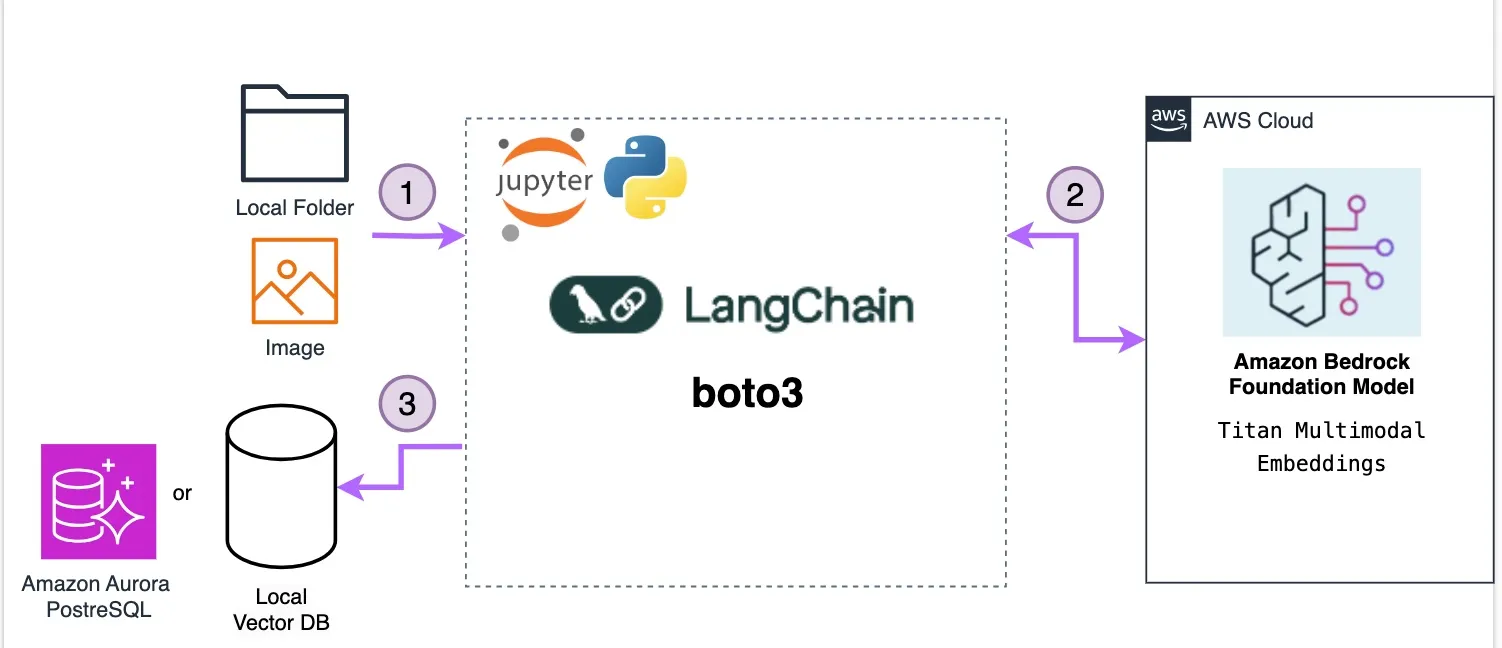
In the first part of this series, you'll dive deep into the core components of our multimodal search engine. Using a Jupyter Notebook environment, we'll explore how to:
- Generate advanced text and image embeddings using Amazon Titan Embeddings models.
- Leverage LangChain to segment text into meaningful semantic chunks.
- Create and query local FAISS vector databases for efficient storage and retrieval
- Develop a powerful image search application utilizing Titan Multimodal Embeddings.
- Implement vector storage in Amazon Aurora PostgreSQL with the pgvector extension
Part 2: Deploying Serverless Embedding App with AWS CDK, Lambda and Amazon Aurora PostgreSQL
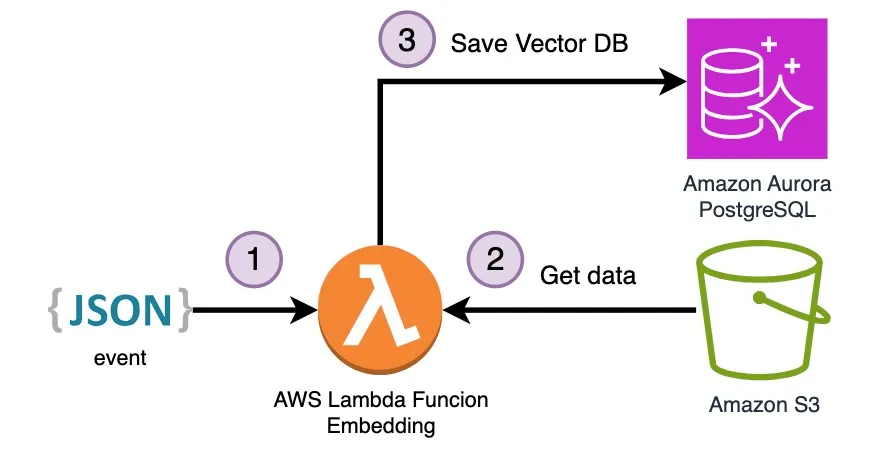
Building upon the foundation laid in Part 1, our second installment will focus on transforming our notebook-based solution into a scalable, serverless architecture. You'll learn how to:
- Developing AWS Lambda functions for embedding generation and retrieval tasks.
- Utilizing AWS CDK to define and deploy our serverless infrastructure as code.
- Integrating our Lambda functions with Amazon S3 for file storage and Amazon Aurora PostgreSQL for vector data.
- Creating a fully functional, serverless multimodal search engine.By the end of this guide, you'll have the knowledge and tools to implement a multimodal search engine, capable of understanding and retrieving both textual and visual content.
Conclusion:
In this guide, you've explored building a powerful multimodal search engine using Amazon Titan Embeddings, Bedrock, and LangChain. By integrating text and image queries within a PostgreSQL database, you've demonstrated how to create flexible, AI-powered search capabilities that go beyond traditional keyword-based approaches.
This technology can enhance applications across various domains, from e-commerce to content management. I encourage you to experiment with these tools in your own projects and stay updated on advancements in vector databases and embedding technologies.
I'd love to hear about your experiences implementing this solution or any innovative applications you develop. Share your thoughts and questions in the comments below.
Happy coding, and may your searches always find what you're looking for! 😉
Thanks,
Series: From Notebook to Serverless: Creating a Multimodal Search Engine with Amazon Bedrock and PostreSQL (3 articles)
- 1From Notebook to Serverless: Creating a Multimodal Search Engine with Amazon Bedrock and PostreSQL. This article
Enjoyed reading this content? Let the author know!
Your likes, comments, shares, and saves help creators reach more builders.

Loading recommendations
Loading article