
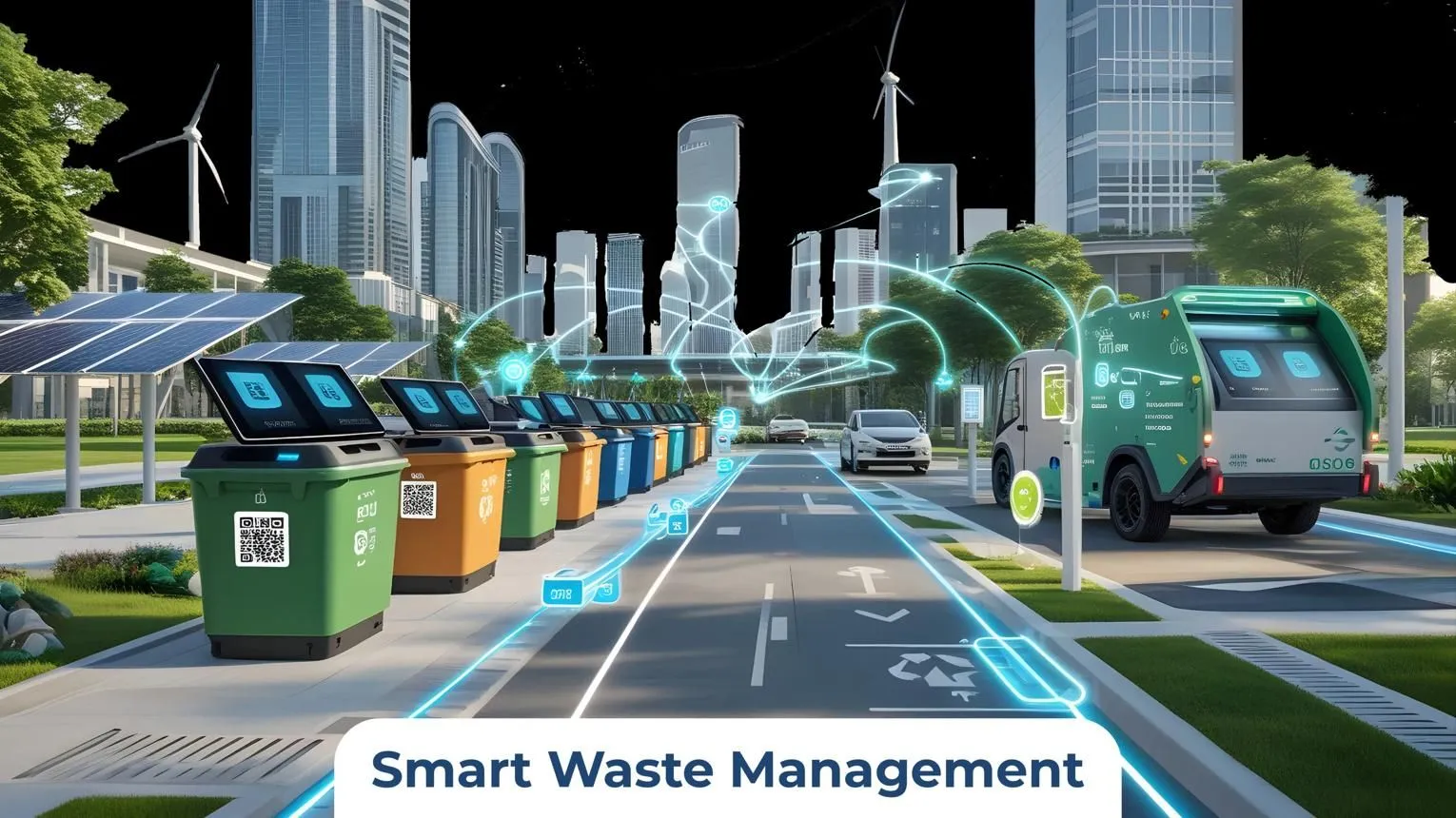
Smart Waste Management Using AWS IoT and Cloud Computing
Discover how AWS cloud services and IoT technology can transform traditional waste management into a smarter, more efficient and sustainable system using real-time monitoring, data analytics and intelligent automation.

Smart Waste Management Using AWS IoT and Cloud Computing
Introduction
Waste management is one of the major challenges faced by modern cities. Traditional waste collection systems often depend on fixed schedules rather than the actual condition of waste bins. This can lead to overflowing bins, unnecessary collection trips and environmental pollution.
With the development of the Internet of Things (IoT), Artificial Intelligence (AI) and cloud computing, waste management can become smarter and more efficient.
Amazon Web Services (AWS) provides several cloud services that can help build intelligent waste management solutions.
What Is Smart Waste Management?
Smart waste management is a technology-based approach that uses sensors, connected devices and cloud platforms to monitor waste collection systems.
Instead of manually checking every waste bin, sensors can collect information such as:
- Waste bin fill levels.
- Gas and air-quality conditions.
- Waste category information.
- Real-time bin status.
This information can be transferred to a cloud platform, where it can be stored, processed and analyzed.
How AWS Can Help
AWS provides different services that can support a smart waste management system.
1. AWS IoT Core
AWS IoT Core allows IoT devices to connect securely to the AWS Cloud.
Sensors installed in smart waste bins can send their readings to AWS IoT Core. This helps collect information from multiple bins in different locations.
2. AWS Lambda
AWS Lambda can process incoming sensor information without requiring users to manage servers.
For example, when a waste bin reaches a particular filling level, Lambda can process the information and trigger an alert.
3. Amazon DynamoDB
Amazon DynamoDB can store real-time sensor information, bin status and historical data.
This information can help administrators understand waste collection patterns.
4. Amazon S3
Amazon S3 can store images, reports and other data generated by the waste management system.
It can also be used to store images collected for waste classification and future analysis.
5. Amazon CloudWatch
Amazon CloudWatch helps monitor cloud resources and applications. It can be used to track system performance and identify operational issues.
System Architecture
A basic smart waste management system can follow this architecture:
Step 1: Data Collection
IoT sensors installed in waste bins collect information about waste levels and environmental conditions.
Step 2: Data Transmission
The collected information is transmitted through a network to AWS IoT Core.
Step 3: Data Processing
AWS Lambda processes the received information and checks whether any action is required.
Step 4: Data Storage
Amazon DynamoDB stores sensor readings, while Amazon S3 can store images and reports.
Step 5: Monitoring and Alerts
Administrators can monitor the waste bins through a dashboard and receive alerts when bins need attention.
Real-World Applications
Smart waste management systems can be useful in many places:
- Smart Cities: Monitoring public waste bins and improving municipal waste collection.
- Colleges and Universities: Monitoring waste bins across campuses.
- Hospitals: Improving waste monitoring and collection procedures.
- Shopping Malls: Managing large numbers of public waste bins.
- Industries: Monitoring waste storage areas and improving operational efficiency.
Benefits of Using AWS and IoT
1. Real-time monitoring of waste bins.
2. Reduced manual inspection.
3. Better waste collection planning.
4. Improved operational efficiency.
5. Centralized data storage and monitoring.
6. Better decision-making through historical data analysis.
7. Support for sustainable and smart city development.
Challenges and Considerations
Although smart waste management offers several benefits, there are some challenges to consider.
- Initial hardware and cloud setup costs.
- Network connectivity problems.
- Sensor accuracy and maintenance.
- Security and privacy of collected data.
- Proper integration between hardware and cloud services.
These challenges can be addressed through secure device authentication, regular maintenance, reliable network connectivity and efficient cloud resource management.
Conclusion
Combining AWS cloud services with IoT technology creates new opportunities for improving traditional waste management systems.
By using services such as AWS IoT Core, AWS Lambda, Amazon DynamoDB and Amazon S3, developers can build scalable solutions that support real-time monitoring, intelligent decision-making and efficient waste collection.
Smart waste management is not just about managing waste; it is about using technology to build cleaner, smarter and more sustainable communities.
As cloud computing and IoT continue to develop, these solutions can play an important role in the future of smart cities.
Enjoyed reading this content? Let the author know!
Your likes, comments, shares, and saves help creators reach more builders.

Loading recommendations
Loading article