

Bringing the Cloud to Bahawalpur: The First AWS Student Community Day in South Punjab
The story of the first Student Community Day 2026 that happened in Bahawalpur at Main Auditorium, The Islamia University of Bahawalpur.
A Community Gathering with a Bigger Purpose
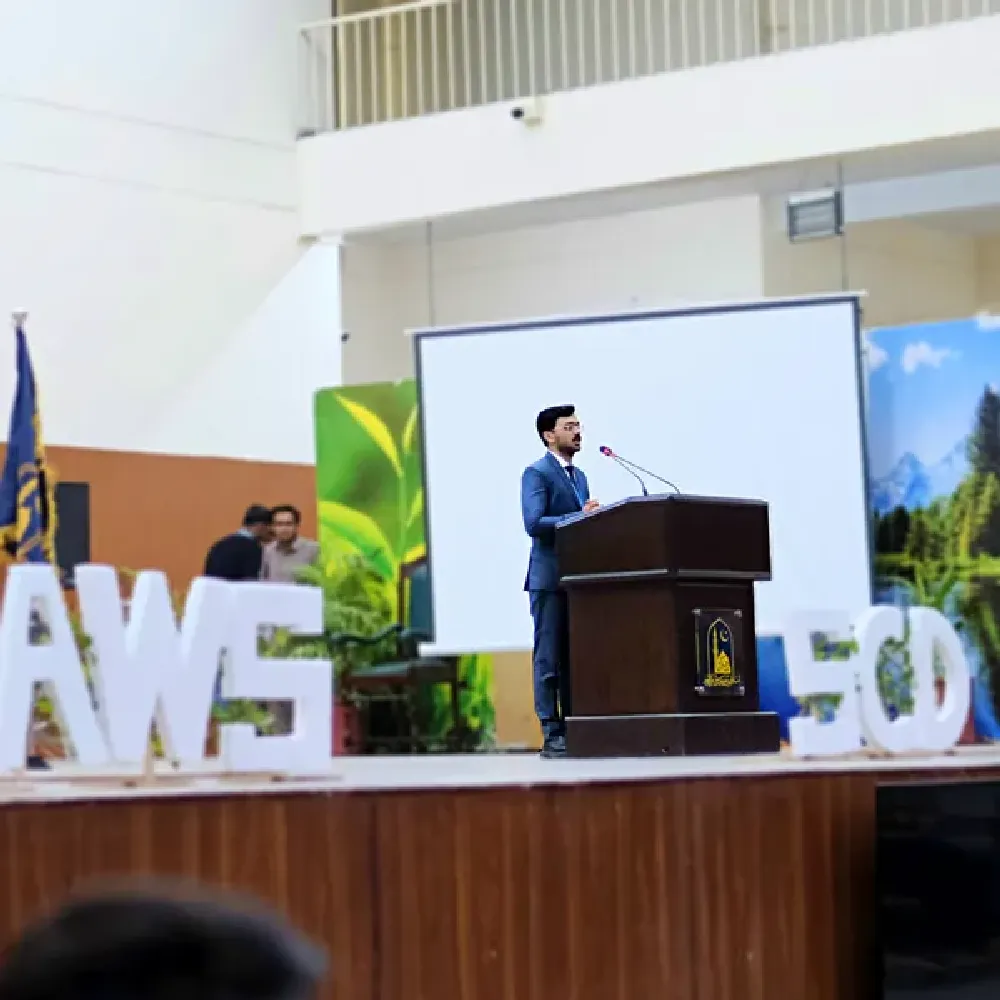
On October 12, 2026, the Main Auditorium of The Islamia University of Bahawalpur (IUB) became a meeting point for students, technology professionals, academic leaders, entrepreneurs, and members of the wider technology community. We welcomed more than 450+ students representing 15 different faculties for AWS Student Community Day Bahawalpur 2026, a student-led initiative centered on cloud computing, Amazon Web Services (AWS), artificial intelligence, open-source technologies, and professional development.
For us, the day represented much more than organizing another university seminar. It was an opportunity to bring industry experience closer to students, introduce them to the wider cloud ecosystem, and demonstrate the value of building connections beyond the traditional classroom environment.
As the AWS Student Builder Group Leader at The Islamia University of Bahawalpur, I wanted to create an experience where students could hear directly from professionals working in the technology industry, understand how the skills they study are applied in professional environments, and discover opportunities they might not otherwise encounter during their academic journey.
Cloud computing has become an important part of modern software development, artificial intelligence, data engineering, cybersecurity, and digital business operations. Yet students often encounter these technologies as separate concepts in their academic subjects without always having the opportunity to explore how they come together in real-world systems.
Our intention was not to suggest that academic learning is disconnected from industry. Rather, we wanted to complement the academic experience with practical perspectives from people who work with these technologies every day.
The response exceeded what we had hoped to achieve. Bringing together more than 450+ students from 15 different faculties demonstrated that interest in modern technology extends well beyond students enrolled in computing-related programs. Students from different academic backgrounds were interested in understanding how cloud infrastructure, AI, and emerging technologies could influence their future careers.
The event also represented a significant milestone for our community, becoming a landmark AWS student community gathering in South Punjab.

This is the story of how we brought this gathering together, the professionals who shared their experiences, the technology we built to manage the event, and what we learned while organizing it.
Building Our Own Registration and Attendance Platform
To manage registrations and attendance, we developed a custom event website (aws-sbg-iub.tech) rather than relying on Google Forms or pre-built templates. The website used static HTML pages, a Python FastAPI backend, and a SQL database, deployed on an AWS EC2 instance. Each registered student received a unique UUID-based QR code, which we scanned on the event day using a dedicated Flutter attendance application. The app communicated with our backend API to verify registrations and automatically mark attendance. We also implemented IP-based rate limiting, Cloudflare security, and multiple data backup mechanisms to improve the platform's security and reliability. The project allowed us to apply cloud deployment, backend development, database management, and mobile application development to a real-world event requirement.
October 12: A Morning of Learning, Community and Collaboration
The formal proceedings followed a structured programme, beginning with the opening ceremony and continuing through three speaker sessions, a panel discussion, closing remarks, and the presentation of commemorative shields.
Opening Ceremony
The programme began with the recitation of the Holy Quran (Tilawat) by Hafiz Muhammad Zain Younus, followed by a Naat presented by Ahmad Samama Salehien. The National Anthem was then played, marking the formal beginning of the gathering.
These opening moments established the atmosphere for a day centered on learning, collaboration, and the contribution of the student community.
I then welcomed the audience and introduced the purpose of AWS Student Community Day Bahawalpur. The opening address provided an opportunity to explain why we had brought students and industry professionals together and what we hoped participants would take away from the event.
For us, the central message was straightforward: students should have opportunities to understand not only the technologies they study, but also the tools, platforms, and professional practices used to build modern digital solutions.

A Welcome from the University's Academic Leadership
Following the opening address, Prof. Dr. Dost Muhammad Khan, Dean of the Faculty of Computing, delivered the university's welcome note.
The participation of the university's academic leadership was particularly meaningful because the event was intended to create a stronger connection between university learning and the professional technology ecosystem.
The Faculty of Computing at IUB brings together diverse academic disciplines, including computer science, artificial intelligence, information security, software engineering, and data science. Its academic and research interests also extend into areas such as cloud computing, fog and edge computing, blockchain, cybersecurity, machine learning, and big data analytics.
These areas closely reflect the technologies that students increasingly encounter when exploring modern software and infrastructure.
Our event complemented this wider academic environment by bringing professionals into direct conversation with students and giving attendees an opportunity to see how different computing disciplines connect with industry applications.

Three Industry Perspectives: Understanding Technology Beyond the Classroom
The central part of the programme featured three individual sessions delivered by professionals working in different areas of the technology industry.
We deliberately brought together speakers with complementary backgrounds. Rather than limiting the programme to a single technical specialization, we wanted attendees to explore professional development, technical contribution, and the engineering behind modern AI solutions.
1. Beyond Academics — Sumama Zaeem
Senior DevOps Engineer, Tkxel | AWS User Group Leader | AWS Community Builder
Our first speaker was Sumama Zaeem, who presented a session titled "Beyond Academics."
Sumama brings experience from the cloud and DevOps ecosystem and has an established connection with the AWS community. His public professional profile identifies him as an AWS User Group Leader and AWS Community Builder, with involvement in the AWS ecosystem dating back to 2018.
His work at Tkxel has also connected DevOps engineering with AI and forward-deployed engineering.
The title of this session captured an important challenge faced by students entering the technology industry: the difference between understanding a concept academically and developing the ability to apply that knowledge in a professional environment
A student may learn programming languages, databases, software engineering principles, and infrastructure concepts throughout a degree. However, professional development also requires learning how to work with tools, collaborate with teams, solve unfamiliar problems, and continue developing skills as technologies evolve.
This is particularly relevant in cloud and DevOps engineering, where understanding infrastructure is only one part of the work. Professionals also need to consider how applications are deployed, maintained, monitored, and operated reliably.
Sumama's experience within the AWS community provided an additional dimension to the session. Student communities can become valuable learning environments where individuals move beyond consuming tutorials and start exchanging knowledge, sharing projects, contributing to discussions, and learning from experienced practitioners.
For attendees, the broader message of this session was to treat university education as the foundation of a much longer professional learning journey.
2. From Consumer to Contributor — Farhan Ashraf
Senior AI/DevSecOps Engineer and Consultant, Systems Limited
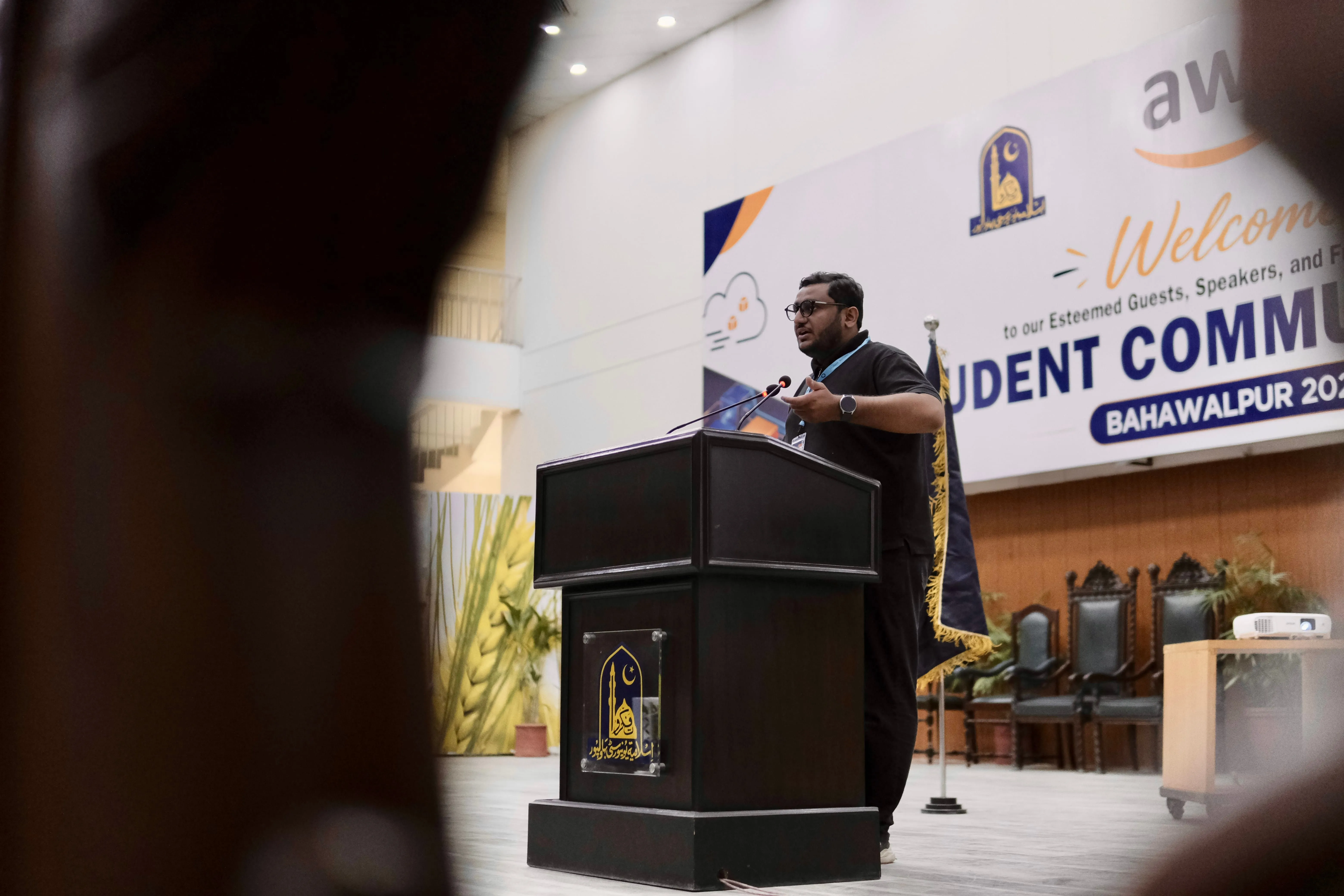
The second session was delivered by Farhan Ashraf and titled "From Consumer to Contributor."
Farhan's professional background in DevSecOps, cloud computing, automation, security operations, monitoring, and scripting provided a relevant perspective on this theme.
The title presented an idea that is particularly important for technology students: there is a difference between using the tools and services created by others and actively contributing to the technologies and communities that move the industry forward.
Students today have access to an enormous ecosystem of open-source software, cloud platforms, developer tools, frameworks, and technical learning resources. They can use these resources to build applications, experiment with new technologies, and learn from existing implementations.
However, an important next step is becoming an active contributor.
Contribution can take many forms. It can involve improving documentation, reporting and fixing bugs, building useful tools, publishing projects, contributing to open-source repositories, helping other developers, or participating in technical communities.
The subject also connects naturally with professional engineering practices. In DevSecOps, software development and security are not completely separate activities. Security, automation, reliability, and monitoring need to be considered throughout the development and delivery process.
Farhan's industry background provided attendees with an opportunity to consider how the mindset of active contribution can extend beyond personal projects and into the professional software ecosystem.
For our student community, this was an especially relevant topic because one of our long-term objectives is to encourage students to become builders and contributors rather than remain passive users of technology.

3. How AI Engineering Works — Hamza Qureshi
Solutions Architect, Tkxel
The third individual session was delivered by Hamza Qureshi, Solutions Architect at Tkxel, under the title "How AI Engineering Works."
Artificial intelligence has become one of the most popular areas of interest among computing students. Many students begin their journey by experimenting with machine learning models, using pre-trained models, or integrating AI APIs into small applications.
However, developing an AI-powered solution that can be used reliably in a real-world environment involves considerably more than selecting a model and running inference.
Hamza's professional background at Tkxel includes system architecture and the development of enterprise AI and cloud solutions. His published professional profile highlights experience with real-time cloud-based systems, enterprise software, IoT integrations, and AI solutions.
That background made the session particularly relevant to students interested in understanding the relationship between AI research and practical engineering.
The subject of AI engineering brings attention to the wider system surrounding an AI model: how a problem is defined, how data is handled, how models connect with application software, and how the resulting solution can operate within a production environment.
It also raises important questions about architecture, scalability, integration, reliability, and the infrastructure required to support intelligent applications.
For students specializing in artificial intelligence and machine learning, this distinction is valuable. Training a model is one achievement; engineering a complete solution that can be deployed, maintained, and used by others is a much broader professional challenge.
The session therefore connected AI development with the realities of software architecture and modern enterprise technology.
Different Professional Journeys, One Conversation: The Panel Discussion
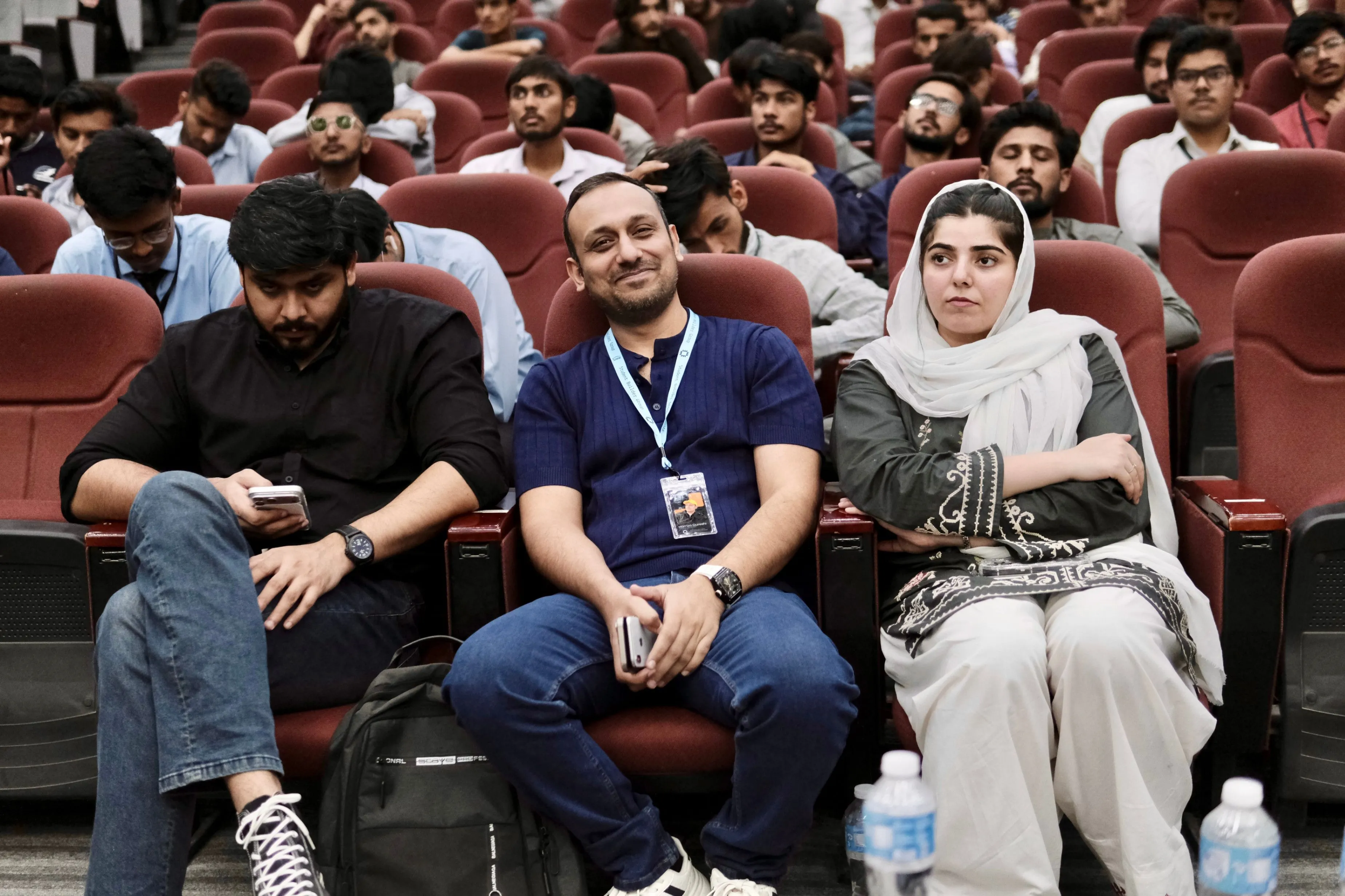
After the three individual sessions, the programme moved into a panel discussion.
The panel was moderated by Hamza Qureshi and brought together four industry and business representatives:
- Sumama Zaeem — Senior DevOps Engineer, Tkxel.
- Hamza Rashid — Founder and CEO, eBabra.
- Farhan Ashraf — AI/DevSecOps Engineer and Consultant, Systems Limited.
- Anas Bin Zia — Founder and CEO, ABZ Technologies.
- Hamza Qureshi — Co-Founder DNotifier, Solutions Architect, Tkxel.
The panel provided a different format for the audience to engage with the professional perspectives represented throughout the event.
The choice of participants brought together experience from enterprise technology, cloud and DevOps engineering, software security, and entrepreneurship.
This diversity was important because technology careers do not follow a single path. Some professionals build their careers within established technology organizations, others specialize in engineering disciplines, and others establish businesses and build products or services of their own.
For students, hearing from people with different professional experiences can help broaden their understanding of the opportunities available after graduation.
The discussion also complemented the individual presentations. While the speaker sessions explored specific themes, the panel brought multiple professional perspectives into one shared conversation.
It reinforced the value of asking questions, learning from professional experiences, and developing an understanding of how technology skills translate into different roles across the industry.
An Auditorium Connecting Academia, Industry and the Local Technology Ecosystem
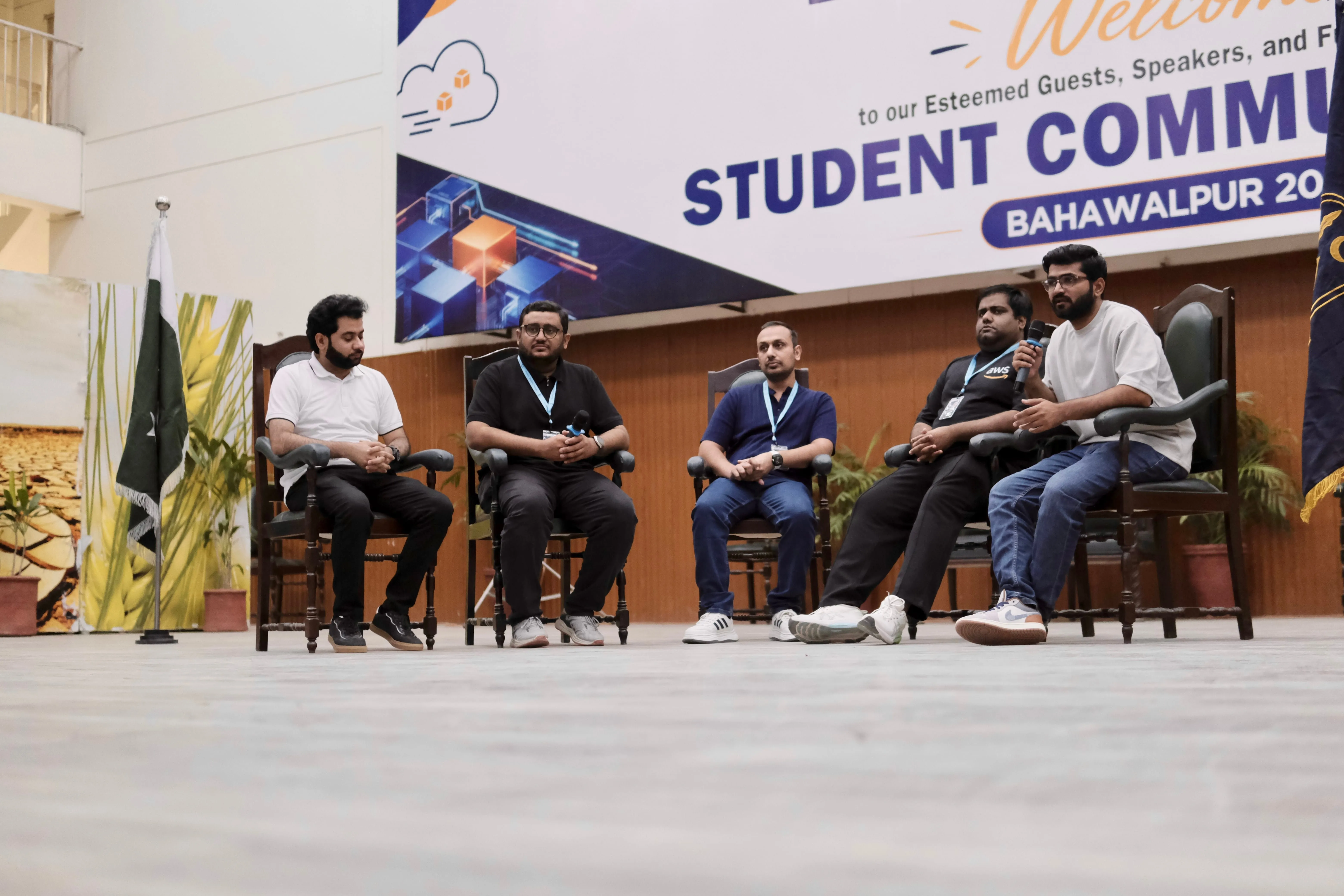
One of the most meaningful aspects of the gathering was the range of people who came together under one roof.
Alongside our three speakers and panelists, the event welcomed university leadership, departmental representatives, local entrepreneurs, technology professionals, educators, and members of the regional community.
Their presence reflected an important part of our vision: building a stronger connection between students, academic institutions, and the wider professional ecosystem.
Academic Leadership and Faculty Participation
We were honoured to welcome the following academic leaders and university representatives:
- Prof. Dr. Dost Muhammad Khan — Dean, Faculty of Computing.
- Prof. Dr. Najia Sehar — Chairperson, Department of Artificial Intelligence.
- Dr. Malik Muhammad Saad Missen — Chairman, Department of Software Engineering.
- Prof. Dr. Waqar Aslam — Chairman, Department of Information Security.
- Prof. Dr. Imran Sarwar Bajwa — Chairman, Department of Computer Science.
- Dr. Muhammad Faheem Mushtaq — Head of Department, Department of Data Science.
- Muhammad Altaf Ahmad — Lecturer/ISA, Department of Data Science.
- Dr. Shahzad Ahmad Khalid — Director, Press, Media and Publications.
- Madam Fatima Muzahir — Deputy Registrar, Public Relations.
The participation of faculty leadership was especially valuable because the event brought together students from 15 faculties, extending the conversation beyond a single department or specialization.
The presence of representatives from artificial intelligence, software engineering, information security, computer science, and data science also demonstrated how many different academic fields are connected to the technologies discussed throughout the day.
Industry Professionals, Entrepreneurs and Community Representatives
We were also privileged to welcome several distinguished guests from the technology industry and the wider Bahawalpur community:
- Farhan Ashraf — Senior AI/DevSecOps Engineer and Consultant, Systems Limited.
- Sumama Zaeem — Senior DevOps Engineer, Tkxel.
- Hamza Qureshi — Solutions Architect, Tkxel.
- Miss Hidayat Fatima Hashmi — Headmistress, Government Special Education School, Lodhran.
- Abdul Samad Malik — CEO, Instant Skills; Co-Founder, Digital South Punjab; former Manager, Chief Minister's eRozgaar initiative.
- Haroon Mallana — Assistant Director (IT), The Islamia University of Bahawalpur; Founder, Digital Bahawalpur; Co-Founder, Digital South Punjab.
- Anas Bin Zia — CEO and Founder, ABZ Technologies.
- Hamza Rashid — CEO, eBabra.
- Talha Razzaq — E-Commerce Specialist.
- Tauqeer Ahmed — Founder and CEO, Enigmatix.
These guests represented different areas of the local and national professional ecosystem, from software and technology services to entrepreneurship, digital initiatives, e-commerce, and education.
Their presence helped make the event more than a sequence of technical presentations. It created an opportunity for students to see the broader network of people and organizations contributing to technology development and digital activity in the region.
We also acknowledge AI Cademy and its leader, Syed Kumail Haider, for their community partnership and support for our efforts to promote modern technology awareness in South Punjab.
The diversity of participation was an important part of the event's success. Bringing academic representatives, industry professionals, local entrepreneurs, and students together demonstrated what can happen when different parts of a regional technology ecosystem engage with one another.
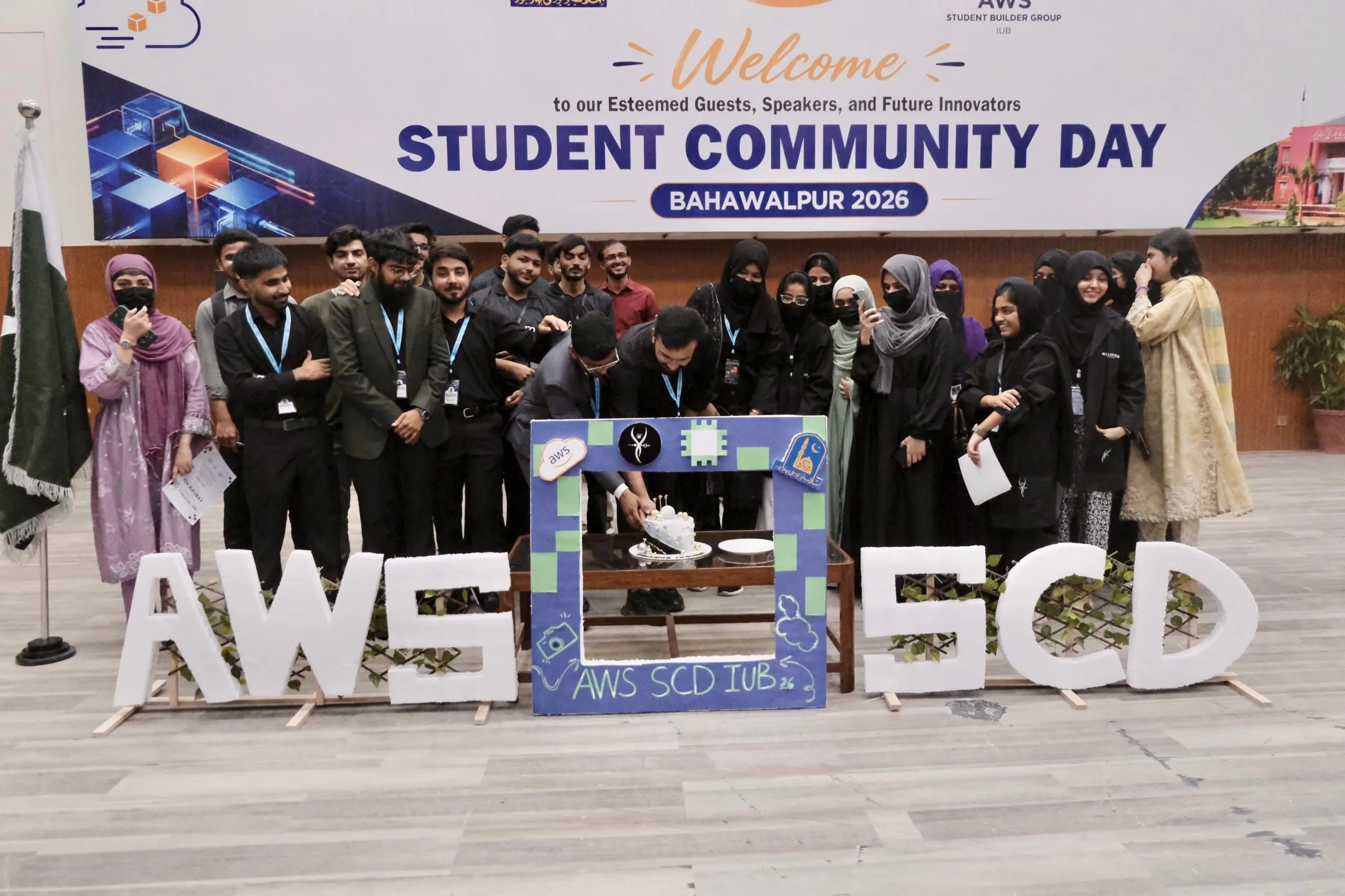
Recognizing the People Who Made the Event Possible
At the conclusion of the formal sessions, Dr. Malik Muhammad Saad Missen delivered the closing remarks.
His participation brought the programme to its concluding stage before the distribution of commemorative shields.
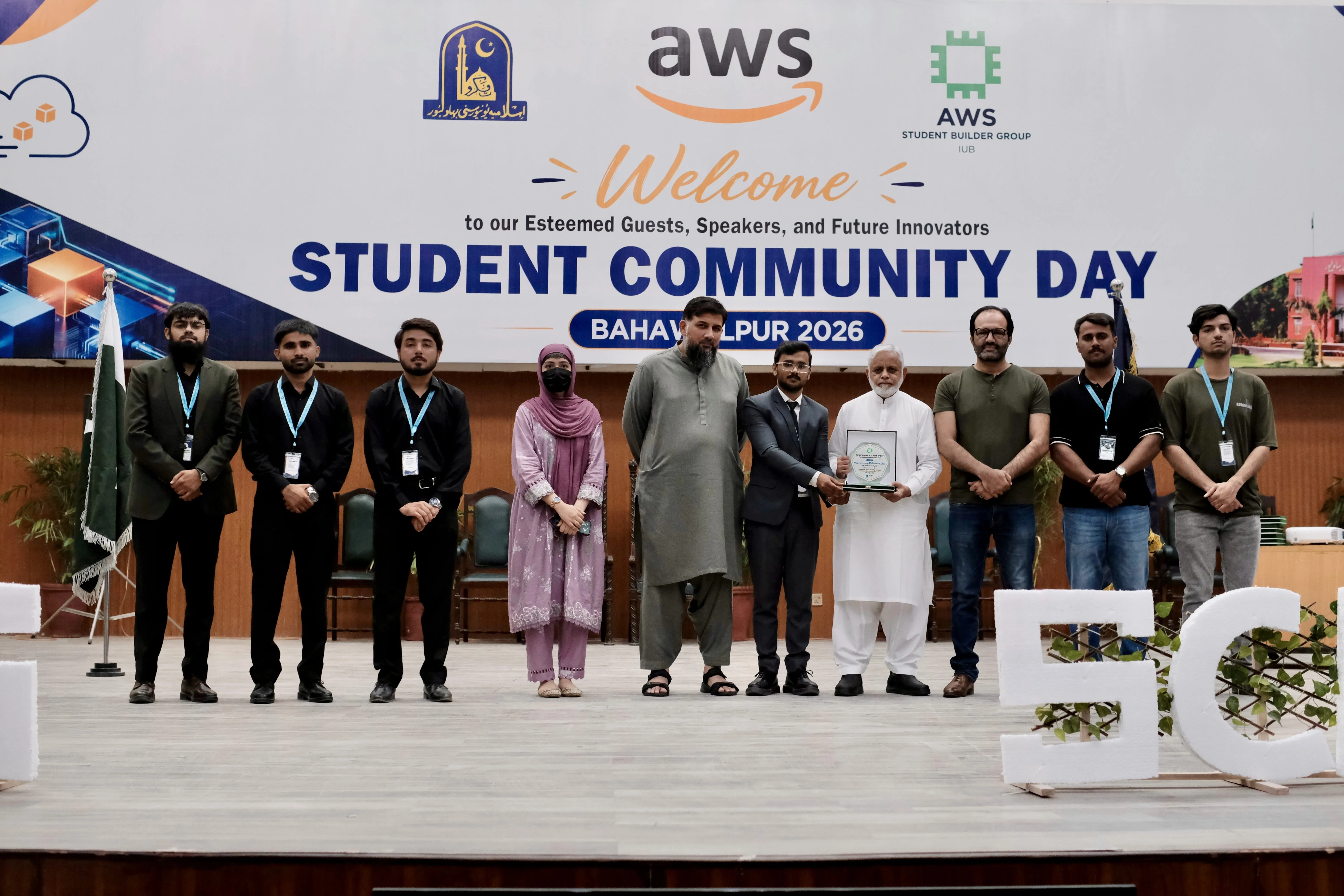
As part of the recognition ceremony, Prof. Dr. Dost Muhammad Khan presented shields to our distinguished guests as a gesture of appreciation for their time, participation, and contribution to the event.
The shields represented more than a formal souvenir. They were a way of acknowledging the people who contributed their professional experience, supported our student initiative, and helped make the gathering possible.
Following the distribution, we gathered for the official group photograph, bringing together speakers, guests, university representatives, and members of the organizing team.
The programme then concluded with a tea break, giving attendees and guests an opportunity for informal conversations and networking.
The Organizing Team Behind the Day
An event welcoming hundreds of students cannot be organized by a single individual.
Behind the programme were students who helped coordinate registrations, maintain the technical infrastructure, manage the venue, facilitate communication, and support the event's overall execution.
I would particularly like to acknowledge our core AWS Student Builder Group team members:
- Muhammad Ali Yahya
- Hafiz Muhammad Zain Younus
- Rayan Khalid
- Kasa-e-Fatima
- Muhammad Moeez
- Muhammad Salman Munir
I am grateful to every member of the organizing team and everyone who contributed their time and effort throughout the preparation and execution of the event.
The website, backend services, attendance application, participant coordination, stage arrangements, communication, and other responsibilities all required cooperation.
The successful execution of the programme was the result of that collective effort.
What We Learned While Organizing a Student-Led Community Event
Organizing AWS Student Community Day Bahawalpur was a learning experience in itself. While the event focused on cloud computing and technology, the process of bringing it together introduced us to challenges involving planning, coordination, engineering, communication, and community leadership.
Looking back, there are several lessons worth sharing with other student organizers.
1. Start with a Clear Purpose, Not Just an Event Schedule
Before thinking about speakers, venue arrangements, or registrations, it is important to understand why the event should exist.
We wanted students to connect with the industry, understand the relevance of cloud computing, and explore technologies beyond their regular academic activities.
Having this objective helped guide our decisions throughout the preparation process, including the topics, speaker selection, and overall event structure.
A strong event should leave participants with something more meaningful than photographs and certificates. It should give them a reason to continue learning after they return home.
2. Build What You Need Instead of Always Relying on Ready-Made Solutions
Our registration platform was one of the most valuable learning experiences from the organizing process.
We could have used a conventional form and managed attendance through spreadsheets. Instead, we chose to build a custom website, backend, database, and Flutter attendance application.
This required additional engineering effort, but it also gave us control over the entire workflow and allowed us to solve the actual problems we faced.
The lesson was not that every event needs its own registration software. It was that student communities can use their technical knowledge to build practical solutions when there is a genuine need.
3. Bring Different Professional Perspectives into the Same Room
Having speakers from different professional backgrounds added considerable value to the programme.
Students need to understand that the technology industry is not limited to one specialization. Cloud engineering, software architecture, AI, DevSecOps, entrepreneurship, and digital business all offer different opportunities.
A carefully selected group of speakers can expose attendees to these different paths without making the event overly technical or difficult for beginners.
4. Institutional and Community Support Matter
Student-led initiatives require cooperation.
The support and participation of university leadership, faculty members, community partners, speakers, and local professionals made it possible to bring hundreds of students together.
Networking should not begin after a person graduates. Technology communities provide an opportunity to establish these professional connections much earlier, while students are still exploring their interests.
5. Invest in the Attendee Experience and the Details Behind It
A successful programme requires much more than good presentations.
Registration, attendance management, communication, time coordination, venue management, and interaction with speakers all contribute to the experience.
Our QR-based attendance system was an example of how thoughtful technical preparation can help manage an important operational aspect of an event.
We also learned the importance of having backup arrangements and ensuring that responsibilities are shared across the organizing team rather than depending on one person.
Most importantly, documentation matters. Photographs, event schedules, attendance records, and technical materials allow us to preserve what was accomplished and make future community initiatives easier to organize.
Beyond October 12: What Comes Next for AWS Student Builder Group IUB?
AWS Student Community Day Bahawalpur was an important milestone, but our vision extends beyond a single gathering.
We want the AWS Student Builder Group at The Islamia University of Bahawalpur to become a consistent learning and collaboration environment for students interested in cloud computing and modern software technologies.
Our future direction includes several areas.
Making Cloud Learning More Accessible
We want to encourage students to begin learning AWS through structured resources, beginner-friendly sessions, and practical exercises.
Students should have opportunities to understand fundamental concepts such as cloud infrastructure, compute, storage, networking, security, and deployment before progressing to more advanced services and architectures.
Official resources such as AWS Skill Builder provide a useful starting point for students who want to explore AWS at their own pace.
Encouraging Practical Projects and Technical Contributions
We want to create more opportunities for students to build projects rather than limit their learning to presentations and theoretical sessions.
This can include cloud-hosted applications, serverless projects, AI-powered solutions, infrastructure automation, and collaborative development activities.
We also want to encourage students to share their work, contribute to open-source projects, and help other beginners become comfortable with new technologies.
Strengthening Connections with Industry
The opportunity to interact with experienced professionals should not be limited to an annual event.
We hope to continue bringing industry professionals into the student community through technical discussions, mentoring opportunities, workshops, and community meetups.
Building these relationships can help students gain a clearer understanding of professional expectations, emerging technologies, and career opportunities.
Growing a Stronger Regional Student Ecosystem
Another important ambition is to extend the community's reach beyond our own university.
Students across Bahawalpur and South Punjab should have opportunities to participate in collaborative technology initiatives, learn from one another, and connect with the wider AWS community.
Through cooperation with other universities, student groups, and technology communities, we hope to contribute to a stronger regional environment for cloud learning and innovation.
An Invitation to the Next Generation of Builders
You do not need to be an experienced cloud engineer to become part of a technology community.
You can begin with curiosity, a willingness to learn, and the motivation to build something of your own.
For students who are just starting, our recommendation is to explore the fundamentals, experiment with practical projects, and make use of the learning resources already available.
For students who have already developed technical skills, the next step is to share that knowledge. Help beginners, contribute to projects, participate in community activities, and use your experience to create opportunities for others.
We encourage students from different faculties and academic backgrounds to explore cloud computing and understand how it connects with their own fields.
Those interested in following our future activities can connect with the AWS Student Builder Group IUB through our LinkedIn community page and Instagram community page .
Our objective is to create an environment where students can learn together, exchange ideas, experiment with emerging technologies, and gradually develop into confident builders and contributors.
More Than a Day at the Auditorium: A Foundation for What Comes Next
Looking back at October 12, what stands out is not simply the number of people who attended or the number of sessions we conducted.
It is the fact that students from 15 different faculties came together to explore technologies that are shaping the future of the software industry. It is the opportunity we created for them to hear directly from professionals, interact with academic leaders, and connect with people from the wider technology ecosystem.
It is also the work that happened behind the scenes: a custom registration platform, an API-driven attendance system, a Flutter application, cloud deployment, security measures, and a team of students working together to deliver a real-world initiative.
For us, AWS Student Community Day Bahawalpur demonstrated what student communities can accomplish when learning is combined with initiative, collaboration, and practical execution.
I am sincerely grateful to our speakers, university leadership, faculty members, community partners, distinguished guests, volunteers, and every student who became part of this experience.
As the AWS Student Builder Group Leader at The Islamia University of Bahawalpur, I see this gathering not as the conclusion of an effort, but as a foundation for the work ahead.
We want to continue creating opportunities for students to learn, build, collaborate, and participate in the global technology ecosystem.
Don't wait for the future of technology to reach you. Learn it, build with it, and help shape what comes next.
Community and Learning Resources
# aws-community-builders# aws-student-builders-groups# artificial-intelligence# aws-community-day-2026# aws-builders
Any opinions in this article are those of the individual author and may not reflect the opinions of AWS.Enjoyed reading this content? Let the author know!
Your likes, comments, shares, and saves help creators reach more builders.

Loading recommendations
Loading article