
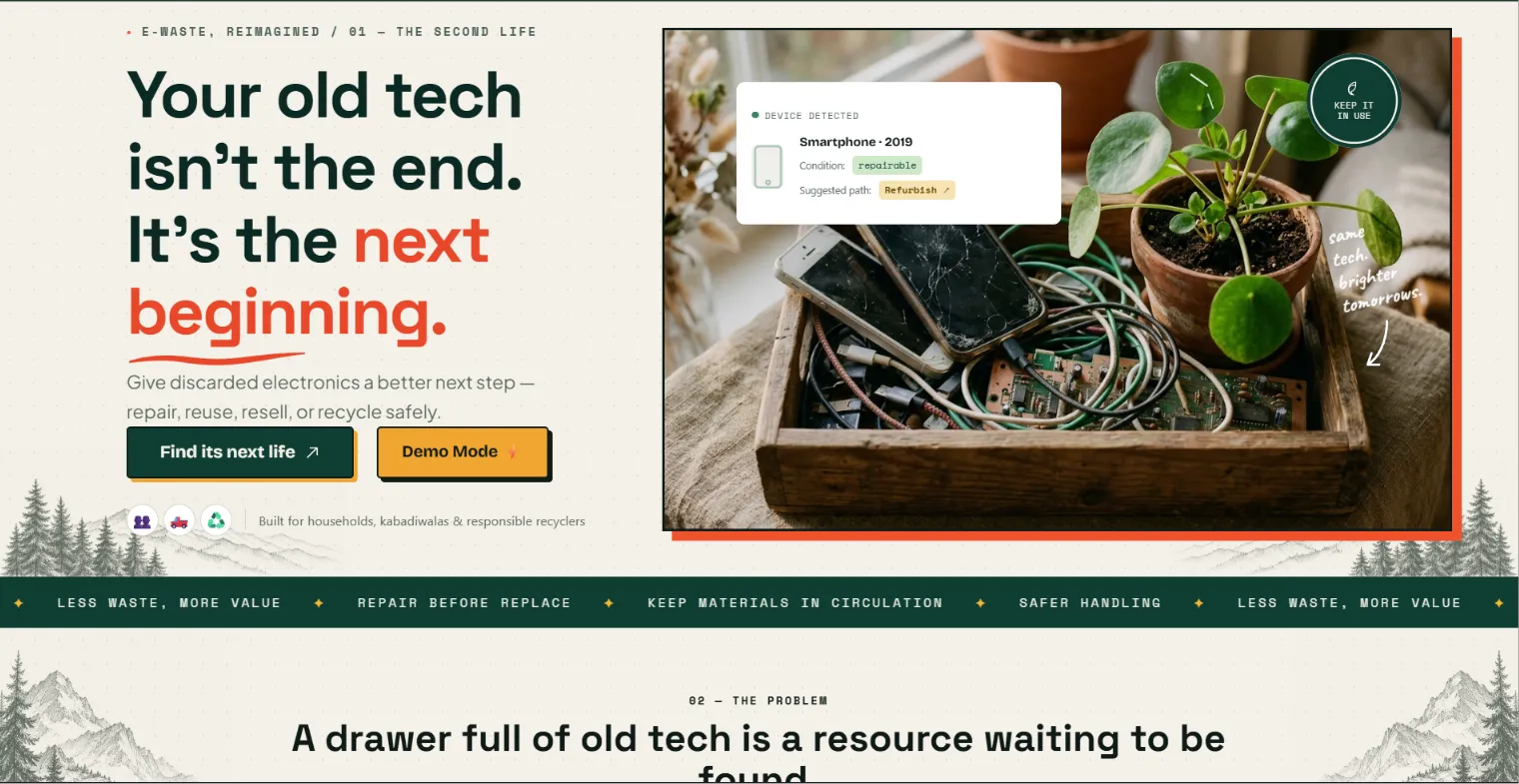
ScrapMitra: Giving Old Electronics a Better Next Step with AWS
How I built ScrapMitra on AWS to help households and collectors make safer decisions about reusing, repairing and recycling old electronics. This article explores its AI-assisted workflow, Hindi voice helper and the lessons behind improving from 15/30 to 26/30 across two hackathons.

An old laptop with a broken screen might still be worth repairing. A working phone might be useful to someone else. A device with a damaged battery needs careful handling. Yet all three can end up in the same pile of scrap.
That uncertainty is what I wanted to address with ScrapMitra, an AI-assisted e-waste platform I built for the Waste & Energy track of WeMakeDevs’ AWS Environmental Hacks.
The idea is simple: help households and collectors understand a device before deciding what happens to it.
A user starts by photographing an old device. Amazon Bedrock with Nova Pro helps identify device traits from the image. Deterministic rules then rank the available options: reuse, repair, recycling and safe disposal of hazardous components. Keeping that decision logic explicit makes the recommendations easier to inspect and improve.
The Hazard Guard flags handling concerns, including battery and CRT-related hazards. A Hindi voice helper makes explanations and questions about safety, pricing and pickups more accessible. These features matter because a recommendation is useful only if the person handling the device can understand and act on it.
ScrapMitra also explores pooled pickups: grouping nearby requests so collectors can visit several households in one trip. The intended handover flow combines a pickup QR, a weight check and confirmation from both parties before impact is credited.
The prototype includes seeded pickup and impact records to demonstrate this workflow. Verification and persistence need further testing, and the carbon figures are illustrative estimates rather than measured environmental outcomes.
AWS supports the architecture throughout. Amplify hosts the React frontend. API Gateway and Lambda handle backend requests and decision logic. Bedrock provides image understanding, while DynamoDB and S3 support application records and uploaded images.
This project also grew out of some difficult feedback. My previous hackathon project, RxClear, scored 15/30. The judges felt it added too little beyond a single AI call. With ScrapMitra, I put more thought into the decisions, safety checks and collection workflow around the AI.
ScrapMitra scored 26/30, including full marks for Execution and Design & Usability, and 7/8 for Idea & Impact. The project didn’t win, but that improvement meant a lot to me.
The judges appreciated the practical approach, safety checks, Hindi voice helper and real AWS implementation. They also identified two clear weaknesses: my seven-minute demo needed a tighter edit, and the price ranges were too wide to be useful.
That pricing feedback is especially valuable. My next step is to capture better model, age and condition information, separate resale value from repair cost and scrap value, and make the basis of each estimate clearer. Those improvements need reliable market data as well as better rules.
I want ScrapMitra to make the next decision about an old device easier: keep it useful where possible, and help people handle it responsibly when its useful life ends.
Give it try here: https://main.dr84g0oee4lb8.amplifyapp.com
Enjoyed reading this content? Let the author know!
Your likes, comments, shares, and saves help creators reach more builders.

Loading recommendations
Loading article