
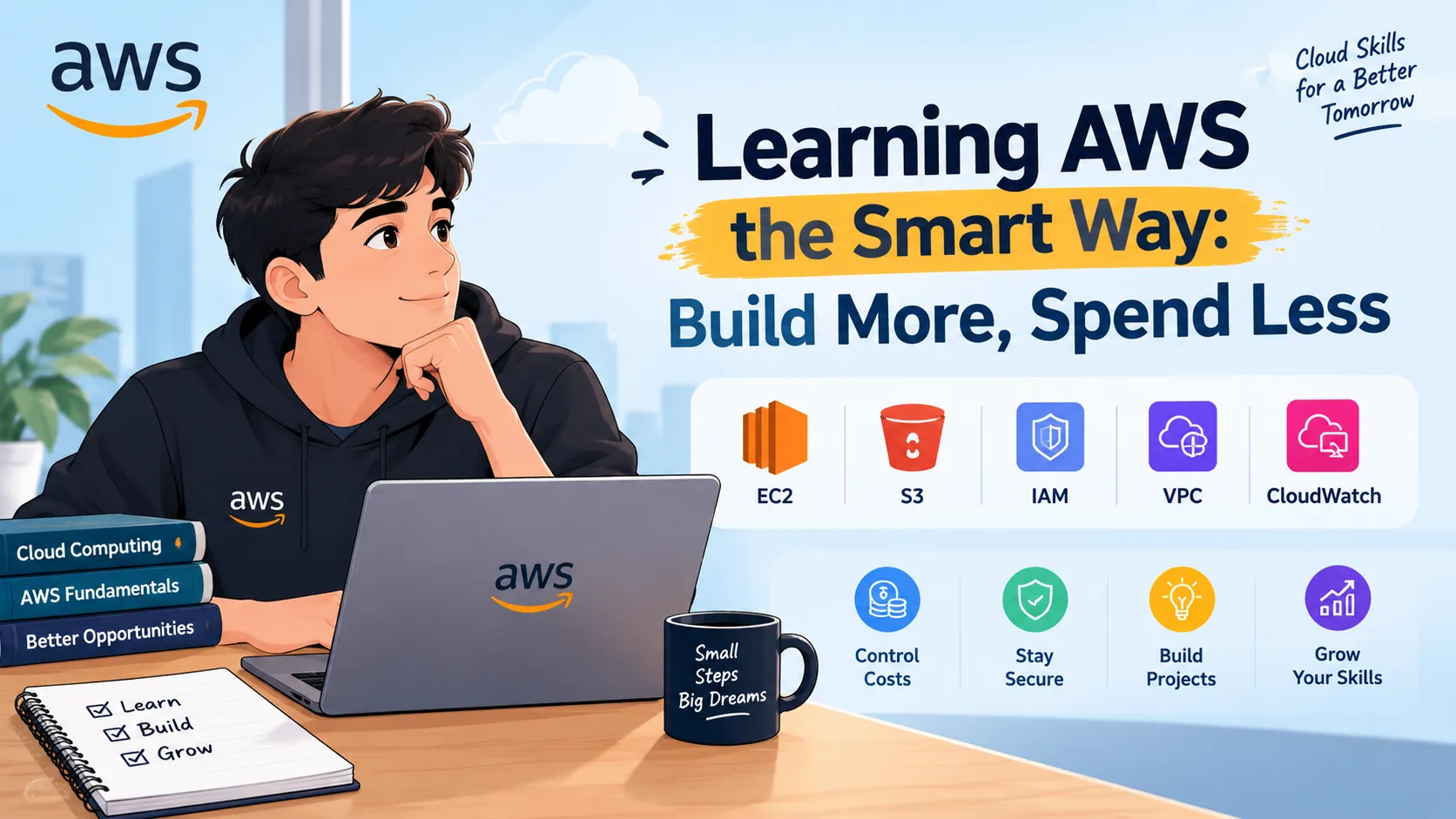
🚀 Learning AWS the Smart Way: Build More, Spend Less
Cloud computing is not just about deploying applications — it is also about understanding how to use cloud resources efficiently and control costs. As I continue learning AWS, one important lesson stands out: building smarter is just as important as building faster.

Here are some practical tips every AWS beginner should keep in mind:
💡 1. Start with the AWS Fundamentals
Before building complex applications, understand these core services:
- Amazon EC2: Run applications on virtual servers.
- Amazon S3: Store files, images, and other objects.
- AWS IAM: Manage users, roles, and permissions securely.
- Amazon VPC: Understand networking and resource isolation.
- Amazon CloudWatch: Monitor application performance and resource usage.
💰 2. Keep Your Cloud Costs Under Control
AWS offers powerful services, but some resources can incur charges if left running.
- Set up AWS Budgets to monitor spending and configure alerts.
- Review the AWS Free Tier and applicable service pricing before starting.
- Stop or delete unused resources when you finish experimenting.
- Check storage, networking, and other potential charges—not just compute costs.
- Never assume that every service or usage level is free.
🛠️ 3. Learn Through Small Hands-On Projects
Instead of only watching tutorials, practice by building small projects.
- Host a static website using Amazon S3.
- Explore serverless applications with AWS Lambda.
- Learn basic monitoring using Amazon CloudWatch.
- Practice IAM permissions using the principle of least privilege.
- Document your architecture, challenges, and learnings.
Always review permissions and potential costs before deploying a project.
🔐 4. Make Security a Habit
Security should be part of every cloud project from day one.
- Follow the principle of least privilege.
- Avoid sharing credentials or committing access keys to GitHub.
- Enable multi-factor authentication where appropriate.
- Review permissions and remove unnecessary access.
- Use AWS pricing and security documentation as your primary references.
📈 5. Focus on Skills, Not Just Certifications
Certifications can provide a structured learning path, but practical understanding helps you apply those concepts.
My approach is to keep learning the fundamentals, explore services step by step, and gradually build projects that demonstrate real technical skills.
🎯 Final Thoughts
You don't need a complex architecture to begin your AWS journey. Start small, understand the services, monitor costs, and improve your projects as you learn.
Learn consistently. Build responsibly. Optimize continuously.
I'd love to hear from the AWS community:
- Which AWS service did you find most useful when you started learning cloud computing?
- What beginner-friendly AWS project would you recommend next?
Let's learn and build together! ☁️
Enjoyed reading this content? Let the author know!
Your likes, comments, shares, and saves help creators reach more builders.

Loading recommendations
Loading article