
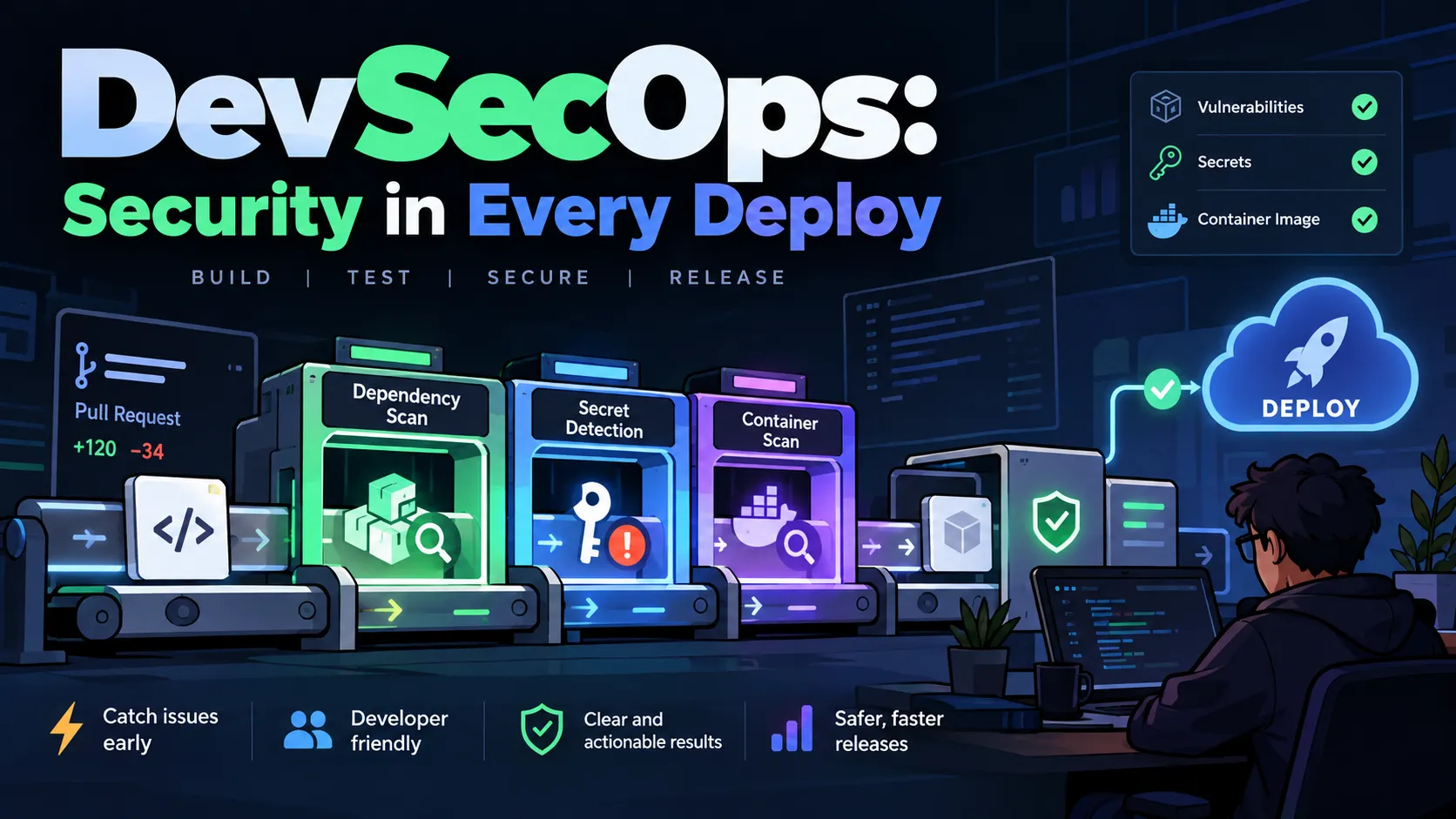
DevSecOps in Practice: Bringing Security Into Every Stage of CI/CD
Learn how to integrate dependency scanning, secret detection, and container image checks into a CI/CD pipeline. This article covers practical ways to prioritize findings and set deployment rules without slowing down development.

Security belongs in the delivery pipeline
DevSecOps brings security checks into the same workflow teams already use to build, test, and release software. Instead of waiting for a final review, teams can catch common issues while changes are still small and easier to fix.
A useful starting point is to add automated checks to pull requests and build pipelines. These checks should give developers clear, actionable feedback alongside the code they are changing.
Start with a few high value checks
A pipeline can begin with three types of scanning:
- Dependency scanning identifies known vulnerabilities in third party packages.
- Secret detection looks for credentials accidentally committed to source control.
- Container image scanning checks operating system packages and application dependencies in built images.
Keep the first rollout focused. Start in reporting mode, review the results, and tune noisy rules before making checks mandatory.
Make findings actionable
A security result is most useful when it explains what was found, where it was found, how severe it is, and what the developer can do next. Link findings to the relevant file, package, or image layer, and offer a suggested fix when one is available.
Set clear ownership for reviewing findings. Teams should know who handles new alerts, how to request an exception, and when an exception expires.
Add deployment rules gradually
Once the checks are reliable, define policies for blocking releases. For example, a team might block a deployment when a newly introduced critical vulnerability or exposed credential is detected, while allowing existing lower severity findings to be tracked and fixed through normal work.
Policies should be visible, consistent, and easy to understand. Avoid rules that fail builds without explaining the reason or the path to resolution.
Measure and improve
Track whether checks are finding issues early, how long fixes take, and how often results are dismissed as false positives. Use those signals to improve the tools and policies over time.
The goal is to make secure delivery part of the normal development process: fast feedback, clear ownership, and sensible safeguards at release time.
Enjoyed reading this content? Let the author know!
Your likes, comments, shares, and saves help creators reach more builders.

Loading recommendations
Loading article