
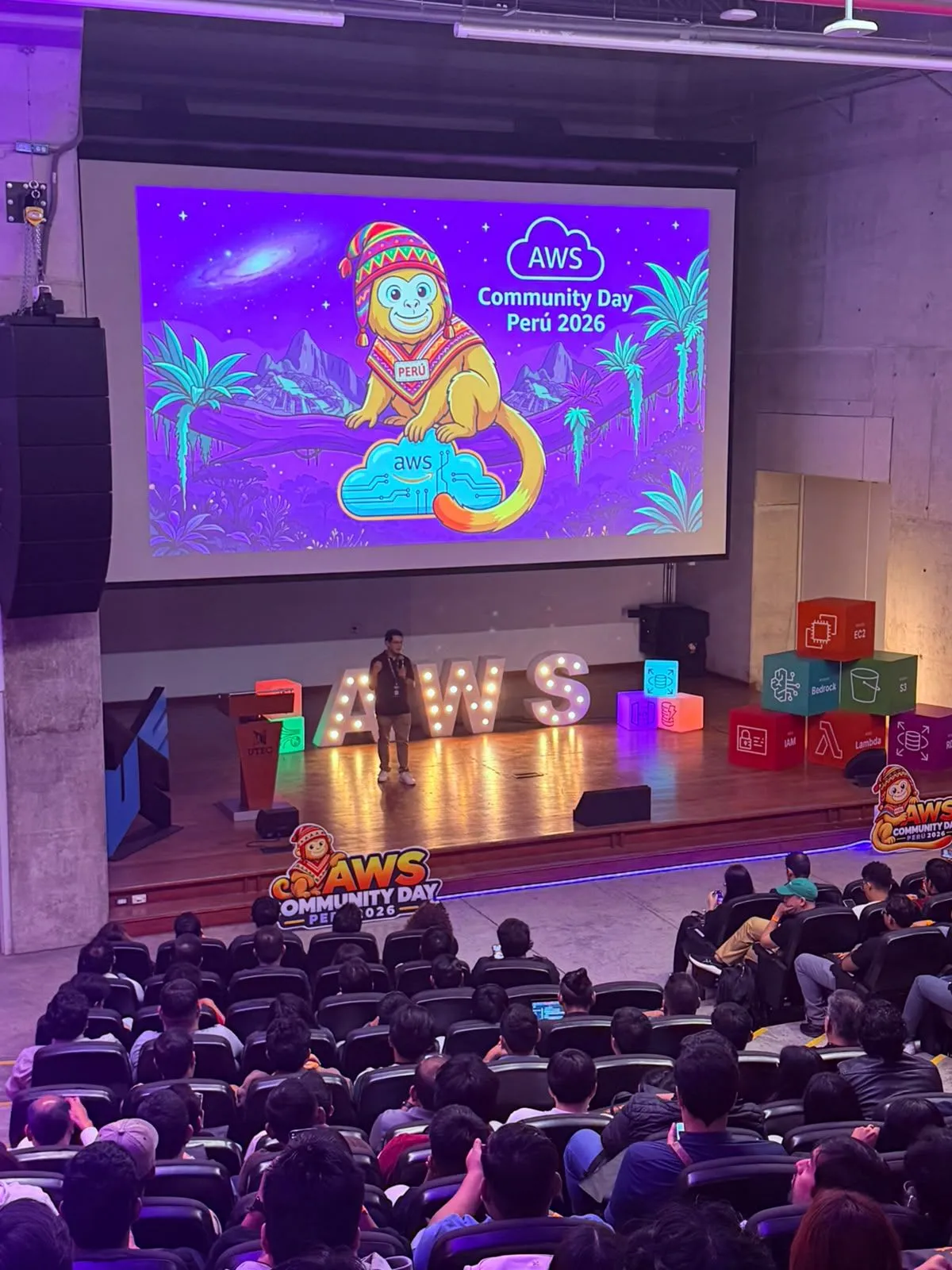
From Code to Cloud: A Retro Game, Containers, and an Amazing Experience at AWS Community Day Peru 🇵🇪
At AWS Community Day Peru 2026, I had the opportunity to share my session "From Code to Cloud" with around 200 attendees! Using a retro Sonic game, I explored how Docker, Amazon ECS, AWS Fargate, Terraform, and Terragrunt work together to deploy applications on AWS. Beyond the technical content, it was an unforgettable experience connecting with the Peruvian AWS community, meeting amazing builders, and being part of such a well-organized event. A celebration of technology, learning, and community!

Containers, Infrastructure as Code, a retro Sonic game, and about 200 builders in the same room.
If you ask me why I love the AWS community, I always come back to the same thing: people. You meet someone from another city or another country, and within five minutes you’re talking about the same problems, the same bugs, the same late-night “why is this not working?” moments.
On October 3, 2026, I got to live that again at AWS Community Day Peru, hosted at UTEC in Lima. And honestly? It was so good.

I presented my session, “From Code to Cloud: Deploying Applications with Containers on AWS and Infrastructure as Code,” to around 200 people. Looking out at a room full of builders curious about containers, cloud, and automation was one of the best moments of the trip. I’m an AWS Community Hero from Brazil, and every time I speak at an event in Latin America, I’m reminded that each community has its own energy and its own stories. Peru was no exception.
The people made the event
Before I get into the technical side, I have to talk about how well the event was run. The organizers and volunteers clearly poured a lot of care into every detail, and you could feel it from the moment you walked in. The atmosphere was warm and welcoming, and everything just worked.
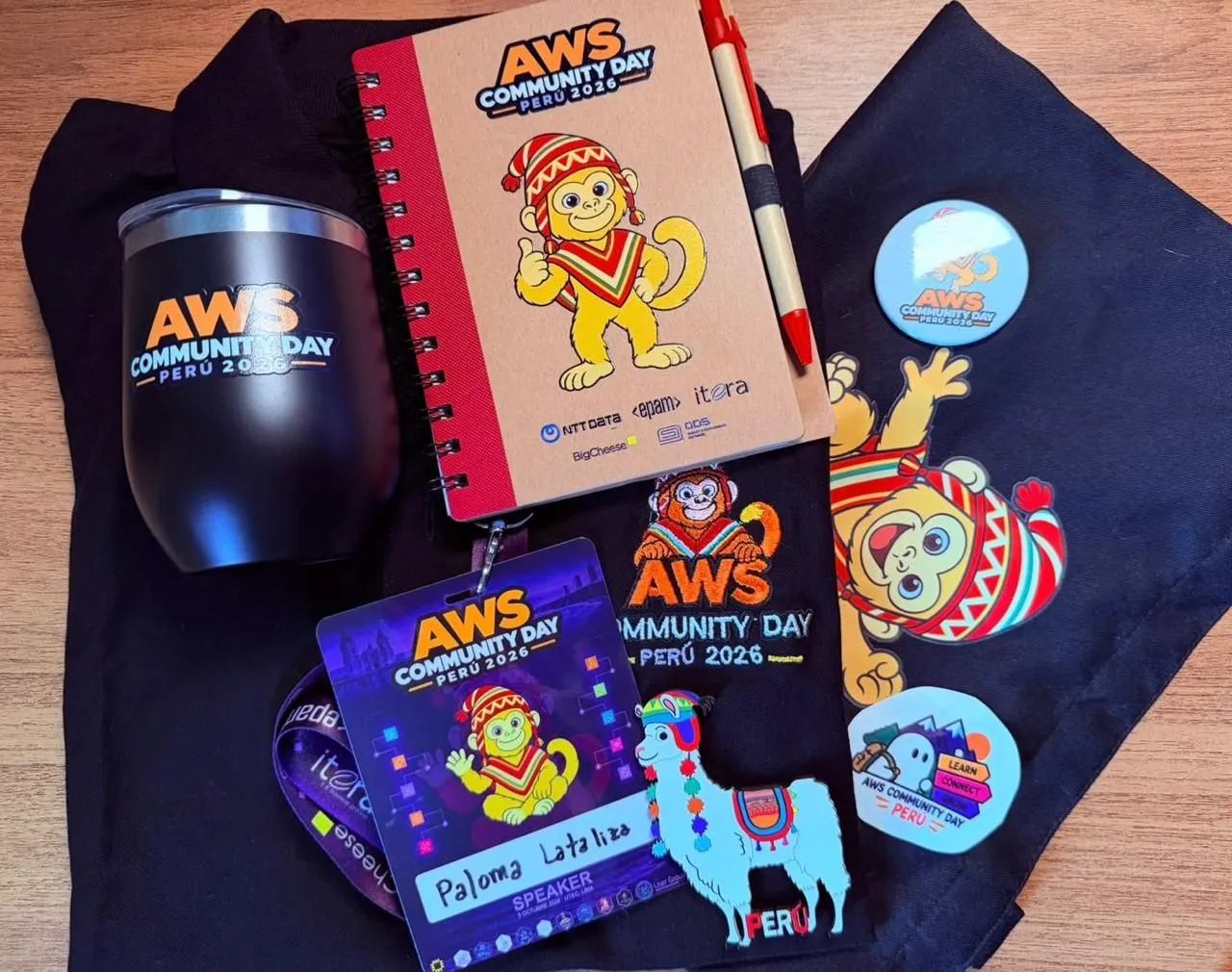
The community also made me feel at home. I swapped stories, heard new perspectives, and met people doing great work in their own communities. That’s what stays with me. We live in different countries and speak different languages, but we’re alike where it counts. We’re curious. We love technology. We like solving problems. And we believe in helping each other grow.
Making cloud architecture a little more fun
My talk was about something I deal with in my day-to-day work: deploying and operating containerized applications on AWS using Infrastructure as Code. But I didn’t want it to be yet another tour of AWS services. I wanted people to follow the whole journey of an application, from source code to something running in the cloud that real users can reach. And I wanted that journey to be fun.
So I used a retro Sonic game as the demo app. The idea was to take tools many people already know separately (Docker, Amazon ECS, AWS Fargate, Terraform, and Terragrunt) and show how they fit together in a complete architecture. The main message was simple: deploying an application is a lot more than running a container. Building a Docker image and running it on your laptop is the easy part. In the cloud, you have to think about networking, security, permissions, orchestration, traffic, observability, and how you’ll keep it all healthy over time.
In the demo, the code lived on GitHub, was packaged into a Docker image, and was stored in Amazon ECR. The workload ran on Amazon ECS with AWS Fargate behind an Application Load Balancer, while Terraform and Terragrunt organized and provisioned the infrastructure. I also explained why ECS with Fargate made sense here. We didn’t need Kubernetes-specific features or the extra operational weight of managing more components. We needed to run and orchestrate containers in a way that matched what the application actually required.
That led to one of my favorite lines from the session:
“Complexity should come from requirements, not from default choices.”
It’s easy to forget this when AWS gives you hundreds of services to choose from. Picking the right tool isn’t about picking the most popular or the most sophisticated one. It’s about understanding the problem you’re solving.

From “it works” to “it’s well designed”
I also wanted people to think about what happens behind the scenes. When you open an app in your browser, you don’t think about everything that has to happen for that request to reach a container. In the cloud, those details matter.
In our setup, the Application Load Balancer received the traffic and sent it to ECS tasks running in private subnets. Each task used the
awsvpc network mode, so it got its own Elastic Network Interface inside the VPC. Around that, we needed IAM roles, security groups, health checks, and logging.These details feel small while everything is working. The moment something breaks, they’re the whole story.
That’s why the session didn’t stop at deployment. Knowing how to create infrastructure isn’t enough; you have to know how to operate it. A good example is this:
“RUNNING is not HEALTHY.”
An ECS task can be running while the application is down, because of a wrong port, a failing health check, an app error, or a networking issue. We looked at how to investigate: service events, task status, stopped reasons, logs, target health, and networking. Instead of changing settings at random and hoping for the best, you can troubleshoot step by step, using what AWS is already telling you.
Infrastructure as Code was a big part of this too. With reusable Terraform modules and Terragrunt configurations, we saw how to organize infrastructure across environments without copying and pasting the same code everywhere.
To me, that’s one of the biggest wins of IaC: it lets us treat infrastructure like software, with version control, reuse, consistency, and maintainability. Combine that with a solid understanding of architecture and operations, and you get workloads that are much easier to manage and evolve.
Learning by building
The hands-on demo is my favorite part of preparing any talk. Diagrams are great, but a working example connects the dots in a way slides sometimes can’t.
The Sonic app helped with exactly that. People could see how containers, AWS services, and Infrastructure as Code come together in one deployment. And there’s something delightfully fun about explaining cloud infrastructure with a retro game. It’s a good reminder that learning doesn’t have to feel heavy or serious. Sometimes a simple app is all you need to explore important ideas.
Whether you’re just getting started with containers or you’ve worked with AWS for years, I hope the demo nudged you to build something of your own and dig deeper. Because honestly, one of the best ways to learn cloud is still to get your hands dirty, break things, troubleshoot, and try again.
200 people and a memory I’ll keep
Presenting to around 200 people was one of the most exciting parts of the event. Preparing a technical talk takes a lot of work: research, designing the architecture, testing, building examples, organizing the story so the demo makes sense. But when you walk into a room full of people and get to share something you genuinely love, all of that feels worth it.
And the experience went way beyond the stage. I spent time with the Peruvian community, talked with other speakers, saw a bit of Lima, and learned a little about the local culture. Those moments are a big part of why I keep showing up at community events.
After years in AWS communities, I’ve seen what sharing knowledge can do. It opens doors, it pushes people toward new careers, and it creates connections that outlast the event itself. A talk can introduce someone to a new technology. A hallway conversation can turn into a project. And sometimes just meeting people who care about the same things is enough to keep you going.
That’s the real power of community.

AWS Community Day Peru reminded me, once again, that these events are about much more than sessions. The talks, demos, and discussions matter. They help us learn, compare approaches, and find new ways to solve problems. But the people are what make it unforgettable.
It was also great to see how much the AWS community has grown across Latin America. So many talented builders are sharing what they know, creating spaces to learn, supporting each other, and making their local communities stronger. As a Community Hero and organizer in Brazil, seeing that dedication in other countries is deeply motivating. I came home with new connections, great memories, and a head full of ideas to bring back to my own communities. I value that as much as the time on stage.
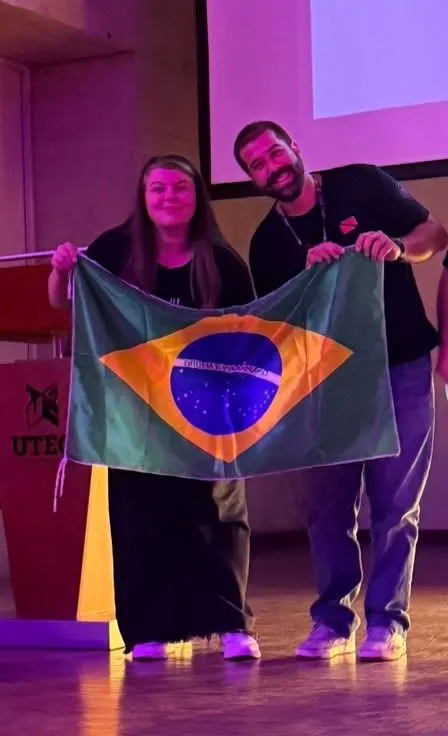
Gracias, AWS Community Day Peru!
A huge thank you to the organizers and volunteers for putting together such a fantastic event. Everything was so well organized, and I felt the care and the welcome all day long. As someone who knows how much effort goes into this, I think the team deserves a big round of applause.
Thank you to everyone who came to my session and took this journey from code to cloud with me.
And thank you to the entire Peruvian AWS community for making me feel so welcome. I hope the session inspired more people to try containers, build something with Infrastructure as Code, and keep learning by doing. Most of all, I hope we keep finding ways to connect, learn, and grow together across Latin America.
Peru, thank you for the memories, the connections, and an amazing experience.
¡Muchas gracias por todo! Espero volver pronto! 🇵🇪
Keep learning, keep building, and keep sharing!
Enjoyed reading this content? Let the author know!
Your likes, comments, shares, and saves help creators reach more builders.

Loading recommendations
Loading article