
Three Lessons from Kiro Nights Nairobi - Build, Break and Deploy with Kiro
What creating a culture of innovation through the AWS AI/ML User Group Kenya taught us after organizing Kiro Nights Nairobi to Build, Break and Deploy with Kiro. Three lessons from a 2-hour buildathon using Kiro and deployment on AWS.

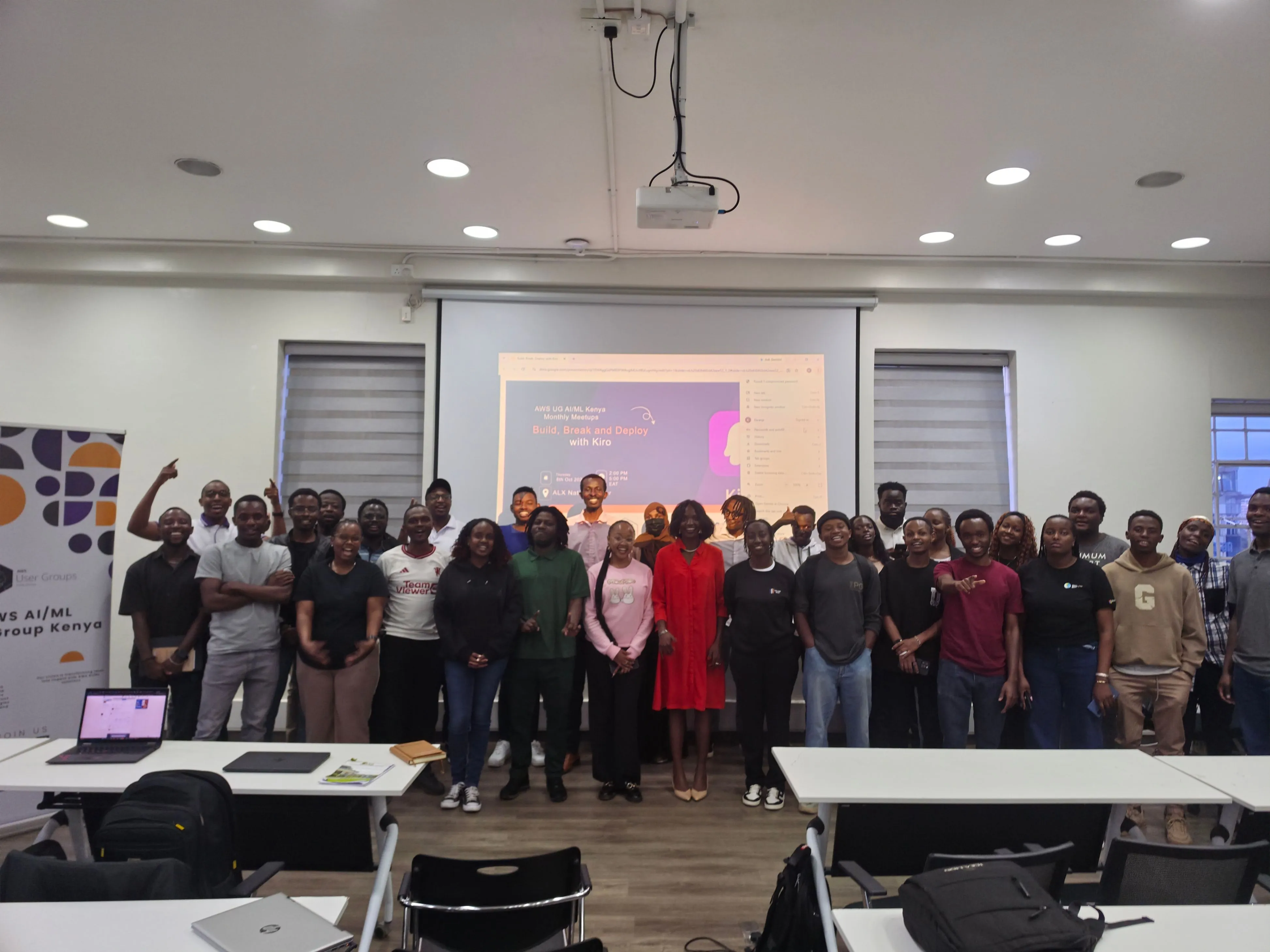
Imagine what would happen when you bring ~50 builders in one room, at one event and in one night. Imagine no more because in this article I will share the three lessons from building, breaking and deploying with the Agentic IDE Kiro during the Kiro Nights organized by AWS AI/ML User Group Kenya at the ALX Nation Centre Hub, Nairobi.
Before I continue, I would like to acknowledge all the core team leadership, volunteers and the AWS Ajira re/Start Kenya Community led by Peter for an amazing collaboration. Through the immense support, the event was seamless and a huge success for both communities as we eventually had 7 groups build and present innovations across three tracks: Open AgriTech (Kilimo Innovation), Open Fintech and Open Transport and Logistics.
Presenting Kiro Nights and the Tracks to Builders

Presenting the Kiro Nights and Build Tracks to Attendees
In the program, I was given the humble opportunity to present what Kiro Nights is all about and the tracks to choose what to build from. More often than not, a buildathon is where you see the good, the bad and the ugly. From over-engineered systems, anti-patterns to solutions that never get to MVPs because of over-analysis. This time it was different thanks to Kiro. Builders signed up using their AWS Builder IDs and in no time they were presented with the two main ways to start with Kiro: Vibe Coding and Spec-Driven Development. Because it was all about Building, breaking and deploying, no one option was given as prescriptive guidance. It was all about: How fast can you move from idea to MVP while doing your best to navigate ambiguity and steer Kiro to help you build what you had only imagined in your mind. Now what happened after about 90 minutes of building...
The Three Lessons
After the clock buzzed at the end of 90 minutes, it was time for the groups to present their solutions. While this article is not meant to detail each of the ideas and the solutions that were built, what really stood out for me as per the user group tagline:
Transforming ideas to impact using AWS AI/ML solutions
All the solutions addressed local problems from Financial Inclusion through Credit Scoring to Smart Agriculture through Smart IoT monitoring of Greenhouses.
Lesson #1: Security is job zero
One of the cross-cutting gaps around all the solutions that were presented was that the security aspect was either lacking in terms of best practices or was an afterthought that never made it to the slides nor the demo. I insisted to the builders that as they architect their solutions with Kiro, the Security Pillar is key because once a solution has been deployed to AWS there is a shared responsibility when it comes to security. Data Encryption, Authentication and Authorization, Input Validation and even App Resilience to attacks such as Distributed Denial of Service Attacks or Prompt Injection attacks needed to be evident during the design, building and testing phases.

Presenting how the builders would move from Prototype to Production during Kiro Nights
Lesson #2: Think about Scalability from the Onset
While the apps looked performant as MVPs, simple questions on how the apps have been architected for High Availability or Contiuous Integration and Continuous Deployment proved tough for most of the presenters, some of us had not even deployed the solutions on AWS and were running through "localhost". Again this needed to be very clear because if you can't anticipate the number of users who would concurrently be served by your application then it becomes a crisis when the application can't scale to meet the growing need from increased number of users.
Lesson #3: Simple and works is better than complex that doesn't even run
While some of the presentations were able to run locally or on AWS on Serverless or EC2 compute, there were solutions that never saw the light of day as Kiro was still busy turn after turn working through the full scale application. When building over a short time, one feature that works is more powerful than a dozen where none has been fully built end-to-end. It reminds me of the interesting keynote by Dr. Werner Vogels, CTO of Amazon during AWS re:Invent 2024 on Simplexity.
Vogels delivered a keynote that delved into the intricacies of complexity in modern cloud systems. Vogels emphasized that while complexity is inevitable, managing it effectively is the key to building scalable, resilient infrastructure.
Key recommendations included designing evolvable systems, automating tasks, breaking problems into smaller components, and aligning team structures with architectural goals. He emphasized that innovation requires thoughtful planning, continuous improvement, and a willingness to embrace complexity in the building journey.

Giving real-life stories as I introduced the tracks during Kiro Nights
Wrapping Up
As we concluded a successful AWS Meetup, what kept lingering in my mind was how ideas have become cheaper and cheaper and proper implementation has called for critical thinking and sound judgement of the trade-offs involved when building using Agentic IDEs such as Kiro and deploying on AWS.
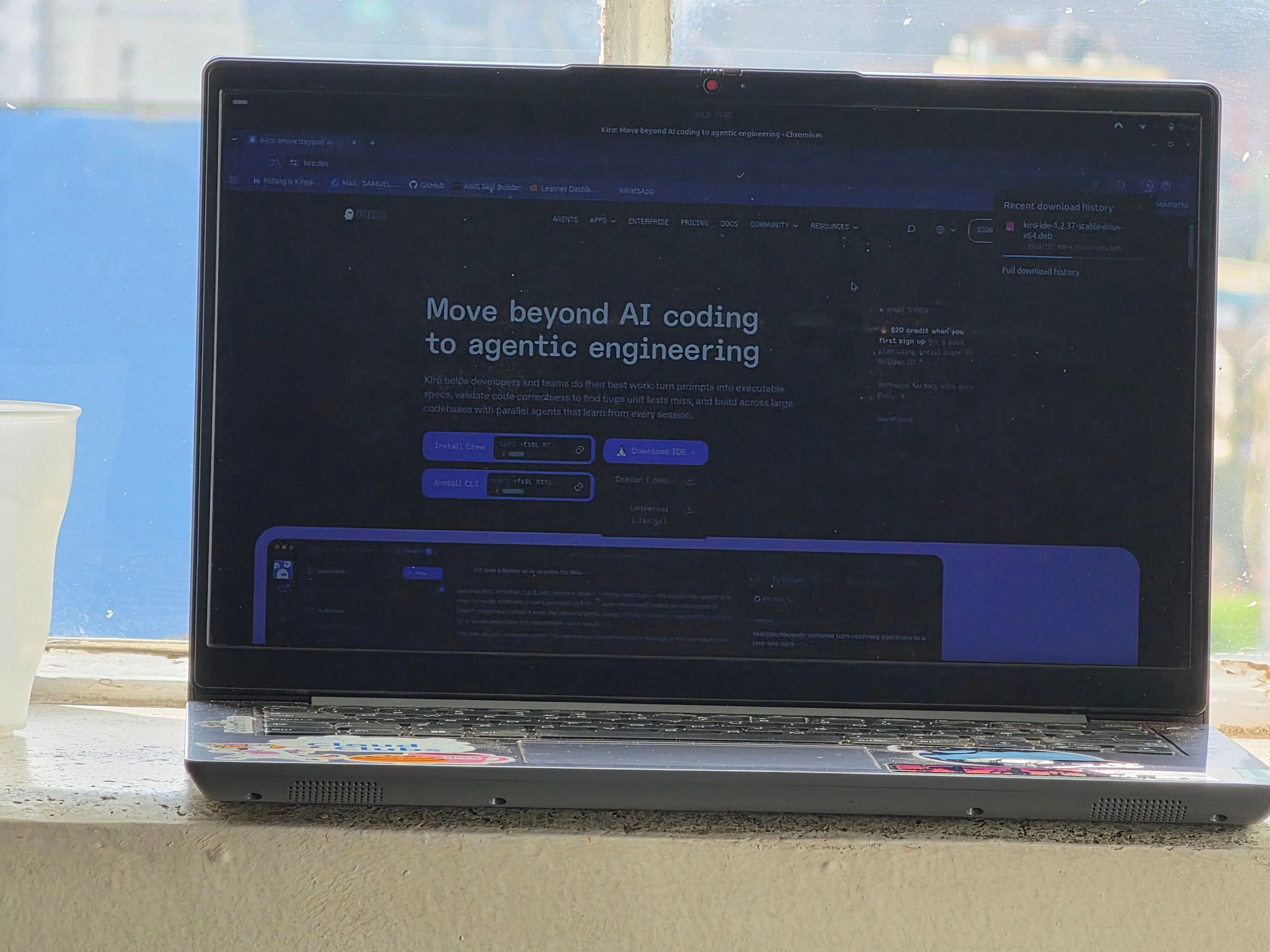
The question that still lingers is: Will Kiro be the solution to move us from AI Coding to Agentic Engineering?
Let's continue to build, break and deploy and most importantly ship to users!
See you on the next one!
Enjoyed reading this content? Let the author know!
Your likes, comments, shares, and saves help creators reach more builders.

Loading recommendations
Loading article