Building BillGuard: AI-Powered Electricity Bill Auditing with AWS
Introduction
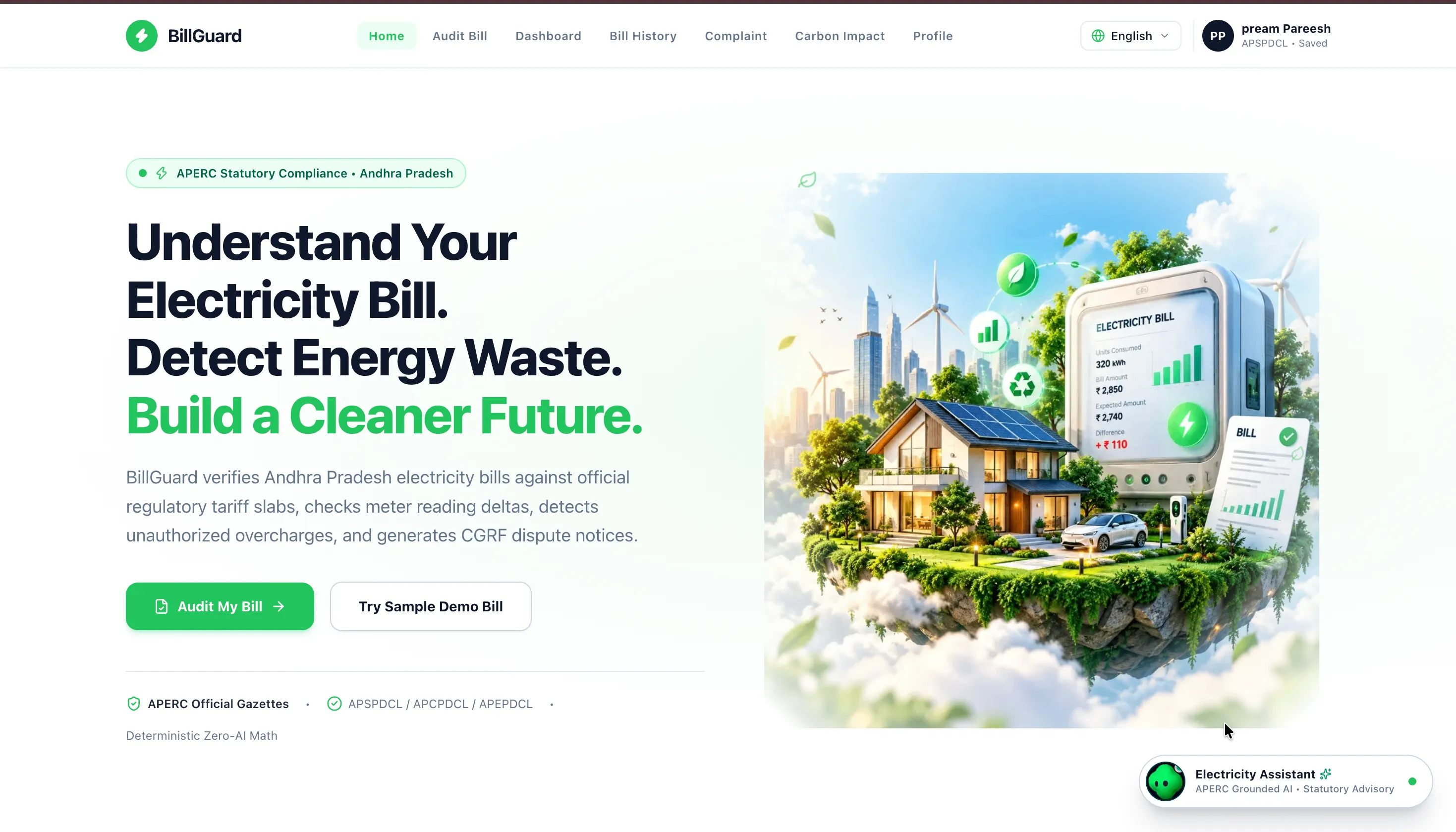
Electricity bills can be confusing for consumers. Understanding tariff slabs, checking charges, and identifying possible billing discrepancies can be difficult. This inspired us to build BillGuard, an AI-powered platform that aims to make electricity billing more transparent and accessible.
The Problem
Consumers may struggle to verify whether their electricity bills match the applicable tariff rules. When a discrepancy appears, preparing a complaint can also be challenging. BillGuard aims to simplify these steps through automated bill analysis and clear explanations.
Our Solution: BillGuard
BillGuard allows users to upload electricity bills and extract relevant information using OCR. Its tariff-based auditing engine calculates expected charges using configured tariff rules and compares them with the actual billed amount.
The platform also provides an AI-powered electricity assistant for billing-related questions and a complaint-generation feature to help users prepare complaint drafts when potential discrepancies are detected.
How We Used AWS
We deployed BillGuard using several AWS services:
- AWS Amplify: Hosts our Next.js frontend.
- AWS Elastic Beanstalk: Runs our FastAPI backend.
- Amazon S3: Supports electricity bill document storage.
- Amazon DynamoDB: Stores audit records and related data.
The frontend communicates with the backend through a Next.js API proxy. This architecture allows the deployed application to connect its user interface to backend services.
Technology Stack
Our frontend uses Next.js, TypeScript, and Tailwind CSS. The backend is built with Python and FastAPI. Google Gemini supports AI-assisted electricity explanations, while our tariff engine performs configured tariff-based calculations.
Challenges and Learnings
One of our main challenges was connecting an HTTPS-hosted frontend to a backend hosted on a different endpoint. We addressed this by implementing a server-side API proxy. We also learned how to deploy a frontend and backend separately and integrate AWS storage and database services into a working application.
Future Scope
We aim to improve tariff coverage, support more electricity bill formats, enhance multilingual assistance, and make the auditing process even more accessible to consumers.
Conclusion
BillGuard aims to help consumers understand their electricity bills, identify potential discrepancies, and prepare complaints more easily. By combining tariff-based calculations, AI assistance, and AWS cloud services, we are working toward a more transparent electricity billing experience.
Project: BillGuard — AI-Powered Electricity Bill Auditing and Discrepancy Detection
Hackathon: WeMakeDevs Environmental Hacks




Loading article