
THE CALL FOR CLEAN STREETS
Spot a garbage pile in your locality? Don’t ignore it just report it! Help identify waste hotspots, bring attention to unclean surroundings, and take a step towards cleaner streets and a healthier community. Every report counts, because a cleaner neighborhood starts with awareness and action.

Waste in a locality is easy to ignore until it blocks a drain, smells for days, or piles up beside the road. Collection trucks often drive long routes without a clear picture of where the worst piles are. At the same time, wet and food waste that could produce biogas is treated as ordinary trash.
ReVive is built around a simple idea people already know: when the truck comes, take the waste out of the house. On the platform that becomes: report the pile at home, guide the truck on the map, and turn wet waste into energy.
Live site: revive-env-1.eba-vdkuuzq6.ap-southeast-2.elasticbeanstalk.com/
GitHub: https://github.com/Pragati5-DEBUG/ReVive
In many neighborhoods, piles go unreported because there is no easy way to flag them. Cleaners do not always know which spots need attention first. Trucks burn extra diesel on unplanned routes. Wet waste that could feed a biogas plant is dumped or mixed with plastic. ReVive treats waste as both a management problem and an energy opportunity.
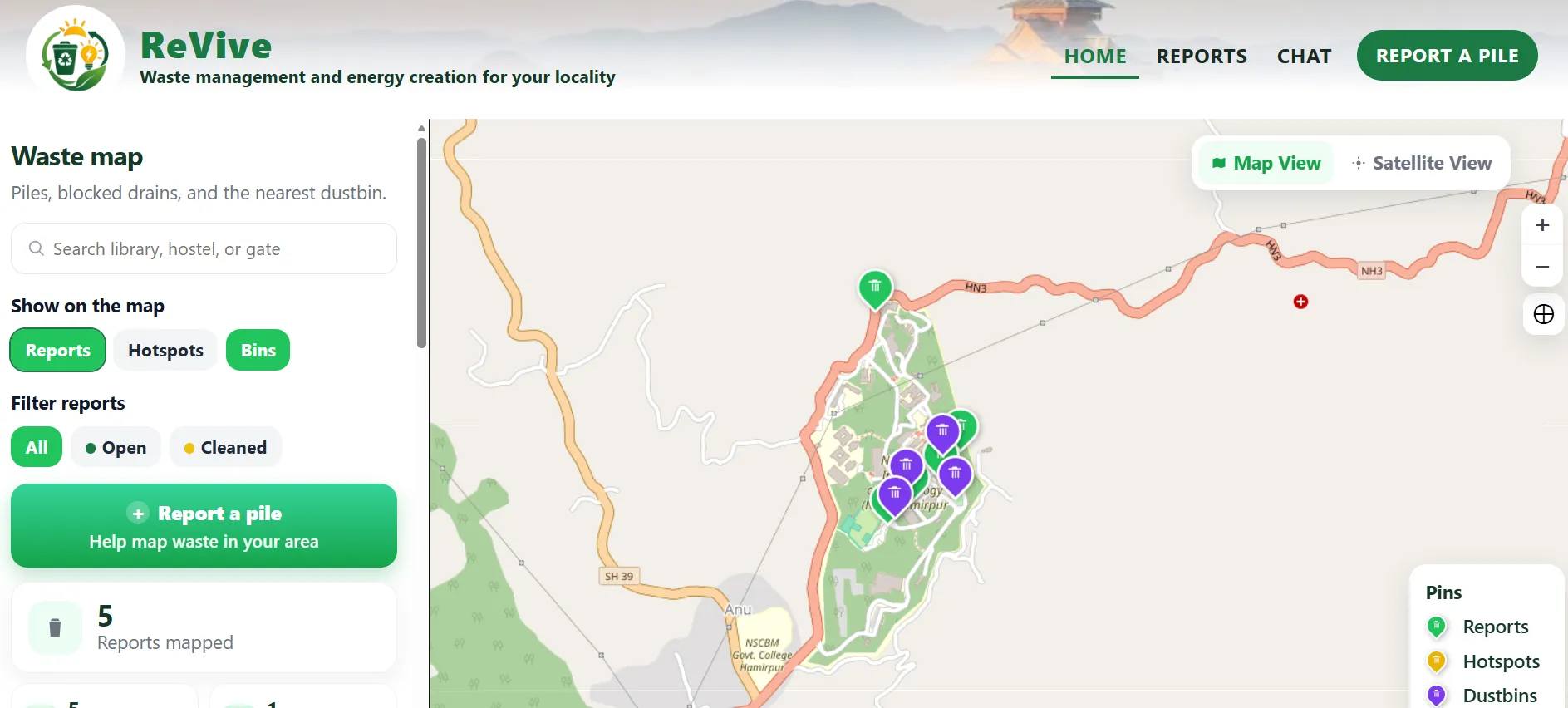
Anyone in the locality can open the site, take or upload a photo, add a short note, and share their location. The report appears on the shared map. The home map shows reports as green pins, hotspots where problems cluster, and dustbins so people know where trash should go. Users can search places, filter open or cleaned reports, and open a pin to see details.
The chat section answers questions about the waste on the map. Residents or workers can ask about piles and places by name, attach a photo and get a rough biogas estimate for wet or food waste, say “guide my way” to draw a red collection path across piles, or say “from A to B” to draw a direct route between two places. A short demo video explains the chat when you open it; Got it continues into the conversation. Reports can also be marked cleaned so the map stays useful over time.
ReVive is for residents who want to report overflow or dumped waste, cleaners and municipal workers who need a clear pickup picture, and local groups working on cleanup and clean energy.
On the waste-management side, reporting, mapping, filtering, and routing turn scattered complaints into a shared view. Shorter, clearer routes mean less diesel for collection vehicles. On the energy side, wet and food waste can go to biogas instead of drains or mixed dumps. Chat can look at a pile photo and estimate biogas as a rough figure from the picture, so cleanup decisions can also consider energy value. One report can support both: clear the mess, and see what that organic waste could produce.Waste in a locality is easy to ignore until it blocks a drain, smells for days, or piles up beside the road. Collection trucks often drive long routes without a clear picture of where the worst piles are. At the same time, wet and food waste that could produce biogas is treated as ordinary trash.
ReVive is built around a simple idea people already know: when the truck comes, take the waste out of the house. On the platform that becomes: report the pile at home, guide the truck on the map, and turn wet waste into energy.
Live site: revive-env-1.eba-vdkuuzq6.ap-southeast-2.elasticbeanstalk.com/
GitHub: https://github.com/Pragati5-DEBUG/ReVive
In many neighborhoods, piles go unreported because there is no easy way to flag them. Cleaners do not always know which spots need attention first. Trucks burn extra diesel on unplanned routes. Wet waste that could feed a biogas plant is dumped or mixed with plastic. ReVive treats waste as both a management problem and an energy opportunity.
Anyone in the locality can open the site, take or upload a photo, add a short note, and share their location. The report appears on the shared map. The home map shows reports as green pins, hotspots where problems cluster, and dustbins so people know where trash should go. Users can search places, filter open or cleaned reports, and open a pin to see details.
The chat section answers questions about the waste on the map. Residents or workers can ask about piles and places by name, attach a photo and get a rough biogas estimate for wet or food waste, say “guide my way” to draw a red collection path across piles, or say “from A to B” to draw a direct route between two places. A short demo video explains the chat when you open it; Got it continues into the conversation. Reports can also be marked cleaned so the map stays useful over time.
ReVive is for residents who want to report overflow or dumped waste, cleaners and municipal workers who need a clear pickup picture, and local groups working on cleanup and clean energy.
On the waste-management side, reporting, mapping, filtering, and routing turn scattered complaints into a shared view. Shorter, clearer routes mean less diesel for collection vehicles. On the energy side, wet and food waste can go to biogas instead of drains or mixed dumps. Chat can look at a pile photo and estimate biogas as a rough figure from the picture, so cleanup decisions can also consider energy value. One report can support both: clear the mess, and see what that organic waste could produce.
Enjoyed reading this content? Let the author know!
Your likes, comments, shares, and saves help creators reach more builders.

Loading recommendations
Loading article