
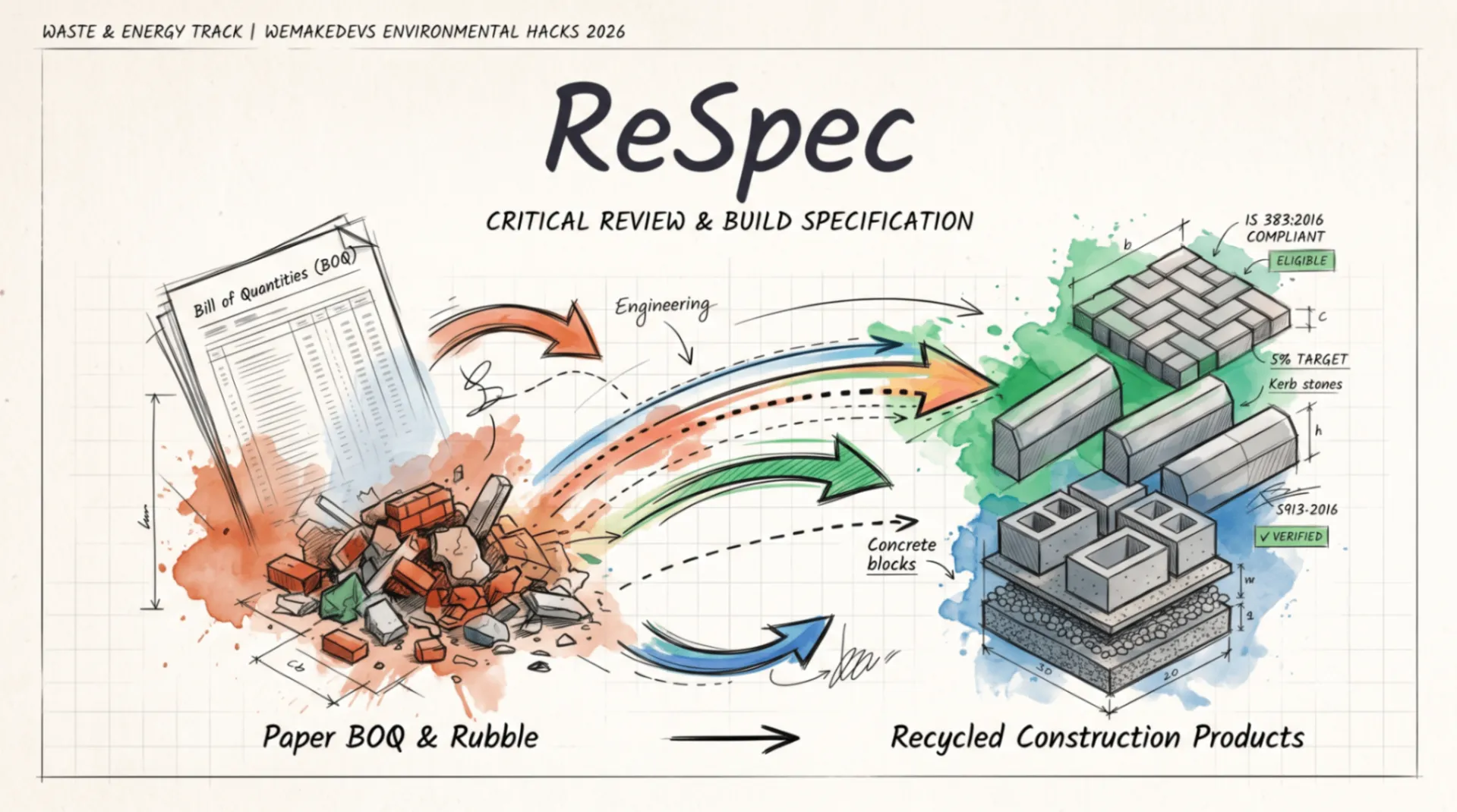
What if construction waste could become an opportunity?
I started building ReSpec with a simple thought - How can we make recycled material choices in construction more transparent and easier to understand?

When we talk about sustainability, we often think about renewable energy, reducing plastic, or planting trees. But have we thought about the materials we use to build our cities and the waste generated along the way?
As a Delhiite, I have seen the constant construction, the dust, and piles of debris we call Malba. But it never occurred to me what a large amount of waste we generate each day.
According to the statistics, Delhi generates around 6,053.8 tonnes of construction and demolition waste every day. At the same time, recycling plants can turn this debris into useful materials like pavers, tiles, and kerbstones. Yet only 14% of recycled construction products were utilised in 2024–25. So why aren't we using more of them?
That question led our team to build ReSpec during WeMakeDevs Environmental Hacks 2026 at DTU.
So, what does ReSpec do? What problem does ReSpec address?
Imagine working on a construction project. You have a Bill of Quantities (BOQ), material specifications, quantities, and project requirements. Now, suppose you want to explore recycled materials as alternatives. Where do you begin? Which materials are suitable for a particular application? What conditions must they satisfy? How do you understand their contribution towards a project's applicable recycled material target? And once a material is planned or ordered, how do you know whether it was actually delivered?
These questions involve more than simply finding an alternative material. I realised the challenge isn't simply recycling construction waste. It's helping construction teams understand where recycled materials can actually be used, whether they meet the relevant requirements, and how their use can be tracked.
So, what exactly is ReSpec?
ReSpec is a construction technology platform designed to connect the different stages of making informed recycled material decisions. Instead of treating the Bill of Quantities, material recommendations, compliance calculations, and delivery records as separate tasks, ReSpec brings them together in one structured workflow.
ELIGIBLE → PLANNED → ORDERED → VERIFIED
One principle matters throughout the platform
"A recommendation needs a reason, a calculation needs an explanation, and a verified delivery needs evidence."
What is my role in ReSpec?
As the frontend engineer, I've been working on turning this complex process into an experience that feels clear and easy to navigate. From project creation and BOQ review to recommendations, compliance calculations, and delivery tracking, my focus is on making technical information understandable and useful.
I've also worked on making the experience feel more approachable. A platform dealing with construction data and technical rules should not make users struggle to understand what they need to do next.
What comes next?
ReSpec is a step towards making recycled material workflows more structured and transparent.
Imagine a developer planning a recreational park who wants to use recycled materials for its pathways, paving, and kerbstones. Where should they start, and how do they know which materials are actually suitable?
That’s where I see ReSpec making a difference.
As a developer, they could use ReSpec to review their BOQ, explore potential recycled alternatives, check relevant requirements, and understand how those materials could contribute to their project. From there, they could plan procurement and track deliveries with supporting evidence.
My vision for ReSpec is to bridge the gap between wanting to build sustainably and knowing how to make it happen.
Technology alone cannot clean up Delhi. But by removing the friction between a strict environmental law and the engineers trying to follow it, we believe ReSpec can help turn paper compliance into a paved reality.
By bringing my Blog to an end i want to finish by telling why we named our project ReSpec.
We named it ReSpec because it is fundamentally about respect. Respecting the safety limits of civil engineering. Respecting the time of the procurement teams who actually have to buy these materials. And most importantly, respecting our city by finding a practical, technological way to clear the malba off our streets and put it back into our foundations where it belongs.
#ReSpec #SustainableConstruction #CircularEconomy #ConstructionTech #WeMakeDevs
Enjoyed reading this content? Let the author know!
Your likes, comments, shares, and saves help creators reach more builders.

Loading recommendations
Loading article