
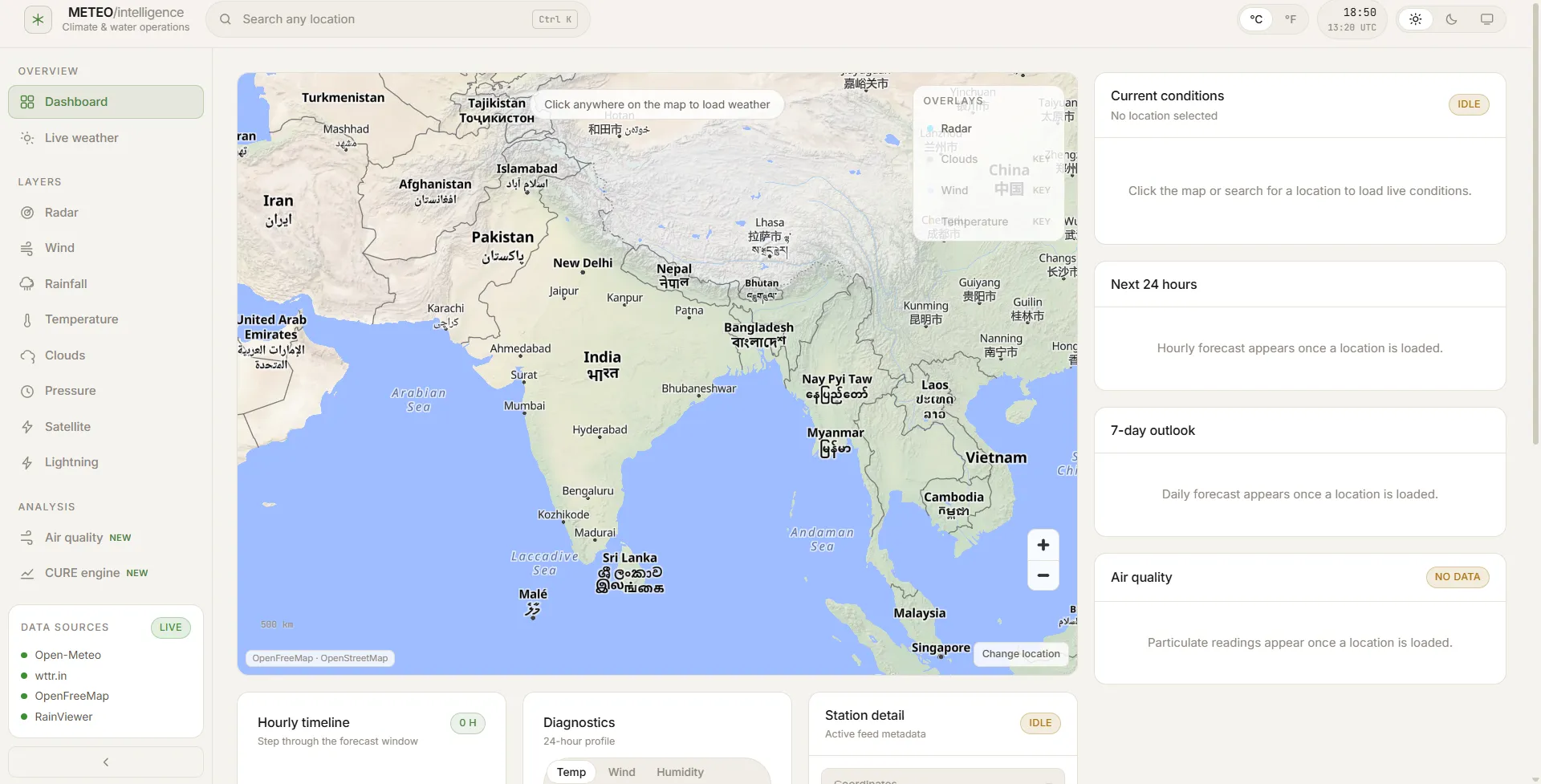
Building CURE: A Climate-Aware Utility Risk Engine
Discover how I built CURE, a climate-aware utility monitoring platform that combines weather insights, consumption tracking, demand prediction, and risk indicators to support smarter resource management.
Developer
Building CURE: A Climate-Aware Utility Risk Engine
Introduction
Climate variability affects how we manage essential resources such as water and energy. Weather changes, heat exposure, and consumption patterns can make utility planning more challenging for households, campuses, and facility managers.
I built CURE (Climate & Utility Risk Engine) to explore how climate information and utility monitoring can be brought together in one application to help people better understand potential risks and resource usage.
The Problem
Utility consumption is often monitored separately from environmental conditions. Without a combined view, it can be difficult to understand how weather conditions may affect demand or identify situations that deserve attention.
CURE aims to provide a more unified view of weather, consumption, and risk indicators so that users can make better-informed resource-management decisions.
What Is CURE?
CURE is a climate-aware utility monitoring platform that brings together:
- Weather insights: Access weather information relevant to environmental conditions.
- Utility monitoring: Explore consumption information and usage patterns.
- Demand prediction: Estimate potential demand using the available data.
- Heat-risk indicators: Highlight heat-related risks.
- Dashboard experience: Present relevant information in one place.
- Risk analysis: Turn available inputs into indicators that are easier to understand.
The goal is to make environmental and utility information more actionable rather than leaving users to interpret disconnected data sources.
Technology Stack and Architecture
CURE uses a frontend-and-backend architecture.
Frontend
The frontend is built with React and Vite. It provides the dashboard through which users explore utility information and risk indicators.
Backend
The backend uses Python and FastAPI. It exposes API endpoints and processes data used by the application.
Data and risk analysis
The backend includes weather-related functionality and utility risk-analysis logic. These components work together to produce insights from the available inputs.
At a high level, the application follows this flow:
- The user opens the CURE dashboard.
- The frontend requests relevant information from the backend.
- The backend processes the available data and runs the applicable analysis.
- The frontend presents the returned information and risk indicators.
AWS Integration
Complete this section with the AWS service or AWS open-source tool you actually implemented.
For each tool or service, explain:
- Its name.
- The problem it solves in CURE.
- How you configured or integrated it.
- How the application uses it.
- What you tested and learned.
Include a short code example or screenshot if it helps explain the implementation.
I want the cloud architecture to support the application's real requirements, so any AWS integration should be based on a working implementation rather than a planned feature.
Challenges and Learning
Building CURE involved bringing together frontend development, backend APIs, data processing, and risk-analysis logic into a single application.
One important lesson was that displaying information is only part of building a useful tool. The application must also handle data availability, errors, and the interpretation of results carefully.
Working on the project helped me understand how frontend and backend components interact and how environmental data can be used to explore practical resource-management problems.
Future Improvements
Possible improvements include:
- Improving data validation and error handling.
- Evaluating demand predictions against real observations.
- Expanding utility monitoring and reporting.
- Making risk indicators easier to interpret.
- Integrating and testing appropriate AWS services for cloud capabilities.
Conclusion
CURE is my exploration of how software engineering and climate-aware analysis can support smarter utility management. By combining weather information, consumption patterns, and risk indicators, the project provides a foundation for more informed resource planning.
Building this project has been a valuable opportunity to develop my skills in full-stack development, backend APIs, data processing, and practical problem-solving.
Enjoyed reading this content? Let the author know!
Your likes, comments, shares, and saves help creators reach more builders.

Loading recommendations
Loading article