
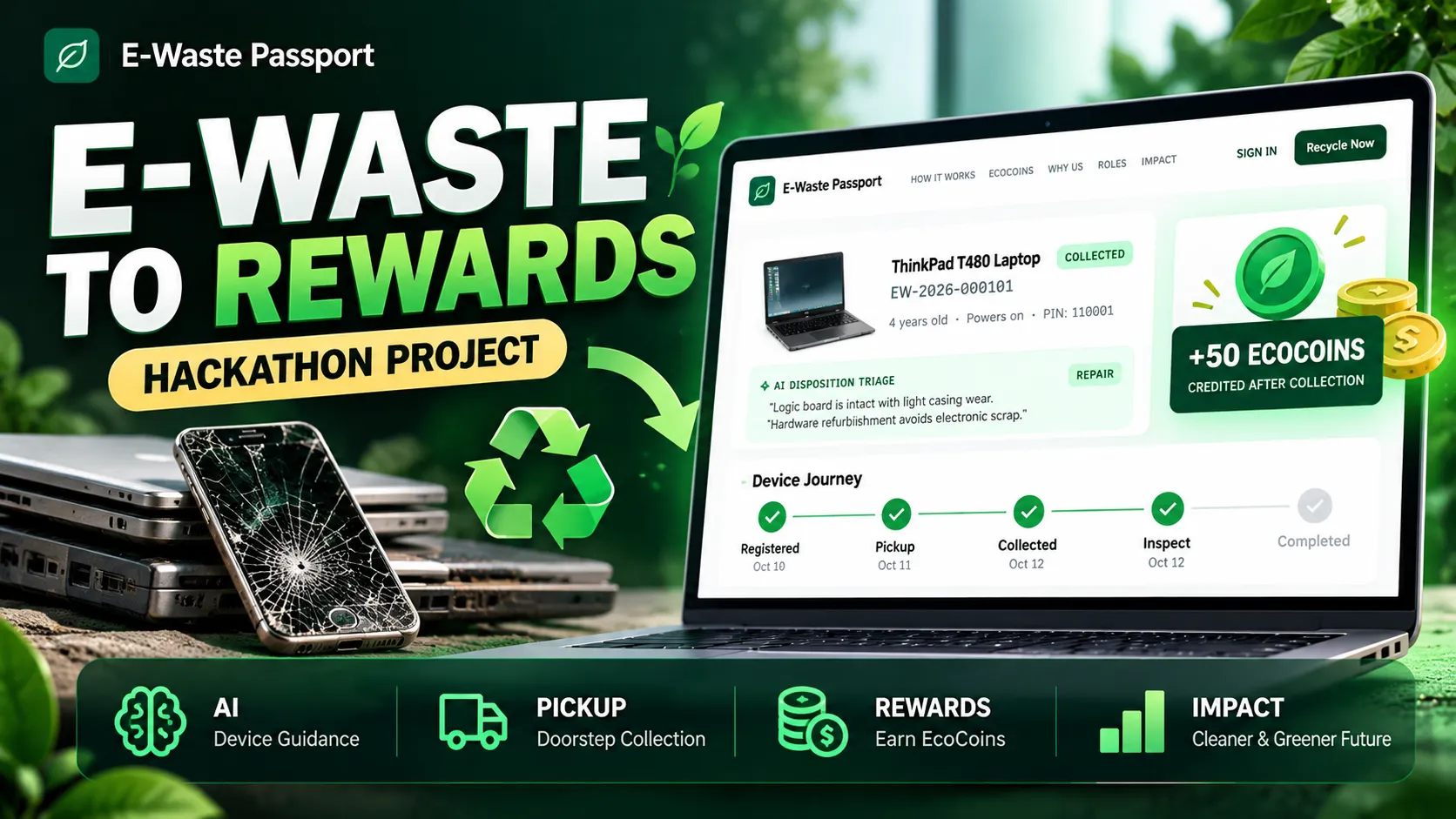
♻️ AI-Powered E-Waste Recycling & Rewards
Discover how E-Waste Passport aims to make electronic waste collection more transparent and rewarding through AI-assisted device guidance, digital passports, pickup tracking, and EcoCoins. Explore the project architecture, AWS integrations, and opportunities to improve responsible e-waste management.

Full Stack Developer | C++ & DSA | AI & Backend Development
E-Waste Passport: Turning Electronic Waste into Rewards with AI and AWS
Introduction
Electronic waste is one of the growing challenges of our digital world. Old smartphones, laptops, televisions, and other electronic devices often remain unused in homes or are discarded without a clear understanding of their next destination.
People may not know whether a device can be repaired, reused, resold, or recycled. Even after handing over a device, tracking what happens next can be difficult.
This inspired me to build E-Waste Passport, a platform designed to make electronic waste collection more transparent, convenient, and rewarding.
The idea is simple: every old electronic device gets a digital passport that helps track its journey from the citizen to its recorded final outcome.
What Is E-Waste Passport?
E-Waste Passport connects three primary users: citizens, collectors, and administrators.
Citizens can register an unwanted electronic device, upload its photograph, provide device details and pickup information, and track the collection request.
Collectors can manage authorized pickup requests, collect devices, inspect their condition, and record the final outcome.
Administrators can monitor device statuses, collection activity, recorded outcomes, and aggregate environmental impact estimates.
By bringing these workflows together, the platform aims to improve visibility and accountability throughout the e-waste collection process.
How Does It Work?
1. Register a Device
A citizen logs in and submits information about an old electronic device, such as a laptop or smartphone. They upload a photograph, describe its condition, and provide the pickup address.
The platform creates a unique device passport ID that can be used to identify and track the device.
2. Get AI-Assisted Guidance
AI-assisted analysis can provide an initial suggestion about whether a device may be suitable for repair, reuse, resale, or recycling.
This recommendation is advisory, not a final certification. The authorized collector inspects the physical device and records its final outcome.
3. Collect and Track the Device
An authorized collector reviews available requests, accepts a pickup, and updates the collection status.
The device passport maintains a lifecycle timeline so the citizen can follow the process rather than losing visibility after handing over the device.
4. Earn EcoCoins
E-Waste Passport includes a rewards concept called EcoCoins.
Under the project's demonstration rules, eligible citizens receive coins after verified collection. The rewards interface can display a balance, transaction history, and simulated shopping coupons.
The goal is to encourage responsible disposal by making participation more engaging. Demonstration rewards are not the same as real merchant discounts or cash.
5. Monitor Outcomes
The admin dashboard provides an overview of device activity and recorded outcomes.
The project also calculates estimated material impact using completed device records and configured impact factors. Keeping these calculations transparent is important because environmental claims should be based on documented assumptions rather than unsupported numbers.
Technology Stack
The application uses a modern web architecture:
- React and Vite: Build and run the frontend interface.
- Tailwind CSS: Provide responsive styling.
- Node.js and Express: Handle backend APIs and application workflows.
- MongoDB and Mongoose: Store application records, including device and collection information.
- Amazon S3: Support private device image storage through presigned URLs.
- Amazon Bedrock: Support AI-assisted device analysis.
- Amazon Cognito: Provide an authentication option for managing user identities and roles.
The AWS services are intended to support secure storage, AI capabilities, and authentication. Live functionality depends on the required credentials, permissions, and environment configuration being available.
Why Does This Matter?
E-waste management is not only about collecting old electronics. It is also about helping people understand what to do with them and providing visibility into what happens after collection.
E-Waste Passport focuses on four principles:
- Convenience: Make it easier for citizens to submit old devices and request pickup.
- Traceability: Give each device a unique identity and lifecycle timeline.
- Responsible outcomes: Keep AI recommendations separate from the collector's final inspection.
- Engagement: Use a rewards concept to encourage participation in responsible e-waste collection.
For recycling organizations, a platform like this could provide a starting point for managing requests, monitoring collection workflows, and reviewing device outcomes.
Challenges and Future Improvements
Building the project highlighted the importance of reliable authentication, secure image handling, consistent status transitions, and accurate environmental calculations.
Future improvements could include integration with verified recycling organizations, real reward partnerships, better pickup scheduling, multilingual support, and validated environmental impact methodologies.
Production deployment would also require thoroughly tested authentication, operational monitoring, privacy controls, and reliable integrations with the relevant service providers.
Conclusion
E-Waste Passport explores how AI-assisted guidance, digital device passports, collection tracking, and rewards can work together to improve the e-waste management experience.
The long-term vision is to make responsible electronic disposal easier for citizens while giving collection organizations better visibility into the process.
Every old device has a next destination. E-Waste Passport aims to help make that journey visible.
Enjoyed reading this content? Let the author know!
Your likes, comments, shares, and saves help creators reach more builders.

Loading recommendations
Loading article