
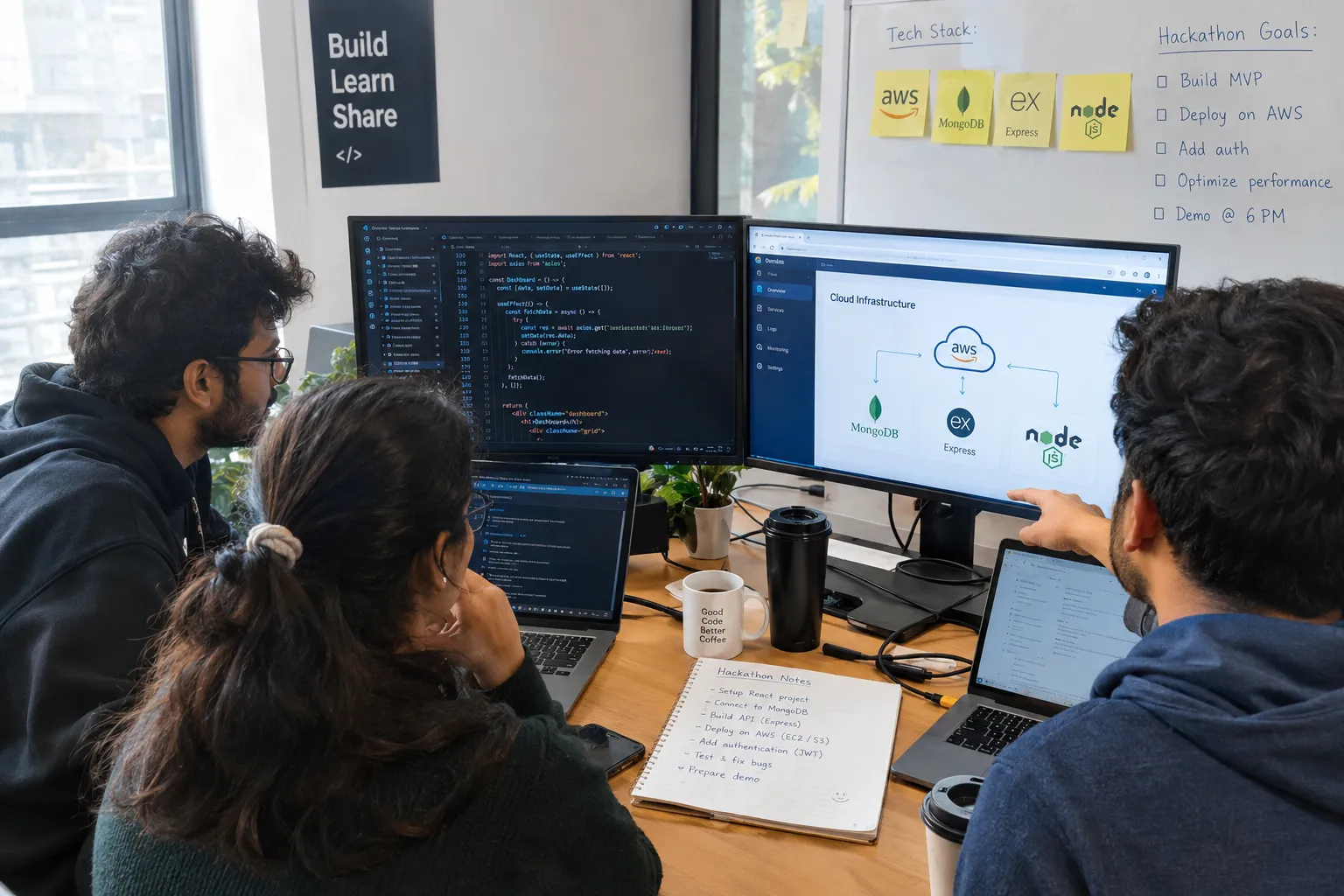
Hackathon Copilot: Building a Smart Real-Time Assistant for Hackathon Teams, Powered by AWS
Hackathon Copilot is an AI-powered assistant that provides real-time guidance to hackathon teams at every stage, from idea generation to development. Built using AWS services, this project aims to save time and boost productivity for participating teams

In this article, I want to share my journey of building Hackathon Copilot — an AI-powered assistant designed to help hackathon teams move faster and smarter, from ideation all the way to final deployment, leveraging the power of AWS.
________________________________________________
________________________________________________
Hackathons are not just about writing code — they're about solving a problem under pressure, within a very limited time frame, while also trying to make something that actually stands out. After my first hackathon experience didn't go as planned, I realized that most teams struggle not because they lack skills, but because they lack direction and structured support once the clock starts ticking. That's exactly the gap Hackathon Copilot is trying to fill — acting like a smart companion that helps teams stay organized, make faster decisions, and avoid getting stuck during critical moments of the event.
________________________________________________
________________________________________________
What excites me most about this project is how it brings together multiple technologies to solve a very real, relatable problem. Instead of just building another generic tool, I wanted to create something rooted in my own experience as a participant — something I personally wished existed during my own hackathon journey. Using AWS alongside the MERN stack gives this project the scalability and reliability it needs to actually be useful in a live, fast-paced hackathon environment, rather than just existing as a theoretical idea
________________________________________________
________________________________________________
What I learned while working on this: Got a much deeper understanding of how to structure a full-stack project end-to-end using the MERN stack. Learned how AWS services can be integrated into a project to make it more robust and production-ready. Realized the importance of planning an idea thoroughly before diving into development, especially after my previous project didn't make it through a hackathon. Improved my ability to think about user experience — building something that's genuinely useful under time pressure, not just technically impressive.
________________________________________________
________________________________________________
Enjoyed reading this content? Let the author know!
Your likes, comments, shares, and saves help creators reach more builders.

Loading recommendations
Loading article