

My Takeaways from AWS for Software & Financial Services Companies Day 2026
My key takeaways on Agentic AI, trusted data, AWS Transform, Kiro, Amazon Bedrock AgentCore, and Kubernetes from an AWS event in Ho Chi Minh City.
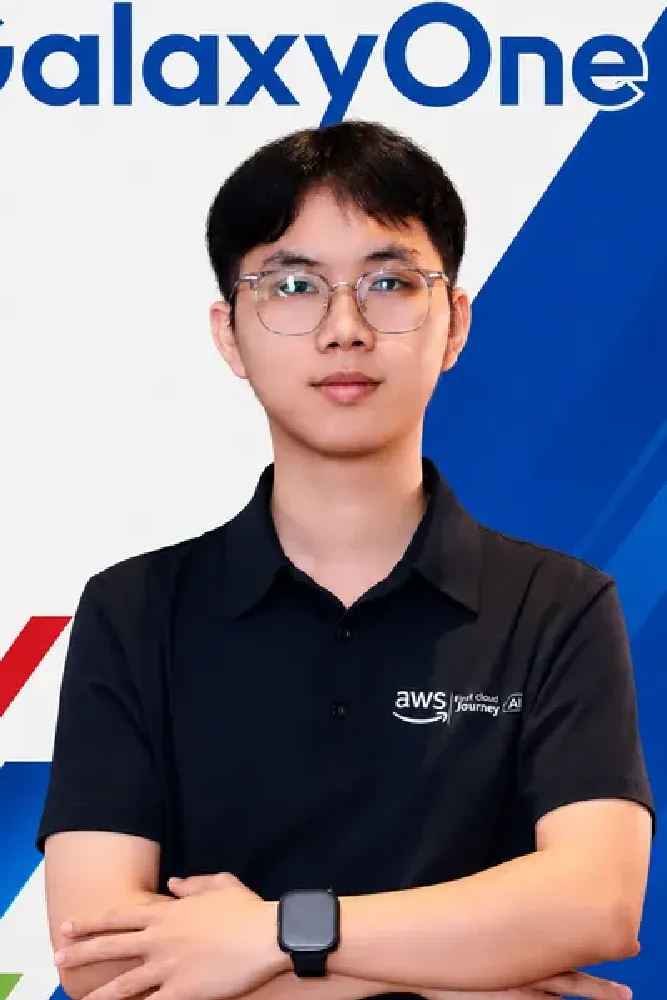
On October 8, 2026, I had the opportunity to attend AWS for Software & Financial Services Companies Day at Sheraton Saigon Grand Opera in Ho Chi Minh City, Vietnam. 🇻🇳
It was a valuable opportunity to connect with the AWS community, learn from AWS Solutions Architects and industry professionals, and explore how organizations are bringing Agentic AI into real-world production environments.
The event covered several important topics, including production-ready AI agents, data engineering, application modernization, AI-assisted development, and Kubernetes operations.
I also participated in a hands-on workshop focused on building and deploying AI agents using Kiro and Amazon Bedrock AgentCore.
Here are the key lessons I took away from the event. 🚀
1. From Demo to Deployment: Building Production-Ready AI Agents
Speaker: Dzung Ha | AWS Solutions Architect
The first technical session explored one of the most important challenges in Agentic AI:
How do we move from a successful Proof of Concept (POC) to a reliable production system?
A working demonstration is only the starting point. Production environments require a much stronger engineering foundation.
Several important considerations stood out:
- Operational Excellence: Managing scalability, operational costs, and governance.
- Observability: Understanding agent behavior, monitoring execution, and identifying issues.
- Optimization: Balancing cost, latency, performance, and engineering trade-offs.
- Data & Context: Improving data quality through RAG, grounding, and short-term and long-term memory.
- Reliability: Using deterministic code for operations that require predictable outcomes.
- Security: Applying appropriate security controls throughout the AI lifecycle.
One principle particularly resonated with me:
"You cannot control what you cannot observe."
From a Cloud and DevOps perspective, this is especially meaningful.
We already rely on logs, metrics, traces, and monitoring to understand traditional cloud applications. With AI agents, observability becomes even more important because agent execution introduces additional complexity.
The session also featured Katalon True Platform, highlighting the importance of independently validating AI-generated code and maintaining trustworthy software quality records.
My takeaway: Developing an AI agent is only the beginning. Running it reliably, securely, and efficiently in production requires a complete engineering approach.
2. Building High-Quality Data Products for AI Agents
Speaker: Binh Tran | AWS Solutions Architect
This session focused on a fundamental principle:
AI agents are only as reliable as the data they consume.
Even advanced AI models can produce inaccurate results when their underlying data lacks consistency, quality, or sufficient context.
One idea from my notes was particularly memorable:
A single incorrect fact can affect an entire AI workflow.
This highlights why data quality must be considered from the earliest stages of system design.
Some of the key concepts discussed included:
- Building trusted data products for AI agents
- Establishing clear data contracts
- Designing schemas that agents can understand
- Maintaining data context and traceability
- Implementing governance and validation
- Supporting real-time data integration
An important engineering principle was:
"Enforce the data contract where the data is produced."
Rather than addressing data quality issues only after information reaches downstream systems, teams should validate data as close to its source as possible.
Another useful framework I captured was:
Trusted → Contextual → Traceable → Governed → Operational
The session also explored Generative AI monitoring, including token consumption, resource usage, infrastructure complexity, and cost attribution.
Vanguard's AI journey was referenced as an enterprise example of these considerations.
My takeaway: Reliable AI starts with reliable data. Model capabilities are important, but trustworthy information is equally essential.
3. Migration at Scale with AWS Transform
Speaker: Taiki Dang | AWS Solutions Architect
Application modernization is an important part of cloud engineering, especially for organizations maintaining large and complex software systems.
This session introduced how AWS Transform uses agentic AI to support application modernization and accelerate engineering workflows.
Some of the capabilities and use cases discussed included:
- Java upgrades and .NET modernization
- Windows modernization
- Framework migrations
- Custom transformations
- Technical debt reduction
- Continuous modernization
One particularly interesting point from my notes was the connection between Kiro and AWS Transform through MCP (Model Context Protocol).
This creates opportunities to connect AI-assisted development environments with modernization tools.
For engineering teams, the potential extends beyond code generation. AI can also assist with understanding existing applications, planning transformations, implementing changes, and supporting validation.
The broader modernization journey discussed during the event included:
Windows Modernization → Custom Transformations → Continuous Modernization
My takeaway: Modernization should not be viewed as a one-time migration activity. It is an ongoing process of improving applications, infrastructure, and engineering practices.
4. Hands-on Workshop: Building AI Agents with Kiro and Amazon Bedrock AgentCore
Speaker: Thi Nguyen | AWS Senior Solutions Architect
One of the highlights of the event was participating in Workshop B: Build & Deploy AI Agents on Amazon Bedrock AgentCore using Vibe Coding with Kiro.
The workshop explored how developers can move from an AI agent prototype toward deployment in a cloud environment.
Two technologies were central to the workshop.
Kiro: AI-Assisted Development
Kiro provides an AI-assisted development environment that supports developers throughout the software development process.
It helps connect ideas, implementation tasks, and development workflows while allowing developers to review and guide the process.
Amazon Bedrock AgentCore: Operating AI Agents
Amazon Bedrock AgentCore provides capabilities for deploying and operating AI agents in cloud environments.
The workshop connected these technologies through a practical development and deployment workflow.
What I found valuable was the opportunity to explore how AI-assisted development fits into the broader process of operating AI workloads.
From a DevOps perspective, this raises important considerations around:
- Deployment workflows
- Infrastructure management
- Observability and monitoring
- Security and access control
- Reliability and operational efficiency
My takeaway: Building an intelligent agent is important, but understanding how to deploy, manage, and operate it is what brings AI engineering closer to real-world applications.
5. Customer Spotlight: AI-Assisted Remediation in Kubernetes
Speaker: Bui Hoang Viet | DevOps Engineer, Kyanon Digital
Another session that caught my attention was the customer spotlight on managing the impact of LLM-assisted remediation in Kubernetes environments.
The session was titled "Beyond Single-YAML: Taming the Blast Radius of LLM Remediation in Kubernetes."
This topic was particularly relevant to my interests in Cloud Engineering, DevOps, Kubernetes, and AI automation.
Kubernetes environments often involve multiple interconnected workloads, configurations, and infrastructure components.
When AI becomes part of operational remediation workflows, engineers need to carefully consider how proposed changes may affect the wider system.
The session encouraged me to think more deeply about several questions:
- How can we define clear boundaries for AI-generated changes?
- How should proposed remediation actions be reviewed and validated?
- When should human approval be required?
- How can observability help teams understand the impact of automated actions?
- How can engineers design safer and more predictable automation workflows?
These are important areas I want to explore further as AI-assisted operations continue to evolve.
My takeaway: Effective automation should improve system reliability while keeping operational changes controlled, transparent, and verifiable.
6. My Biggest Takeaways from the Event
Looking back at the sessions and workshop, I noticed several important ideas connecting the different topics.
Production readiness requires more than a working demo
Observability, security, reliability, governance, and cost optimization are essential when bringing AI systems into production.
Data quality directly influences AI reliability
Trustworthy, contextual, and traceable data provides the foundation for dependable AI applications.
AI is becoming part of the software engineering lifecycle
Technologies such as Kiro and AWS Transform demonstrate how AI can support development and modernization, while Amazon Bedrock AgentCore provides capabilities for operating AI agents in the cloud.
Automation requires clear engineering safeguards
As AI becomes more involved in infrastructure operations, validation, monitoring, and appropriate human oversight remain important.
For me, these lessons reinforce an important idea:
AI can help engineers work more effectively, but strong engineering principles remain essential.
7. What's Next?
After attending this event, I'm even more motivated to explore the intersection of Cloud Engineering, DevOps, and Agentic AI.
Here are some areas I plan to continue learning and experimenting with:
- Building AI agents using Kiro and Amazon Bedrock AgentCore
- Improving observability and cost monitoring for AI workloads
- Exploring AI-assisted troubleshooting in Kubernetes
- Understanding how AI can support application modernization
- Designing reliable automation workflows with validation and human oversight
For me, attending AWS events is not just about discovering new services.
It is about learning from experienced builders, understanding real engineering challenges, and finding practical ways to apply new knowledge.
A big thank you to the AWS team, Solutions Architects, guest speakers, and everyone involved for organizing this event and sharing valuable technical insights.
It was a great opportunity to learn, explore new technologies, and connect with the AWS community.
Keep learning. Keep building. Keep sharing. 🚀
#AWS #AWSBuilderCenter #AgenticAI #AmazonBedrock #AgentCore #Kiro #AWSTransform #DevOps #CloudEngineering #Kubernetes
Enjoyed reading this content? Let the author know!
Your likes, comments, shares, and saves help creators reach more builders.

Loading recommendations
Loading article