
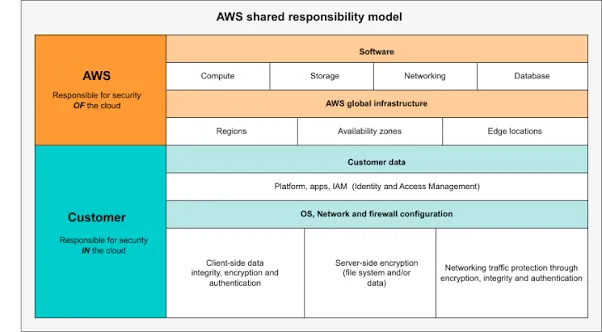
AWS shared responsibility model
Putting my understanding of the AWS shared responsibility model, where I will try to explain about what it is ?, how it works ?, why it is useful ?, and last but not the least where it's useful.

When we start learning cloud computing, one of the most important concept we come across and important to understand is the AWS Shared Responsibility Model.
In simple terms, AWS is responsible for security of the cloud, while customers are responsible for security in the cloud.
AWS manages the underlying infrastructure, including physical data centers, hardware, networking, and the foundational services that run AWS Cloud. Customers, however, are responsible for securing their applications, data, access permissions, and configurations depending on the AWS service they use.
For example, when using Amazon EC2, customers are responsible for tasks such as configuring the operating system, managing applications, controlling user access, and protecting their data. With more managed services, AWS takes responsibility for more of the underlying infrastructure, but customers still need to configure the service securely.
This model highlights an important principle of cloud computing: using a cloud provider does not automatically make an application secure.
As a learner, I find the Shared Responsibility Model particularly useful because it provides a clear way to understand what needs to be secured, who is responsible for it, and how security changes depending on the AWS service being used.
Understanding this concept is a strong foundation for designing secure and reliable cloud applications.
Enjoyed reading this content? Let the author know!
Your likes, comments, shares, and saves help creators reach more builders.

Loading recommendations
Loading article