
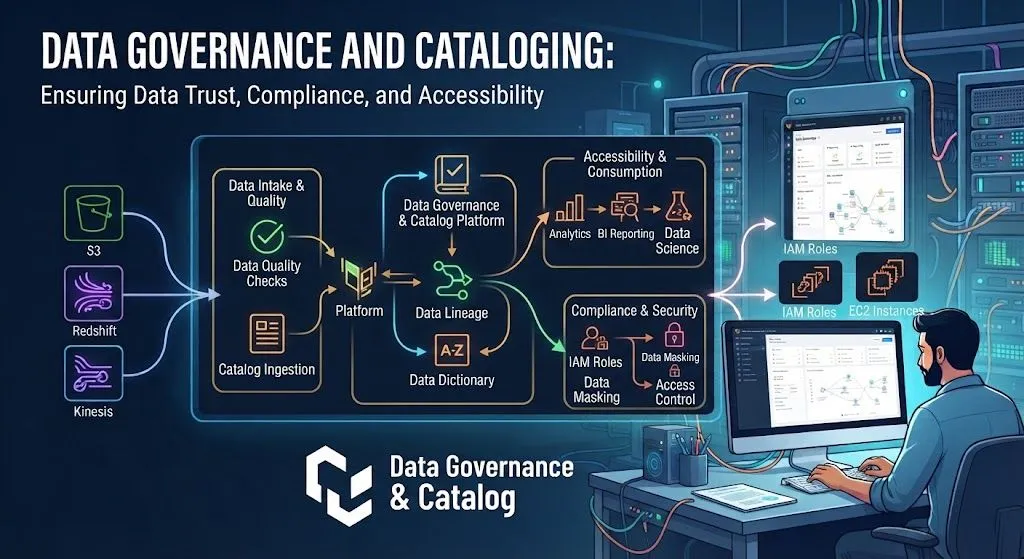
Data Governance and Cataloging: Why Your Pipeline Needs Both
An introduction to data governance and cataloging — and why they matter as much as the pipeline itself.

What Is Data Governance?
Data governance is the set of policies and processes that ensure data is accurate, secure, consistent, and used appropriately across an organization.
What Is a Data Catalog?
A data catalog is a centralized inventory of an organization's data assets — showing what data exists, where it lives, who owns it, and what it means (like the AWS Glue Data Catalog).
Why This Matters in Practice
As pipelines grow, it becomes easy to lose track of:
- Which tables are actually trustworthy vs. deprecated
- Who owns a given dataset
- Whether a field contains sensitive information (PII)
Without governance, teams end up duplicating pipelines or making decisions on outdated/incorrect data.
Key Components of Good Data Governance
- Data Lineage: Tracking where data came from and how it was transformed
- Access Control: Ensuring only authorized users/roles can access sensitive data
- Data Quality Rules: Defined standards for what "valid" data looks like
- Ownership: Clear accountability for each dataset
How AWS Supports This
- AWS Glue Data Catalog: Central metadata repository
- AWS Lake Formation: Fine-grained access control for data lakes
- dbt Documentation/Lineage: Tracks transformation logic and dependencies
Final Thoughts
A technically excellent pipeline is still risky if nobody can tell what the data means, where it came from, or who's responsible for it. Governance and cataloging aren't bureaucracy — they're what makes data trustworthy at scale.
Enjoyed reading this content? Let the author know!
Your likes, comments, shares, and saves help creators reach more builders.

Loading recommendations
Loading article