
AWS Sharpens EC2 for Two Extremes: Massive AI Training and Smarter Capacity Control
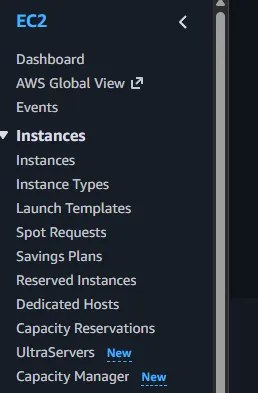
AWS has quietly filled two gaps in EC2 that Cloud and DevOps teams feel every day. On one end, AI models have outgrown single servers. On the other, EC2 footprints have outgrown spreadsheets and manual reservation tracking. The answers are EC2 UltraServers and EC2 Capacity Manager.

UltraServers: When One Instance Is Not Enough
Modern frontier models need dozens of accelerators acting like one machine, with shared high-speed memory and near-instant communication between chips. A cluster of independent GPU instances linked only by standard networking creates bottlenecks.
UltraServers change the architecture. AWS wires multiple EC2 hosts together with a dedicated accelerator fabric, so you can treat a group of systems as a single large node. That gives you access to far more accelerators, memory, and bandwidth in one place than any standalone instance offers.
In practice this means:
- Training of very large dense and mixture-of-experts models finishes faster because model-parallel communication does not stall.
- Real-time inference on huge models gets lower latency, which matters for copilots, agents, and video generation.
- Scale-out is still possible. Put UltraServers inside an EC2 UltraCluster with EFA networking and you can grow to tens of thousands of GPUs on a petabit-scale fabric.
AWS now offers this pattern in two flavors: its own Trainium chips — Trn2 with 64 chips per UltraServer, Trn3 with up to 144 chips and around 362 FP8 petaflops — and NVIDIA Blackwell systems — P6e-GB200 with up to 72 GPUs in a single NVLink domain, and P6e-GB300 with about 1.5x more memory and compute. You reserve them through Capacity Blocks for ML and run them with EKS, ECS, SageMaker HyperPod, Batch, or Slurm.
For platform teams, the takeaway is operational: you no longer have to engineer exotic interconnects yourself to run trillion-parameter work. You reserve an UltraServer shape and focus on data, checkpoints, and job scheduling.
Capacity Manager: One Place to See All Your EC2 Capacity
While UltraServers push performance up, Capacity Manager brings order to what you already run.
Most organizations spread On-Demand, Spot, and Capacity Reservations across many accounts and Regions. Until now that meant stitching together console screens, cost tools, and custom scripts to answer basic questions: Where are we reserved but idle? Where are we paying On-Demand when a reservation would fit? How often is Spot actually interrupted?
Capacity Manager, launched in October 2025, centralizes that in the EC2 console:
- One dashboard for On-Demand, Spot, and reservations, refreshed hourly, with up to 90 days of history.
- Organization-wide aggregation. Enable it in one Region, connect AWS Organizations, and it pulls in data from all accounts and Regions.
- More than 30 metrics covering usage, unused capacity, utilization trends, and estimated cost.
- Slice by Region, instance family, AZ, account name, or your own tags like team or environment. EKS, Auto Scaling, and Karpenter identifiers are included automatically.
- New Spot health signals — total runs, interruption count, and interruption rate — to guide diversification.
- Export to S3 in CSV or Parquet and query via API or Athena for long-term planning.
It costs nothing extra to turn on.
For DevOps and FinOps, the workflow shift is real: enable, wait a few hours for backfill, then review optimization opportunities directly in the console instead of building one-off reports.
Enjoyed reading this content? Let the author know!
Your likes, comments, shares, and saves help creators reach more builders.

Loading recommendations
Loading article