
AI + IoT: When Physical Devices Start Making Decisions
IoT devices can sense the world, but AI can help them understand it. Explore how combining AI with IoT enables physical systems to detect situations, make decisions, and respond intelligently in real time.

The Internet of Things (IoT) has changed the way physical devices interact with the digital world. Sensors can measure temperature, motion, pressure, location, air quality, and many other conditions, while connected devices can send this information to software systems. But collecting data is only the first step. The real transformation happens when Artificial Intelligence (AI) is added to these devices. Instead of simply detecting what is happening, an AI-powered IoT system can analyze the information, recognize patterns, make decisions, and trigger actions automatically.
Think about a smart safety system in a factory. A traditional IoT system might detect a sudden increase in temperature and send an alert to a monitoring system. An AI-powered system can go further. It can combine temperature readings with smoke, motion, and historical sensor data to determine whether the situation is likely to be dangerous. If the system identifies a potential fire, it could immediately activate an alarm, notify workers, and trigger other safety mechanisms without waiting for a person to respond.
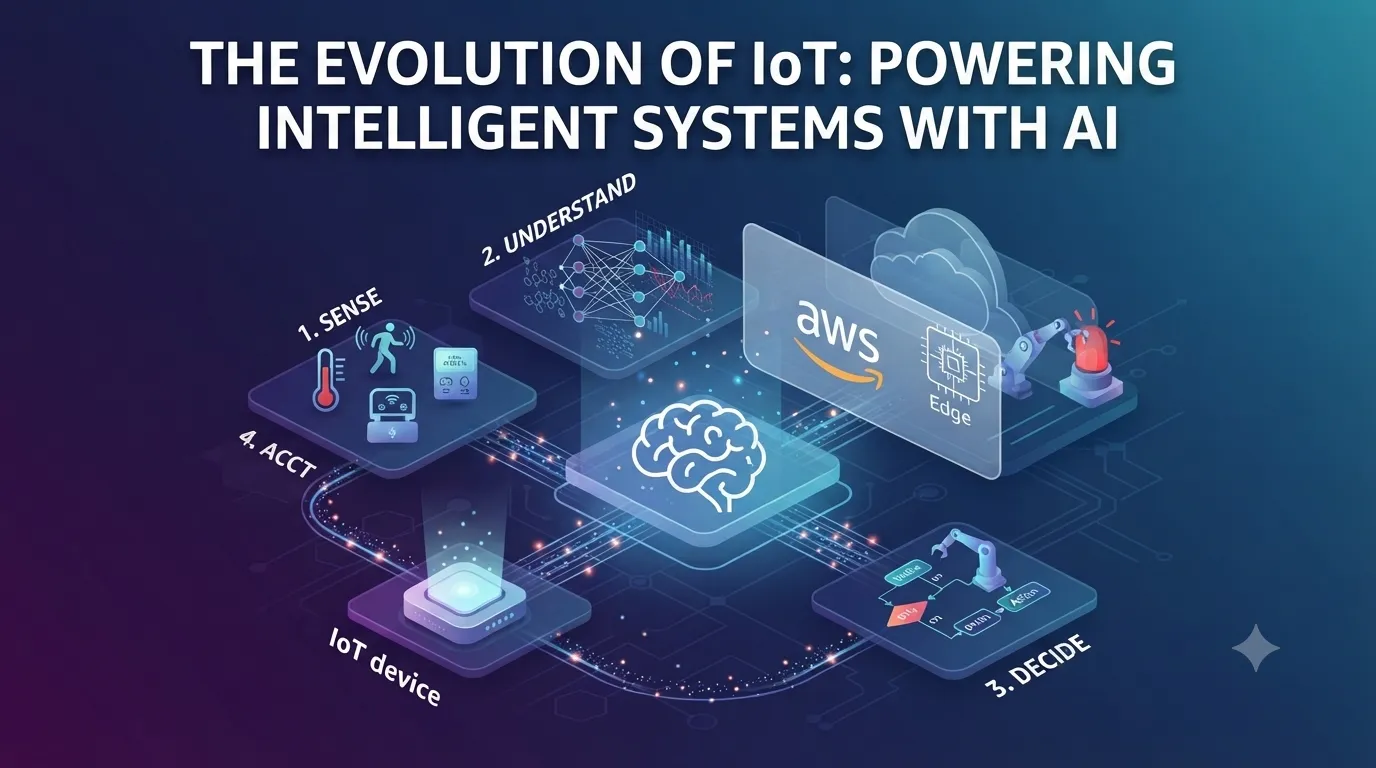
This combination of AI and IoT creates a continuous cycle: sense, understand, decide, and act. Sensors provide the system with information about the physical environment, AI analyzes that information, and connected devices carry out the appropriate response. This makes it possible to build systems that are not only connected but also capable of responding intelligently to changing conditions.
AI + IoT can be useful in many areas. Smart traffic systems can analyze vehicle movement and adjust signals dynamically. Agriculture systems can monitor soil and weather conditions to determine when crops need water. Industrial machines can detect unusual behavior and predict possible failures before they happen. In buildings, intelligent systems can analyze occupancy and environmental conditions to improve energy efficiency.
Cloud platforms can make these systems even more powerful by providing computing, storage, machine learning, and device-management capabilities. For example, AWS services can be used to collect IoT data, process it, store it, and apply machine learning models to identify useful patterns. Depending on the application, some decisions can also be made closer to the device using edge computing, reducing the need to send every piece of data to the cloud.
However, building intelligent physical systems also introduces challenges. Devices may have limited computing power, networks may not always be reliable, and large amounts of sensor data must be processed securely. Privacy and cybersecurity are also important because connected devices can become targets if they are not properly protected.
The future of IoT is therefore not simply about connecting more devices. It is about making those devices more capable of understanding their surroundings and responding appropriately. When AI gives intelligence to the data collected by IoT, physical systems can move from “I detected something” to “I understand what is happening, and I know what to do next.” This shift could become an important foundation for safer, smarter, and more autonomous systems.
Enjoyed reading this content? Let the author know!
Your likes, comments, shares, and saves help creators reach more builders.

Loading recommendations
Loading article