
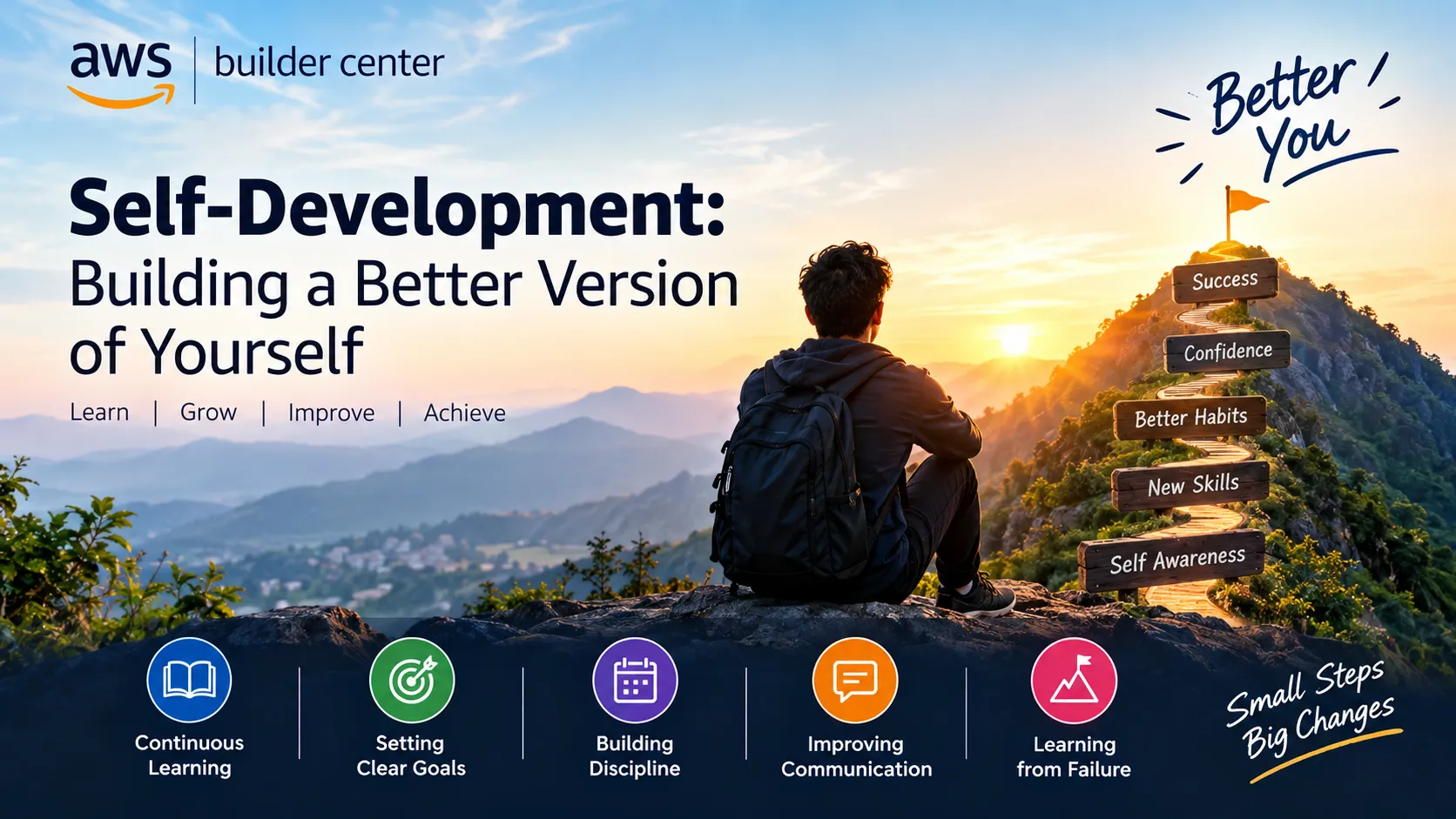
Self-Development: Building a Better Version of Yourself
Self-development is a continuous journey of improving our skills, mindset, confidence, communication, and ability to adapt to change. In today’s rapidly evolving world, personal growth is not only about achieving professional success but also about becoming a disciplined, confident, responsible, and lifelong learner. By setting clear goals, developing positive habits, learning from failures, and consistently improving ourselves, we can unlock our potential and create a meaningful future.

Introduction
Every person has the potential to become better, but potential becomes meaningful only when we take action. Self-development is the process of consciously working on ourselves to improve our knowledge, skills, habits, mindset, and overall personality. It helps us understand our strengths and weaknesses and encourages us to continuously move forward.
In the technology industry, where new tools, technologies, and ideas emerge every day, self-development has become especially important. Learning a new technical skill is valuable, but developing qualities such as problem-solving, communication, creativity, discipline, and adaptability is equally important.
Key Areas of Self-Development
1. Continuous Learning
Learning should not stop after completing school or college. Reading books, taking online courses, practicing new technologies, and working on projects can continuously expand our knowledge. A habit of learning helps us remain adaptable and prepared for new opportunities.
2. Setting Clear Goals
A clear goal gives direction to our efforts. Instead of trying to improve everything at once, we should identify specific short-term and long-term goals. Breaking a large goal into smaller achievable tasks makes progress easier to track and maintain.
3. Developing Discipline
Motivation can change from day to day, but discipline helps us remain consistent. Creating a daily routine, managing time effectively, completing important tasks, and avoiding unnecessary distractions can gradually build strong habits.
4. Improving Communication
Technical knowledge becomes more useful when we can communicate our ideas clearly. Improving speaking, writing, listening, and presentation skills helps us collaborate effectively with others and express our thoughts with confidence.
5. Learning from Failure
Failure should not always be viewed as the end of a journey. It can provide valuable feedback about what needs improvement. Instead of being discouraged by mistakes, we can analyze them, learn from them, and use that knowledge to make better decisions.
Self-Development in the Digital Era
Technology provides countless opportunities for personal growth. Cloud platforms, online communities, educational resources, documentation, and practical projects allow learners to develop skills at their own pace. For aspiring technology professionals, hands-on practice is particularly important because applying knowledge to real-world problems strengthens both technical and problem-solving abilities.
Conclusion
Self-development is not a one-time activity; it is a lifelong process. Small improvements made consistently can create significant changes over time. By learning continuously, setting meaningful goals, maintaining discipline, improving communication, accepting feedback, and learning from failures, we can become more capable and confident individuals.
The goal of self-development is not to become perfect. It is to become better than we were yesterday. Every new skill learned, every challenge faced, and every mistake understood is another step toward building a stronger version of ourselves.
Enjoyed reading this content? Let the author know!
Your likes, comments, shares, and saves help creators reach more builders.

Loading recommendations
Loading article