
Going Serverless: Cost Effective Architecture - a Highly Scalable Website on AWS
Discover the blueprint for a highly available, maintenance-free web deployment on AWS. This article details a complete serverless architecture, breaking down how to seamlessly integrate Amazon S3 for static hosting, CloudFront for global delivery, ACM for SSL/TLS security, Route 53 for traffic routing, and Lambda for dynamic backend logic.

When deploying my personal website, thanvirassif.com , I wanted an architecture that was highly available, incredibly fast, and cost-effective with zero server maintenance. The solution was a fully serverless stack leveraging Amazon S3, CloudFront, Route 53, ACM, and AWS Lambda. Here is a breakdown of how these services work together to deliver a seamless web experience.

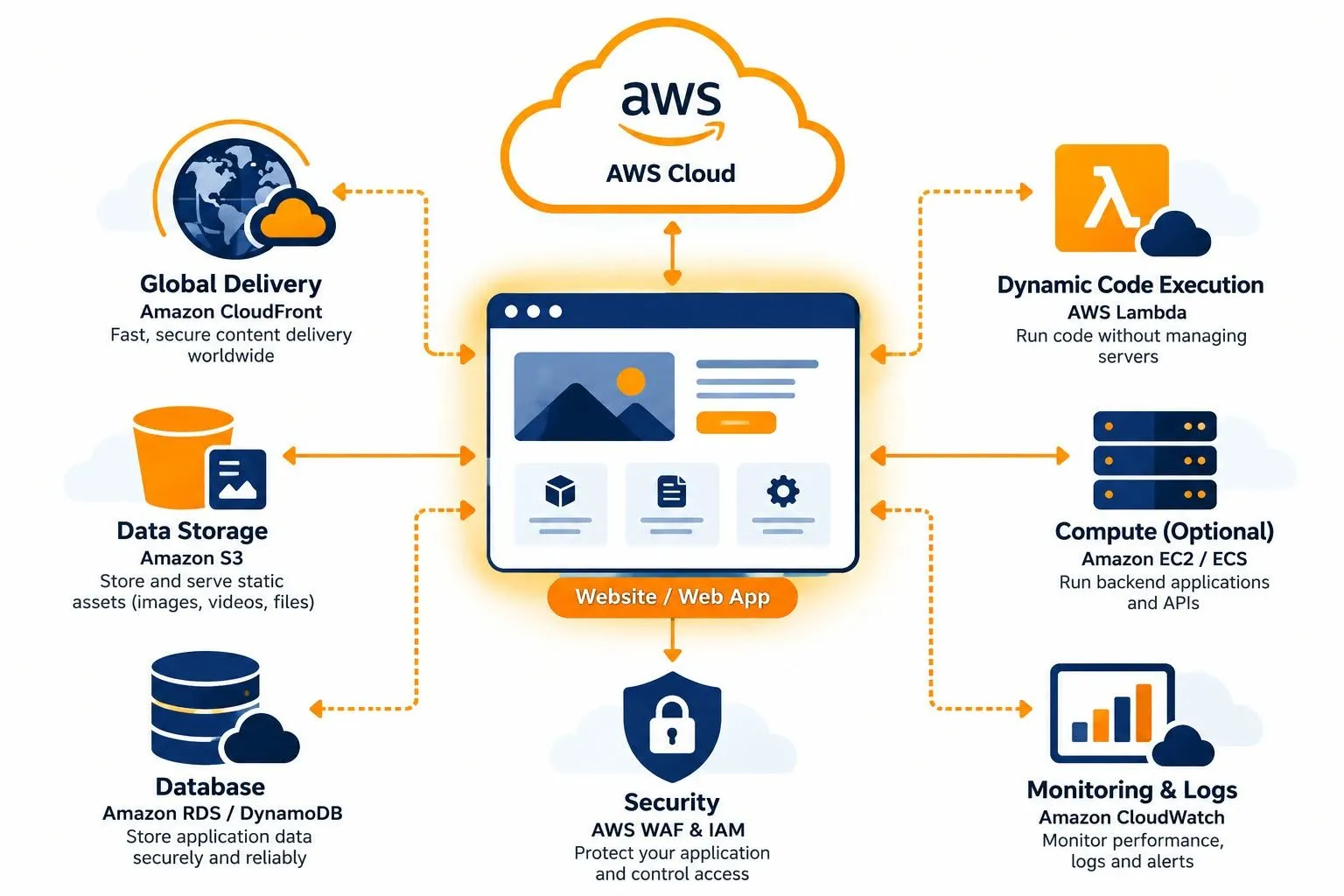
This diagram visualizes how Route 53 handles the DNS routing, ACM secures the connection, CloudFront serves as the global CDN, S3 hosts your static website assets, and AWS Lambda provides dynamic backend processing.
1. Amazon S3: The Foundation
Amazon Simple Storage Service (S3) acts as the backbone of the website, hosting all static assets including HTML, CSS, JavaScript, and images. By configuring an S3 bucket for static website hosting, it immediately serves as a reliable origin for the site without the need to provision or manage web servers.
2. Amazon CloudFront: Global Content Delivery
To ensure low latency for users visiting the site from anywhere in the world, I integrated Amazon CloudFront. This Content Delivery Network (CDN) caches the static assets at AWS edge locations globally. When a user requests the site, CloudFront delivers the content from the edge location closest to them, significantly reducing load times and protecting the S3 origin from traffic spikes.
3. AWS Certificate Manager (ACM): Securing the Site
Security is a non-negotiable standard. AWS Certificate Manager (ACM) seamlessly integrates with CloudFront to provision and manage the SSL/TLS certificate for the domain. This ensures that all traffic to the website is encrypted and served securely over HTTPS, providing a safe browsing experience while also meeting modern security standards.
4. Amazon Route 53: Traffic Routing
To connect my custom domain to the CloudFront distribution, I used Amazon Route 53. As a highly available DNS web service, Route 53 efficiently translates thanvirassif.com into the IP addresses of the CloudFront edge nodes. Utilizing Route 53's alias records made it incredibly simple to map the apex domain directly to the AWS resource without incurring standard DNS query charges.
5. AWS Lambda: Adding Dynamic Functionality
While S3 and CloudFront handle the static delivery beautifully, AWS Lambda steps in to manage dynamic backend operations. Whether it's processing submissions from a contact form, handling API requests, or implementing Lambda@Edge for custom header manipulation and dynamic routing at the CDN level, Lambda executes the necessary code entirely on demand. This event-driven approach ensures computing resources are only consumed and paid for exactly when needed.
Conclusion
By combining these five AWS services, the resulting architecture is highly resilient, globally distributed, and virtually maintenance-free. It’s a prime example of why serverless computing is the go-to choice for modern web deployment.
Enjoyed reading this content? Let the author know!
Your likes, comments, shares, and saves help creators reach more builders.

Loading recommendations
Loading article