

When you open a website or use an app, a computer somewhere works behind the scenes. That computer is called a server. It stores information and responds to requests.
A business can buy its own servers or use computing services from a provider such as Amazon Web Services (AWS).
The main difference is who owns and looks after the equipment.
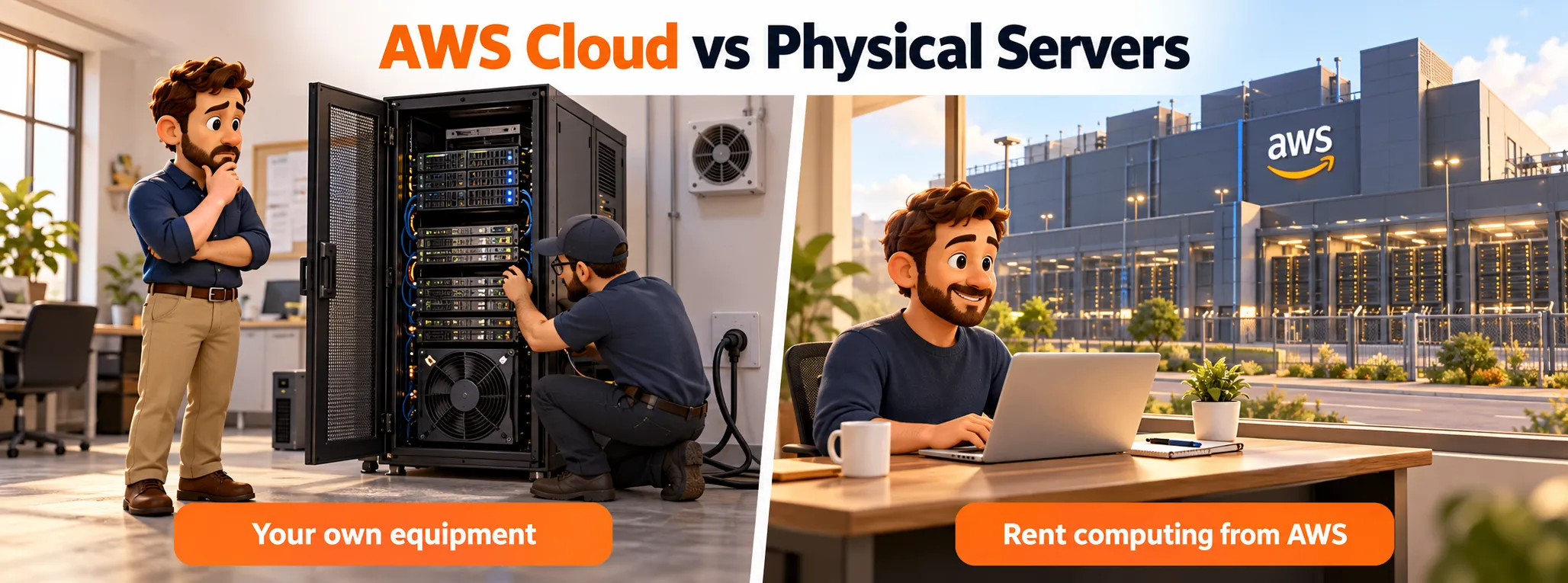
Owning a Physical Server
Imagine buying a server and keeping it in your office.
You need to arrange electricity, cooling, internet access and repairs. If a part breaks, someone needs to fix or replace it. When your business needs more computing power, you may need to upgrade the equipment or buy another server.
It is similar to owning a car: you pay to buy it and take care of its maintenance.
Using AWS Cloud
With AWS, you use computing power and storage provided by AWS instead of buying all the equipment yourself. You can request resources when you need them and pay according to the services and usage involved.
Think of it like renting a car: you use the service without owning the vehicle.
The cloud still uses real physical servers. They are inside data centers—not floating in the sky! AWS maintains the underlying equipment.
A Simple Online Shop Example
Imagine you run a small online shop.
On normal days, only a few customers visit. During a big sale, hundreds may arrive together.
With your own server, you are limited by the equipment you have. Adding capacity may require buying and installing more hardware.
With AWS, you can add computing resources when demand grows and reduce them afterward. Automatic scaling needs to be set up; it does not happen simply because you use the cloud.
Quick Comparison
| Question | Your Own Physical Server | AWS Cloud |
|---|---|---|
| Who owns the hardware? | You or your business | AWS |
| Who repairs the hardware? | Your team or a technician | AWS |
| How do you add capacity? | Upgrade or buy equipment | Request more resources |
| How do you pay? | Equipment purchase plus running costs | Charges for selected services and usage |
Do You Still Have Responsibilities?
Yes. AWS manages its infrastructure, but you still need to protect your accounts, data and applications. Depending on the service, you may also need to update software and manage security settings.
Owning servers means managing your own equipment. Using AWS means accessing computing resources as a service. The better choice depends on your budget, needs and ability to manage the system.
Enjoyed reading this content? Let the author know!
Your likes, comments, shares, and saves help creators reach more builders.

Loading recommendations
Loading article