
500 Passing Tests Weren’t Enough: What Building an AI-DLC Simulator with Kiro Taught Me About Human Gates
Even with 500 passing automated tests, the project was not automatically release-ready. This article shares practical lessons from building an AI-DLC Learning Simulator with Kiro, including Human Gates, rework, evidence, blind audits, and evidence-based release decisions.

500 Passing Tests Weren’t Enough: What Building an AI-DLC Simulator with Kiro Taught Me About Human Gates
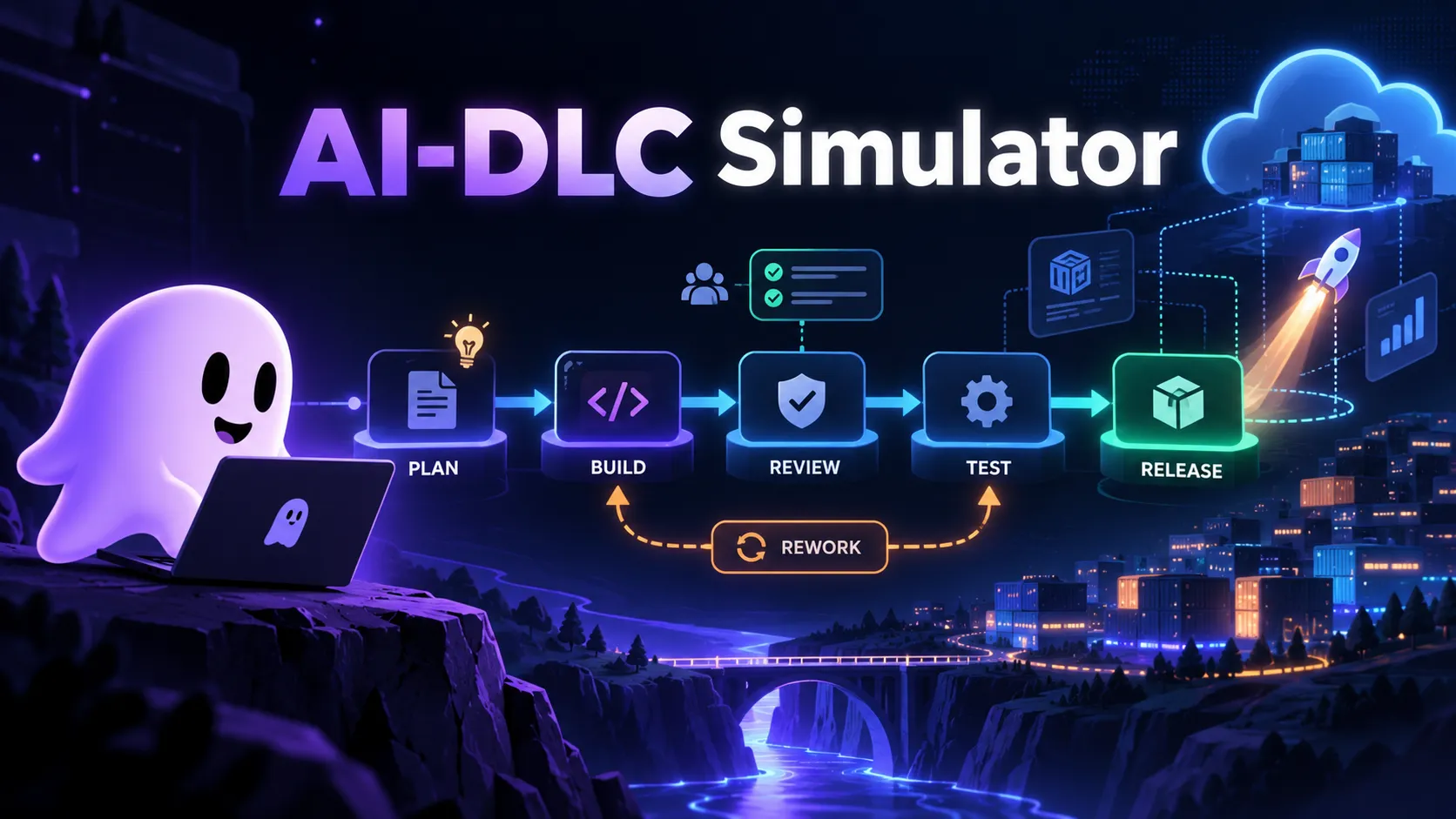
I built an open-source AI-DLC Learning Simulator with Kiro to make Human Gates, Rework, Evidence, and Release decisions easier to experience.
The first release is intentionally deterministic and does not use a runtime LLM or Amazon Bedrock. The goal was to create a low-cost learning environment for practicing AI-DLC decision points in the browser.
The interesting part is that I also used an AI-DLC workflow to build the simulator itself.
That development process changed how I think about validation in agentic development.
252 tests passed, but the product was not ready
At RC3, the project had:
- 252 automated tests passing
- P0: 0
- P1: 6
- P2: 8
- P3: 1
- Release status: NOT READY
The automated tests were useful, but they did not guarantee that the product semantics were correct.
Several issues required rework, including:
- Conditional Approval
- Root Finding vs. downstream manifestation
- Evidence sufficiency
- Completion vs. Release
This led to a simple realization:
Test PASS ≠ Release Ready
The product reached 500 tests
After repeated rework, the v1.0.0 release checkpoint reached:
- 500 automated tests
- 54 test files
- TypeScript typecheck: PASS
- ESLint: PASS
- Production build: PASS
But I still did not treat that as sufficient release evidence.
I added blind browser-based product audits.
What happened when reviewers disagreed?
Two RC6 reviews reached different conclusions.
One audit raised two P1-level concerns.
Another multi-reviewer audit concluded:
1
2
3
P0: 0
P1: 0
Ready with minor fixes
Instead of deciding by majority vote, I reproduced the disputed behavior in fresh isolated browser environments.
Two areas were checked:
- Root Finding Identity
- Evidence Semantics
Each was reproduced twice.
The result:
1
2
3
4
5
PASS × 2
PASS × 2

Final judgment:
Not reproduced
No product code was changed during this adjudication.
The disagreement was resolved by additional evidence, not by opinion.
Three lessons from the rework
1. Approval ≠ Risk Resolution
A stage can continue while conditions remain open.
Conditional Approval needs to preserve those conditions downstream instead of turning them into a simple "approved" state.
2. Artifact exists ≠ Evidence sufficient
An evidence artifact can be complete while required execution evidence is still missing.
1
2
3
4
5
Artifact exists
      ≠
Evidence sufficient
      ≠
Release ready
3. Completion ≠ Release
Finishing implementation is different from authorizing production release.
Release still requires a separate decision based on evidence and residual risk.
A validation pattern I would reuse
The workflow I would use again is:
1
2
3
4
5
6
7
8
9
10
11
12
13
14
15
Generate
   ↓
Deterministic Validation
   ↓
Semantic / Product Review
   ↓
Human Gate
   ↓
Rework
   ↓
Independent Validation
   ↓
Reproduce disputed findings
   ↓
Evidence-based Release Decision
The most important lesson was this:
AI review should be treated as evidence input, not as the final authority.
A reviewer finding may be important, but it still needs to be reproducible.
AWS architecture
The simulator runs as a low-cost static application:
1
2
3
4
5
6
7
Browser
   ↓
Amazon CloudFront
   ↓
Origin Access Control
   ↓
Private Amazon S3
The infrastructure is defined with AWS CloudFormation.
The application intentionally has:
- no runtime backend
- no runtime LLM dependency
- no AWS credentials in the browser
Kiro was used throughout development and connected to AWS during development and release preparation.
What I learned
Building an AI-DLC learning tool with an AI-DLC workflow made one thing very clear:
Generation ≠ Validation
Test PASS ≠ Release Ready
Approval ≠ Risk Resolution
Finding ≠ Truth
Completion ≠ Release
Test PASS ≠ Release Ready
Approval ≠ Risk Resolution
Finding ≠ Truth
Completion ≠ Release
As coding agents become better at producing artifacts, the human role increasingly shifts toward deciding:
What evidence is sufficient for this work to move forward?
That is the decision model I wanted the simulator to make easier to practice.
Try it
Live Demo:
https://d1s9ig7adbe2qs.cloudfront.net
https://d1s9ig7adbe2qs.cloudfront.net
GitHub:
https://github.com/nobu-13/aidlc-learning-simulator
https://github.com/nobu-13/aidlc-learning-simulator
The project is open source under MIT-0.
Enjoyed reading this content? Let the author know!
Your likes, comments, shares, and saves help creators reach more builders.

Loading recommendations
Loading article