
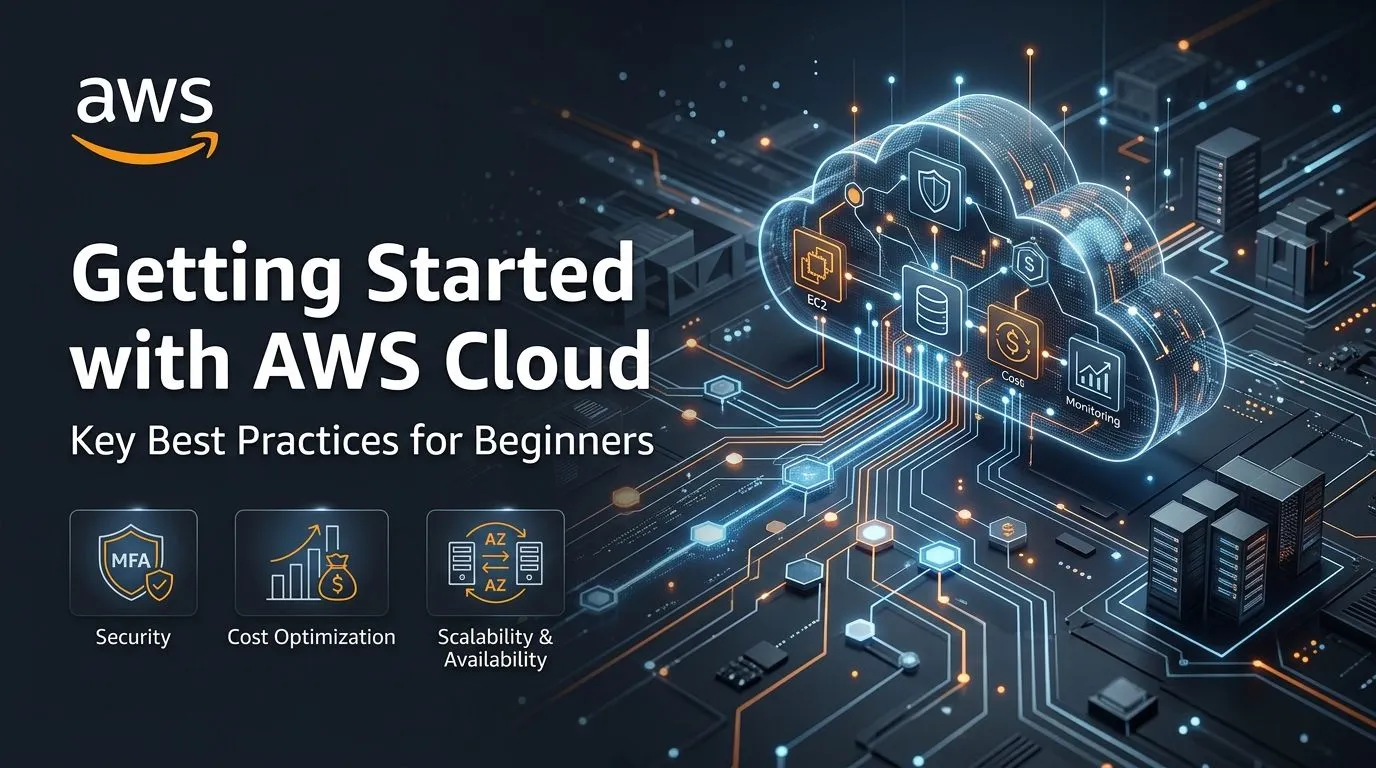
Getting Started with AWS Cloud: Key Best Practices for Beginners
Learn the fundamental best practices for building scalable, secure, and cost-effective cloud applications on AWS. A quick guide for developers starting their cloud journey.

Introduction to Building on AWS
AWS (Amazon Web Services) offers a vast ecosystem of cloud computing services. Whether you are building web applications, deploying microservices, or managing databases, following foundational cloud architecture principles ensures optimal performance and security.
Core Best Practices for AWS Beginners
1. Security and IAM Management
- Never use the root account for daily operational tasks.
- Create dedicated IAM Users or Roles with the Principle of Least Privilege (PoLP).
- Enable Multi-Factor Authentication (MFA) on all key accounts.
2. Cost Optimization
- Monitor your resource usage using AWS Cost Explorer.
- Set up AWS Budgets to receive real-time alerts when spending exceeds threshold limits.
- Terminate or stop unused EC2 instances and unattached Elastic IPs.
3. Scalability & High Availability
- Utilize Auto Scaling Groups to dynamically handle traffic spikes.
- Deploy applications across multiple Availability Zones (AZs) for fault tolerance.
1
2
# Example AWS CLI command to check running EC2 instances

aws ec2 describe-instances --filters "Name=instance-state-name,Values=running"Enjoyed reading this content? Let the author know!
Your likes, comments, shares, and saves help creators reach more builders.

Loading recommendations
Loading article