
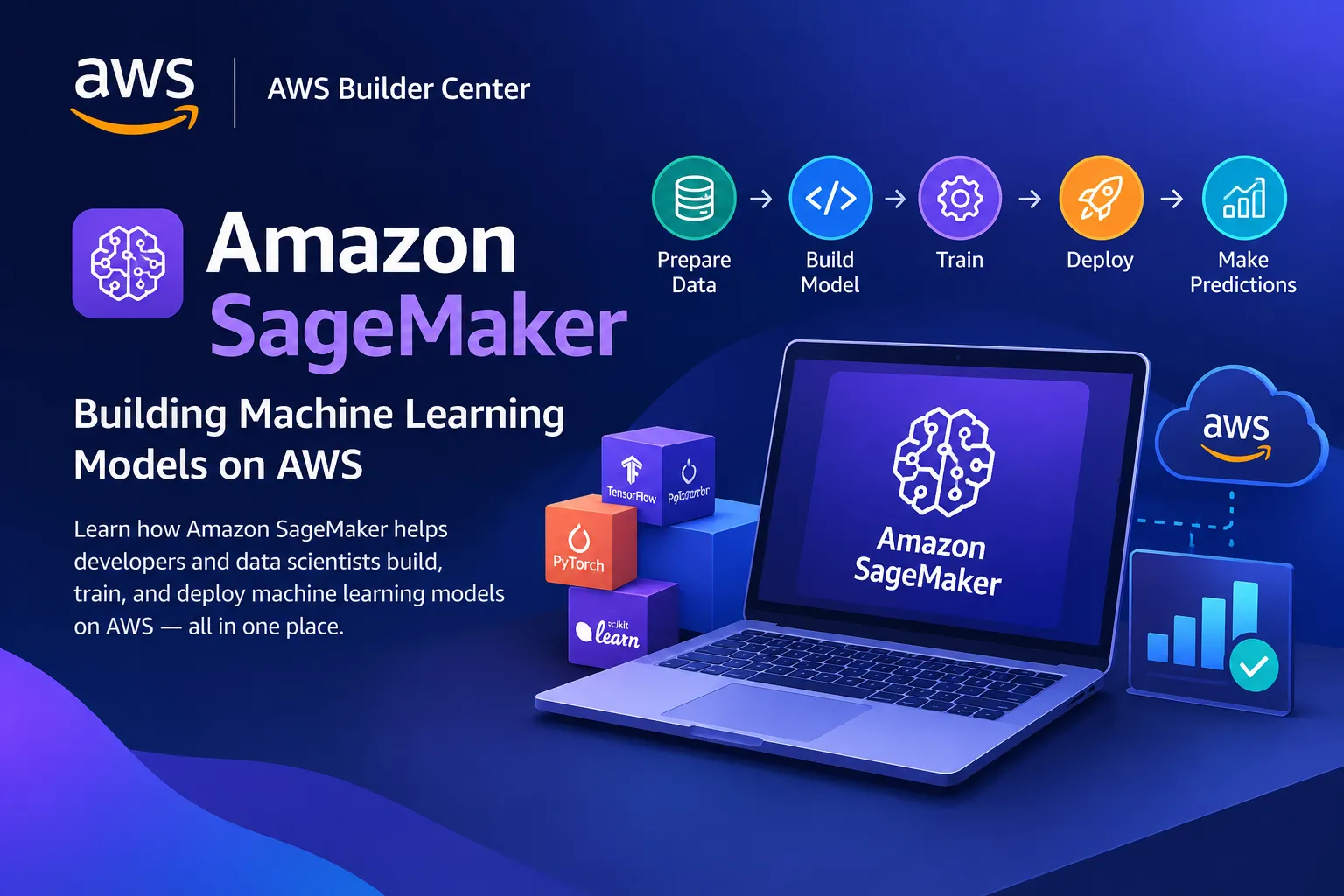
🧠Amazon SageMaker: Building Machine Learning Models on AWS
Learn how Amazon SageMaker helps developers and data scientists build, train, and deploy machine learning models on AWS—all in one place.

🧠 Amazon SageMaker: Building Machine Learning Models on AWS
As I continue exploring the AI track on AWS, I came across an important question:
“Where do we actually build and train Machine Learning models?” 🤔
That's where Amazon SageMaker comes in.
🚀 What is Amazon SageMaker?
Amazon SageMaker is an AWS service that helps developers and data scientists build, train, and deploy machine learning models.
Think of SageMaker as a complete workspace for Machine Learning 🧰.
Instead of setting up servers, installing ML tools, managing infrastructure, and figuring out how to deploy a model, SageMaker provides tools to help manage these steps on AWS.
🔄 How Does SageMaker Work?
A simple ML workflow looks like this:
📊 Data → 🧠 Build Model → 🎓 Train → 🚀 Deploy → 🔮 Make Predictions
1️⃣ Prepare Data
Machine Learning models need data to learn from.
2️⃣ Build the Model
You can develop your ML model using supported frameworks and SageMaker tools.
3️⃣ Train the Model
SageMaker provides computing resources to train your model using your data.
4️⃣ Deploy the Model
Once trained, the model can be deployed so applications can send data and receive predictions.
5️⃣ Make Predictions
Your application can use the deployed model to make predictions on new data.
🌍 Simple Example
Imagine building a model that predicts whether an email is spam or not spam.
You could:
📩 Collect email data
⬇️
🧹 Prepare the data
⬇️
🧠 Train a machine learning model
⬇️
🚀 Deploy the model
⬇️
📩 New email arrives
⬇️
🔮 Model predicts: Spam / Not Spam
⬇️
🧹 Prepare the data
⬇️
🧠 Train a machine learning model
⬇️
🚀 Deploy the model
⬇️
📩 New email arrives
⬇️
🔮 Model predicts: Spam / Not Spam
This is the type of ML workflow SageMaker can help support.
⚡ Why is SageMaker Useful?
Without a managed ML platform, you may need to handle many things yourself:
- Setting up computing resources
- Installing ML frameworks
- Training models
- Managing infrastructure
- Deploying models
- Monitoring ML workloads
SageMaker brings many of these capabilities together in AWS.
🤔 SageMaker vs EC2
EC2:
You get a virtual server and manage much of the environment yourself.
You get a virtual server and manage much of the environment yourself.
SageMaker:
You get tools specifically designed to help with the Machine Learning lifecycle.
You get tools specifically designed to help with the Machine Learning lifecycle.
A simple way to remember it:
EC2 = Manage a virtual computer 🖥️
SageMaker = Build and manage ML workflows 🧠
🎯 Key Takeaway
Amazon SageMaker makes it easier to work through the Machine Learning lifecycle on AWS.
From data preparation → model training → deployment → predictions, SageMaker provides tools to help build ML solutions in the cloud.
As I continue my AI journey on AWS, understanding services like SageMaker is an important step toward building real-world AI and Machine Learning applications. 🤖☁️
# amazon-sagemaker-ai# amazon-sagemaker# amazon-sagemaker-studio# amazon-sagemaker-hyperpod# amazon-sagemaker-jumpstart
Any opinions in this article are those of the individual author and may not reflect the opinions of AWS.Enjoyed reading this content? Let the author know!
Your likes, comments, shares, and saves help creators reach more builders.

Loading recommendations
Loading article