
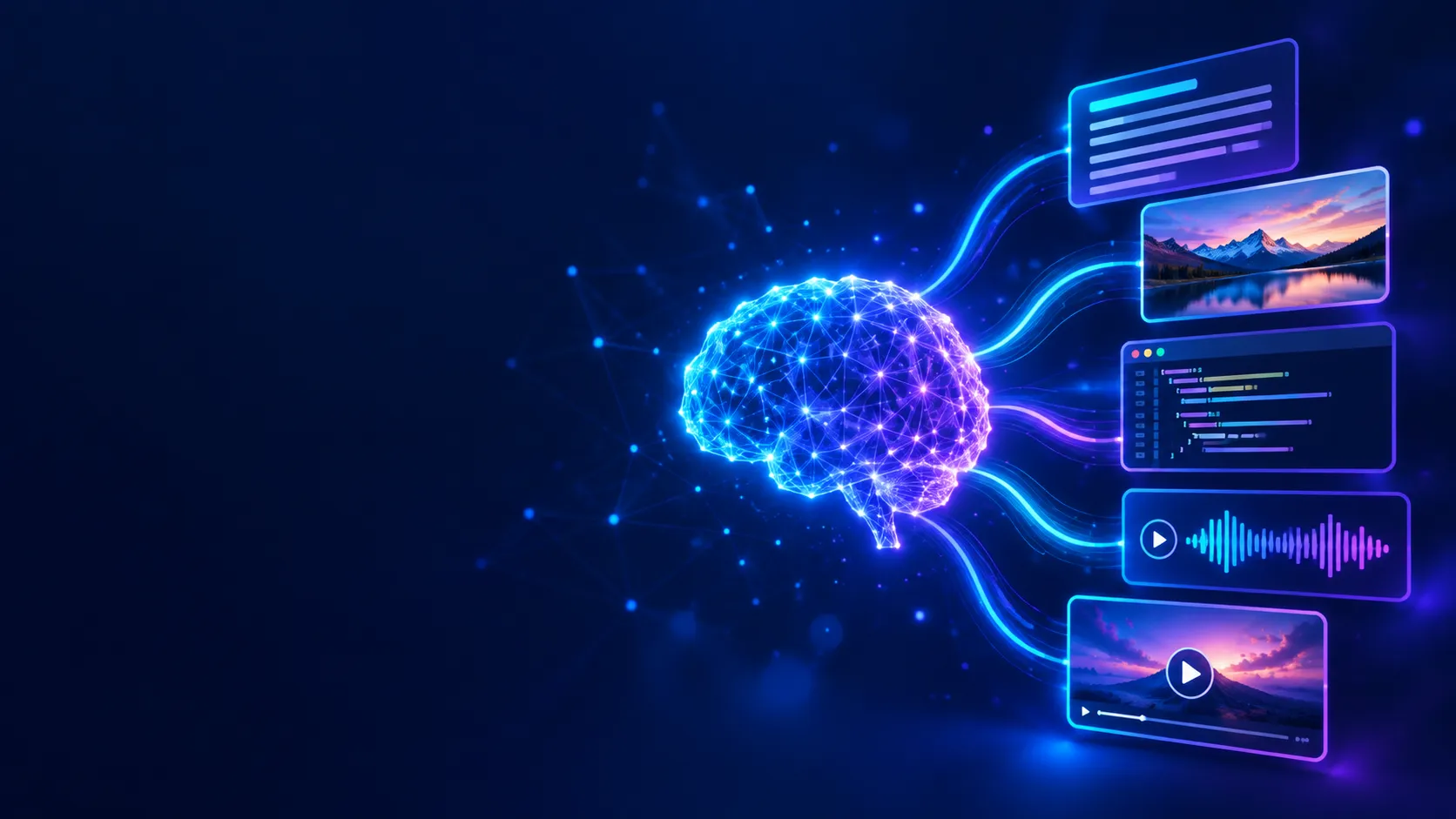
Generative AI: How Artificial Intelligence Is Creating the Future.
Generative AI is changing the way we create content, solve problems, learn new skills, and work with technology. This article explains what Generative AI is, how it works, its applications, benefits, limitations, and what the future may look like.
Series: Cloud Computing & AWS Learning Journey. (6 articles)
- …
- 5Generative AI: How Artificial Intelligence Is Creating the Future. This article

Generative AI: How Artificial Intelligence Is Creating the Future
Artificial Intelligence (AI) has become an important part of modern technology. One of the most exciting developments in AI is Generative AI. Unlike traditional AI systems that mainly analyze information or make predictions, Generative AI can create new content such as text, images, music, videos, computer code, and more.
From students using AI for learning to businesses using it for content creation and software development, Generative AI is becoming a powerful tool in everyday life.
What Is Generative AI?
Generative AI is a type of artificial intelligence that learns patterns from large amounts of existing data and uses those patterns to generate new content.
For example, when you give an AI tool a prompt such as:
"Write a short story about a student who discovers a robot."
The AI can generate an original story based on your instructions.
Generative AI can create:
📝 Text and articles
🖼️ Images and illustrations
🎵 Music and audio
🎬 Videos
💻 Computer programs and code
📊 Presentations and documents
How Does Generative AI Work?
🖼️ Images and illustrations
🎵 Music and audio
🎬 Videos
💻 Computer programs and code
📊 Presentations and documents
How Does Generative AI Work?
Generative AI models are trained using very large datasets. During training, the model learns relationships and patterns within the data.
When a user provides a prompt, the AI processes the instructions and generates an appropriate response.
A simple process is:
User Prompt → AI Model → Processing → Generated Content
For example:
Prompt: "Create an image of a futuristic city."
AI: Generates an image based on the description.
The quality of the result often depends on how clearly the user describes what they want.
Applications of Generative AI
Generative AI is being used in many different areas.
- Education
Students can use AI to understand difficult topics, generate study notes, practice questions, and learn programming concepts.
Teachers can also use AI to create lesson plans, quizzes, and educational materials.
- Content Creation
Writers, bloggers, and creators can use Generative AI to develop ideas, write drafts, create images, and improve their content.
- Software Development
Generative AI can help programmers write code, explain programming concepts, identify errors, and create examples.
- Business
Businesses can use AI for customer support, marketing content, document creation, data analysis, and brainstorming.
- Healthcare
Generative AI can assist with tasks such as summarizing medical information, supporting research, and helping professionals analyze large amounts of information. However, healthcare applications require appropriate professional oversight.
Benefits of Generative AI
Generative AI provides several advantages:
Saves time: It can complete many content-creation tasks quickly.
Improves productivity: It can help people generate ideas and first drafts.
Supports learning: It can explain complex topics in simpler language.
Encourages creativity: Users can experiment with different ideas and formats.
Assists programmers: It can help generate and explain code.
Works across many fields: It can be used in education, business, technology, design, and entertainment.
Limitations and Challenges
Generative AI is powerful, but it is not perfect.
AI-generated information can sometimes be incorrect or misleading. It may also produce biased results or misunderstand a user's instructions.
Other important concerns include:
Privacy and data protection
Copyright and ownership
Misinformation
Overdependence on AI
Responsible use of AI-generated content
Need for human verification
Copyright and ownership
Misinformation
Overdependence on AI
Responsible use of AI-generated content
Need for human verification
Therefore, AI-generated information should be reviewed before being used for important decisions or published as factual information.
The Future of Generative AI
Generative AI is developing rapidly. Future AI systems may become more capable of understanding text, images, audio, video, and other types of information together.
The goal should not simply be to replace human creativity. Instead, AI can become a creative assistant that helps people explore ideas, learn faster, automate repetitive tasks, and solve problems.
The most valuable skill in the AI era may be knowing how to work effectively with AI while using human judgment and creativity.
Conclusion
Generative AI is transforming the way people create, learn, communicate, and work. Its ability to generate text, images, code, audio, and other content makes it one of the most significant developments in modern technology.
However, using AI responsibly is just as important as understanding its capabilities. Generative AI is a tool, and the quality of its impact depends on how people choose to use it.
The future will likely belong to people who can combine human creativity, critical thinking, and AI skills to create new possibilities.
Series: Cloud Computing & AWS Learning Journey. (6 articles)
- …
- 5Generative AI: How Artificial Intelligence Is Creating the Future. This article
Enjoyed reading this content? Let the author know!
Your likes, comments, shares, and saves help creators reach more builders.

Loading recommendations
Loading article