AWS certifications can feel confusing at first. There are multiple exams, different levels, and several possible paths. The good news is that you do not need to take every certification, and there is no strict order you must follow.
AWS certifications are generally organized into four levels: Foundational, Associate, Professional, and Specialty.
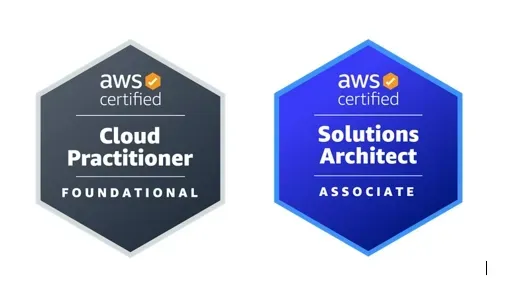
For complete beginners, AWS Certified Cloud Practitioner is the usual starting point. It introduces core cloud concepts, basic AWS services, pricing, security, and the AWS shared responsibility model. It is particularly useful if you have little or no previous cloud experience.
If you already have some technical experience, you can often skip Cloud Practitioner and move directly to an Associate-level certification. The most common starting point is AWS Certified Solutions Architect – Associate, which provides broad coverage of AWS architecture, networking, storage, compute, databases, security, reliability, and cost optimization.
Other Associate certifications focus more heavily on particular roles, such as development, operations, or data engineering.
One important thing to understand is that AWS exams are not simply tests of memorization. You will frequently be given scenarios and asked to choose the most secure, highly available, cost-effective, or operationally efficient solution. Knowing what a service does is important, but understanding when and why to use it matters even more.
You also do not need years of professional AWS experience before attempting your first certification. Hands-on practice with services such as IAM, EC2, S3, VPC, Lambda, RDS, and CloudWatch can make the material much easier to understand.
Finally, treat certifications as a structured learning path rather than the end goal. A certification can validate your knowledge and help guide your studies, but combining it with labs, projects, and practical experience is what turns that knowledge into an actual cloud engineering skill set.
If you are unsure where to start, a simple rule is:
New to cloud -> Cloud Practitioner
Already technical -> Solutions Architect Associate
From there, choose certifications based on the kind of cloud work you want to do.



Loading article