

The First AWS Community Day Brasília, Brazil: A Milestone for the Cloud Community in Central-West Brazil
Months of planning, dozens of volunteers, hundreds of participants, and countless lessons learned while bringing to life the largest community-led AWS event in Brazil’s Federal District.
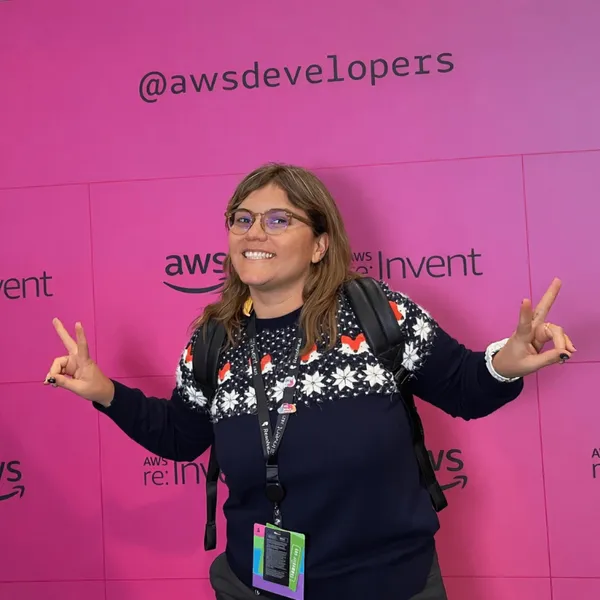
I don’t know if you’ve ever had the opportunity to organize an event the size of an AWS Community Day in your city, but for us, bringing the first edition to Brasília, Brazil’s capital, was both a major challenge and an incredible experience. The initiative to host multiple Community Day editions across the country was led by our AWS Hero from Central-West Brazil, Marcelo Paiva , inspired by an important characteristic of our country: Brazil is continental in size, with technology communities spread across thousands of kilometers. This led to the idea of hosting five Community Day editions in 2026, one in each of Brazil’s five regions, creating more opportunities for people to learn, share knowledge, build connections, and experience the AWS community closer to home. And Central-West Brazil had the exciting mission of opening the calendar. In this article, we’ll share the story behind this journey, the challenges we faced, the lessons we learned, and the tools we used along the way — including solutions built by members of our own community using AWS technologies.
On June 27, 2026, we hosted the first AWS Community Day Brasília at UniProjeção in Taguatinga, Federal District. Throughout an entire Saturday, technology professionals, students, experts, partner companies, and cloud enthusiasts came together to strengthen the region’s technology ecosystem. The event was made possible through the collaboration between the AWS communities of Brasília and Goiânia , with a core team of four organizers and the essential support of volunteers, speakers, sponsors, and partners. We welcomed more than 204 on-site attendees, with over 240 people involved in the event overall, considering everyone who helped make the experience possible. With the support of AWS , Darede , and other partners, we transformed months of planning into a full day of technical content, networking, culture, and community. In the following sections, we’ll take you behind the scenes, share what we learned, and show how technology helped us bring it all to life.
1. A Dream Called AWS Community Day
For me, as part of the community leadership team since 2022, hosting an event of this scale in our region had always been a dream. But making it happen also became a very personal challenge: I was on maternity leave, and delivering something this ambitious would have been impossible without truly shared leadership. By my side was Wagner Landim , also a leader of the AWS User Group Brasília , along with Marcelo Paiva, AWS Hero from Central-West Brazil, and Deivid Veras , each bringing experience, commitment, and many helping hands to make it all happen. It took months of work — sprints, meetings, tasks, spreadsheets, platforms, and countless conversations with partners to secure the financial, technical, and local support we needed. And when the big day finally arrived, we also had the incredible support of more than 20 volunteers, working across different areas throughout nearly eight hours of activities. To me, this is one of the best definitions of community: people who choose to give their time, knowledge, and energy to a shared purpose because they genuinely enjoy being together, sharing, helping, and serving one another.
There was also a very special challenge behind this story: Community Day happened on my son’s birthday. Somehow, that Saturday gave me two major milestones to celebrate — and, fortunately, I was able to be present for both. Looking back at everything we built together made all the effort even more meaningful. My deepest thanks go to every leader, volunteer, speaker, partner, and community member who joined us on this journey, with a special thank-you to Carol Milanez , who sent thoughtful gifts for our participants and helped make the experience even warmer and more welcoming. And perhaps the most fitting ending came after the event: everyone ended up at my house! After months of planning and an intense day together, opening my home to the community and celebrating with everyone made me incredibly happy. In many ways, it captured exactly what this journey was all about: community is not only about the events we build together, but also about the people we welcome, the moments we share, and the sense of belonging we create along the way.


2. Bringing the Idea to Life: Technology, Community, and the Culture of Central-West Brazil
If you are a community leader, you probably know just how many tasks are involved in bringing an event to life. This is true for everything from a monthly meetup to a Community Day, which can take months of planning for an experience that ultimately happens in a single day. Speakers, volunteers, sponsors, registrations, communications, scheduling, giveaways, participant experiences, and many other workstreams need to move forward simultaneously. To manage a project of this scale, we adopted Scrum practices, organizing our work into sprints, tracking the backlog, and holding biweekly meetings, while also using digital tools to integrate different aspects of event management and the participant journey.
But we wanted the first AWS Community Day Brasília to reflect the identity and culture of the region hosting it. So, alongside cloud, AI, architecture, and software development, we made room for Brazilian cultural traditions and a little of the history of Central-West Brazil. We opened the event with the sound of the viola caipira and references to traditional música caipira and catira, performed by local artist Valmir Batista. Also known as cateretê, catira has a strong presence in rural areas of Goiás and combines viola music with choreography characterized by rhythmic hand clapping and foot stomping. In Goiás, it has become an important expression of caipira identity and regional folk culture.
In the afternoon, the rhythm changed, but we continued telling a Brazilian story. We welcomed a capoeira roda performed by Grupo Beribazu , led by our colleague Iron Prado. Capoeira carries an even deeper historical dimension: developed in Brazil from African cultural traditions, particularly Bantu influences, it brings together singing, musical instruments, dance, movements, play, symbols, and rituals in a single cultural expression. In 2008, IPHAN — Brazil's National Institute of Historic and Artistic Heritage — recognized the Capoeira Circle and the Craft of Capoeira Masters as part of Brazil's Cultural Heritage. In 2014, UNESCO inscribed the Capoeira Circle on the Representative List of the Intangible Cultural Heritage of Humanity.
This cultural presence becomes even more meaningful when we think about Brasília itself. IPHAN highlights how the construction of Brazil's capital brought together migration flows from different parts of the country, turning the Federal District into a meeting point where many Brazilian cultural traditions came together and were reinterpreted. Among the cultural expressions found in the Federal District are precisely the Capoeira Circle and the Craft of Capoeira Masters. That is why bringing the viola, catira, and berimbau alongside technical sessions was much more than entertainment: it was our way of remembering that a technology community also carries the culture, history, and identity of the people who build it. At our first Community Day, we wanted to share knowledge about the future while still celebrating the roots of the people and the region, opening their doors to welcome the community.


3. Optimizing Event Management with Party Community
For us, it is important to talk about Party Community not only because the platform holds a special place in our journey — after all, it was born within our own community to address challenges we experienced firsthand — but mainly because of the value it delivered during AWS Community Day Brasília. With the platform, we were able to centralize processes that had previously been scattered across spreadsheets, forms, messaging groups, and other disconnected tools. Party Community supported activities such as registrations, event scheduling, volunteer and sponsor management, communications, giveaways, information sharing, gamification, and feedback collection. During the event, this became even more valuable: we ran multiple giveaways, distributed swag through engagement activities, and used session ratings to encourage participants to interact throughout the day. One result that particularly stood out was participant retention: even after nearly eight hours of activities, around 80% of the audience stayed with us until the end of the event.
One of the features developed specifically for Community Day was session management and the collection of NPS and session ratings. These interactions allowed us not only to generate data about the participant experience, but also to create new engagement dynamics throughout the event. Messaging, feedback, photos, giveaways, and other interactions became part of a more integrated experience while also simplifying the organizers' work. Perhaps the most interesting part of this story is that Party Community is being built and matured within the very events it helps support. Community Day became an important real-world laboratory where we could validate features, identify improvements, and discover new needs directly from actual users. The platform is open source, built using AWS technologies, and continues to evolve through contributions from community volunteers, with ongoing support from our partner Dan Rezende, who remains actively involved in its development and maintenance. In this way, each event is not only supported by Party Community — it also helps us build the platform's next version.

4. The Big Test
I cannot talk about this journey without mentioning that building a platform, testing it in a real-world environment, and making it work takes many hands. I have been actively involved in building Party Community, both from a product perspective and by getting hands-on as a maker, and Community Day gave us one of those stories that perfectly captures what being part of a community really means. On the very day of the event, we identified an issue with the feature used to manage our giveaways. While everything was happening in Brasília, our colleague Dan Rezende was driving from Goiânia to join us. Somewhere along the way, he stopped at a gas station, opened his laptop, connected through his phone's 5G network, and fixed the issue so we could keep using the feature during the event. It may sound like a funny behind-the-scenes story, but to me it represents something much bigger: community is also about commitment, dedication, and people being willing to help one another when it truly matters. So, a very special thank-you goes to Dan for his generosity, availability, and continued support of both the project and our community.
And we could not have asked for a better environment to put everything to the test. AWS Community Day Brasília was one of Party Community's first major real-world tests at an event of this scale, putting the platform in front of hundreds of users while the entire operation was happening live. We welcomed 204 on-site attendees, with a predominantly technical audience, in addition to speakers, volunteers, organizers, and exhibitors. More than simply proving that the platform worked, the event allowed us to uncover issues, adjust behaviors, validate features, and collect valuable insights for future versions. By the end of the day, we realized we had been doing two things at once: building a Community Day while using the Community Day itself to build a better product for the community.
5. Data That Tells a Story
Another fascinating part of this experience was realizing just how much data can help us understand the behavior of a community. Throughout Community Day, we collected information through Party Community as well as Hub Eventos, the platform provided by our partner Juciney, who played an important role in the check-in operation and provided the infrastructure and hardware required to print and label attendee badges. When we brought all this information together after the event, the numbers began to reveal stories that we probably could not have noticed in the middle of such a busy day. The reports helped us identify peak arrival times, professional profiles, participants' geographic origins, satisfaction levels, and concrete opportunities to improve future editions.
And we discovered some interesting patterns. Around 70% of the audience was concentrated among Software Development professionals (29.4%), Infrastructure professionals (20.6%), and students (20.6%), alongside IT managers, business executives, and professionals transitioning into new careers. Our reach also extended well beyond the Federal District: although approximately 75% of attendees came from the Federal District, Goiás accounted for 11.8%, and we also welcomed participants from São Paulo, Minas Gerais, Rio de Janeiro, Santa Catarina, Maranhão, Mato Grosso, Sergipe, and Amapá. Operational data also provided valuable lessons: around 88% of attendees checked in before 9:00 a.m., with the highest peak occurring between 8:15 and 8:30 a.m., when we recorded 41 check-ins in just 15 minutes. Today, these insights help us make better decisions about staffing the check-in area, anticipating peak periods, and improving the arrival experience at future events.
Party Community also allowed us to explore another important dimension: engagement and participant experience. Throughout the event, we recorded hundreds of interactions and session ratings, reaching an average score of 4.9 out of 5, with 98.6% of all ratings between 4 and 5 stars. These are more than impressive numbers to include in a report. They help us understand what worked, where we can improve, and which experiences actually delivered value to our participants. Perhaps one of the most important lessons from our first AWS Community Day Brasília is that communities can also be data-driven. The event lasted only one Saturday, but the information generated that day continues to help us make decisions, improve our processes, and design better experiences for future gatherings.
Looking back at all of this, it becomes even clearer that the first AWS Community Day Brasília was much more than a technical event. It demonstrated how organized communities can connect people, develop talent, experiment with technology, build their own products, and strengthen an entire regional ecosystem. The numbers help us understand the scale of that impact, but they tell only part of the story. The real legacy lives in the connections we created, the opportunities that emerged, and the people who will continue carrying knowledge and the spirit of community far beyond that one Saturday.


6. Beyond Check-In
It is important to make one distinction: Party Community was not designed primarily as an attendee check-in solution. At our Community Day, that part of the operation was handled by our partner Juciney through the Hub Eventos platform, which supported us with attendee check-in, badge printing, and the infrastructure needed to welcome participants. Party Community was created with a different purpose: to support the people working behind the scenes — especially community leaders — in managing the many activities required to bring an event to life. At the same time, the platform provides an engagement layer for participants during and after the event, giving them access to information, session ratings, NPS surveys, giveaways, gamification, and other interactive experiences.
In practice, Party Community aims to centralize processes that are often scattered across spreadsheets, forms, messaging groups, and multiple disconnected tools. For community leaders, this means having a more integrated view of event management; for participants, it means having a single environment where they can interact with the event program and the community in different ways. During AWS Community Day Brasília, we used the platform primarily to support session ratings, giveaways, engagement, and data-driven insights, turning interactions throughout the day into information that later helped guide our decisions. Perhaps this best summarizes Party Community's purpose: not to replace every tool that already exists, but to connect processes, reduce fragmentation, and make community and event management simpler, more organized, and more data-driven.


7. Purple Spot Pills
One of the greatest opportunities that cloud technology offers to tech communities is the ability to turn knowledge into hands-on experimentation — and experimentation into real-world impact. The first AWS Community Day Brasília was a great example of this. While organizing an event designed to share cloud knowledge, we were also using that same ecosystem to solve challenges within our own community. Party Community was born from this mindset: problems we experienced while organizing events became requirements; requirements became features; and those features were tested with real users during Community Day. Session ratings, NPS surveys, giveaways, gamification, communication, and data-driven insights went from ideas to actual capabilities supporting an experience involving more than 200 people in a single day.
I like to think of this cycle as a Sustainable Community Pillar:
learn → experiment → build → share → measure → improve → give value back to the community. Instead of using the cloud only for labs, studying, or certifications, communities can turn it into an experimentation environment for building solutions to real problems around them. In our case, Community Day was not simply an event where we used Party Community; it became a real-world laboratory for validating the product, identifying issues, collecting data, and discovering new features. In this way, the knowledge developed within the community returns to the community through technology, better experiences, and social impact — and every new event feeds the cycle again, creating new opportunities to learn, build, improve, and share.

8. The Greatest Legacy Is Coming Together
The first AWS Community Day Brasília came to an end after a full Saturday of technical content, technology, and countless connections, but perhaps the numbers alone cannot capture what truly happened that day. We welcomed more than 200 on-site attendees, along with speakers, volunteers, organizers, partners, and people who traveled from different Brazilian states to join us. More than simply hosting an event, that Saturday we opened our home to the community. We shared a little of the Central-West Brazilian way of welcoming people: through music, culture, coffee, conversations, hugs, thoughtful gifts, and plenty of networking between sessions. We had creative and entertaining talks, unexpected encounters in the hallways, and cultural performances that brought a piece of our Brazilian and regional identity into the heart of a cloud technology event.
And perhaps that is the greatest legacy of a Community Day: coming together and serving one another. Everyone arrives with something that no platform or technology can replace — their presence, knowledge, time, and willingness to share. A volunteer gives a few hours of their Saturday; a speaker shares a story and lessons learned over years of experience; a partner helps turn an idea into reality; someone offers a cup of coffee, someone else prepares a thoughtful gift, another person shares their culture, while participants arrive ready not only to learn, but also to teach. In the end, that is what community is all about: each person offering a little of what they have so that everyone can take something new home with them. The first AWS Community Day Brasília showed us that we can talk about cloud, AI, architecture, and innovation, but it is the people sitting together over coffee, talking in the hallways, laughing during a session, or meeting someone for the first time who truly turn an event into a community. That is how we chose to welcome Brazil to Brasília: by sharing technology, culture, knowledge, and, above all, hospitality.
Enjoyed reading this content? Let the author know!
Your likes, comments, shares, and saves help creators reach more builders.

Loading recommendations
Loading article