

My Journey to Becoming an AWS Certified DevOps Engineer Professional
My Journey to Becoming an AWS Certified DevOps Engineer Professional
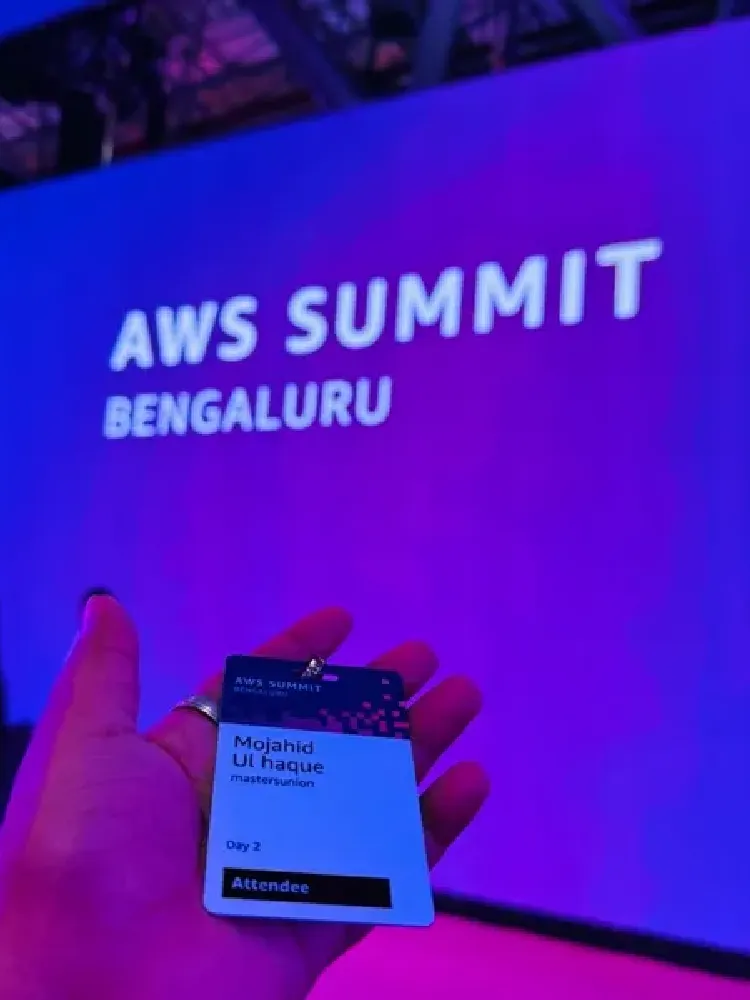
Call me when your AI agent breaks the build :)
My Journey to Becoming an AWS Certified DevOps Engineer – Professional
I’m excited to share that I recently earned the AWS Certified DevOps Engineer – Professional certification.
For me, this achievement represents much more than passing another certification exam. The preparation process changed the way I think about building and operating workloads on AWS.
Instead of looking at AWS services individually, I learned to think about complete production systems — how applications are deployed, how infrastructure is automated, how failures are detected, how systems recover, and how security and governance can be integrated into everyday DevOps workflows.
In this article, I want to share what I learned during my preparation, the areas I focused on, and some advice for anyone planning to pursue the AWS Certified DevOps Engineer – Professional certification.
Moving Beyond Individual AWS Services
One of the biggest differences I noticed while preparing for a professional-level AWS certification was the shift from understanding individual services to understanding how multiple AWS services work together in real-world architectures.
Knowing what AWS CodePipeline, AWS CodeBuild, AWS CloudFormation, Amazon CloudWatch, AWS Systems Manager, or AWS Config does is important.
However, the bigger challenge is understanding questions such as:
- How should these services work together in a production environment?
- How can deployments be automated safely?
- How can infrastructure automatically recover from failures?
- How should logs and metrics be collected across multiple environments?
- How can security controls be automated instead of handled manually?
- How can organizations reduce deployment risk while still releasing frequently?
This systems-level thinking was one of the most valuable things I gained from the preparation process.
1. CI/CD Pipeline Design and Automation
Continuous Integration and Continuous Delivery were major areas of my preparation.
I focused on understanding how AWS services can be combined to build automated software delivery pipelines.
Some of the services and concepts I studied included:
- AWS CodePipeline
- AWS CodeBuild
- AWS CodeDeploy
- Amazon S3
- AWS Lambda
- Amazon EventBridge
- IAM roles and permissions
- Deployment approvals and automated testing
The most important lesson was that a good CI/CD pipeline is not simply a sequence of build and deployment stages.
A production-ready pipeline should also include automated testing, security checks, deployment validation, rollback mechanisms, monitoring, and appropriate approval processes.
2. Infrastructure as Code
Infrastructure as Code is one of the foundations of modern DevOps.
During my preparation, I strengthened my understanding of AWS CloudFormation and the principles behind managing infrastructure through code.
Instead of manually creating resources from the AWS Management Console, infrastructure can be defined using templates and deployed consistently across multiple environments.
This provides several benefits:
- Repeatable infrastructure deployments
- Easier disaster recovery
- Better change tracking
- Reduced configuration drift
- Consistent development, staging, and production environments
- Easier automation
I also focused on understanding CloudFormation stacks, change sets, stack policies, nested stacks, drift detection, and automated deployment strategies.
3. Highly Available and Self-Healing Architectures
Another important part of the journey was learning how to design systems that can continue operating even when failures occur.
Failures are unavoidable in distributed systems.
The goal is not to create infrastructure that never fails. The goal is to create systems that can detect failures and recover automatically.
AWS provides several capabilities that help achieve this, including:
- Amazon EC2 Auto Scaling
- Elastic Load Balancing
- Amazon Route 53 health checks
- Multi-AZ architectures
- Amazon CloudWatch alarms
- AWS Lambda automation
- Amazon EventBridge
- AWS Systems Manager Automation
Learning how these services work together helped me better understand the concept of self-healing infrastructure.
4. Monitoring, Logging, and Observability
A system cannot be operated effectively if engineers do not understand what is happening inside it.
Observability became another major focus during my preparation.
I spent time learning how AWS services can help collect and analyze metrics, logs, and events.
Important services included:
- Amazon CloudWatch
- CloudWatch Logs
- CloudWatch Alarms
- AWS CloudTrail
- AWS X-Ray
- Amazon EventBridge
- AWS Config
One important lesson was understanding the difference between simply collecting logs and actually building an observability strategy.
A strong monitoring strategy should help teams answer questions such as:
- Is the application healthy?
- Is performance degrading?
- Are deployment failures increasing?
- Are users experiencing errors?
- Has an unexpected infrastructure change occurred?
- Is there suspicious activity in the AWS account?
Monitoring should ultimately help teams detect and resolve problems faster.
5. Incident and Event Response
Automation becomes extremely valuable during operational incidents.
Instead of depending entirely on engineers to manually detect and fix every problem, AWS services can respond automatically to certain events.
For example, Amazon EventBridge can detect events and trigger AWS Lambda functions or AWS Systems Manager Automation documents.
CloudWatch alarms can also trigger automated actions when specific thresholds are reached.
This opened my thinking toward event-driven operations, where systems do not simply generate alerts but can also take appropriate remediation actions automatically.
6. Security, Governance, and Compliance Automation
Security is not something that should be added after an application is deployed.
One of the strongest lessons from the certification journey was the importance of integrating security directly into DevOps processes.
I focused on several AWS security and governance services, including:
- AWS Identity and Access Management
- AWS CloudTrail
- AWS Config
- AWS Organizations
- AWS Security Hub
- Amazon GuardDuty
- AWS Systems Manager
- AWS Secrets Manager
- AWS Key Management Service
The goal is to make security controls repeatable and automated wherever possible.
For example, organizations can automatically detect configuration changes, enforce policies, rotate credentials, monitor suspicious behavior, and identify resources that do not meet compliance requirements.
This approach helps bring security closer to the DevOps lifecycle.
7. Safer Deployment Strategies
Deploying an application is easy.
Deploying an application without causing downtime or impacting users is much harder.
During my preparation, I studied deployment strategies such as:
- Rolling deployments
- Blue/green deployments
- Canary deployments
- In-place deployments
- Immutable deployments
Each strategy has different trade-offs related to cost, complexity, deployment speed, and rollback capability.
Understanding when to use each approach was more important than simply memorizing their definitions.
For example, a blue/green deployment can significantly reduce deployment risk because the new environment can be validated before production traffic is redirected.
Thinking Like a DevOps Engineer
The biggest improvement I noticed during my preparation was not memorizing more AWS services.
It was learning to approach architecture problems differently.
Whenever I looked at a solution, I started asking:
- Can this be automated?
- What happens if this component fails?
- How will the team detect the failure?
- Can the system recover automatically?
- How can deployment risk be reduced?
- How can permissions follow the principle of least privilege?
- How can infrastructure changes be tracked?
- How can the same environment be reproduced consistently?
These questions helped me understand the mindset behind DevOps on AWS.
Challenges During My Preparation
Professional-level AWS certification questions often provide multiple solutions that may technically work.
The challenge is identifying the solution that best follows AWS architectural and operational best practices.
That requires understanding trade-offs rather than memorizing service definitions.
I found it helpful to focus on architecture scenarios and ask why one solution would be more secure, scalable, reliable, automated, or operationally efficient than another.
This approach improved both my exam preparation and my real-world understanding of AWS.
Advice for Future Candidates
If you are preparing for the AWS Certified DevOps Engineer – Professional certification, I would recommend focusing on architecture and practical scenarios.
Do not study AWS services only in isolation.
Try to understand how services connect together.
Build CI/CD pipelines.
Experiment with CloudFormation.
Create CloudWatch alarms.
Work with EventBridge events.
Explore automated remediation using Lambda or Systems Manager.
Compare blue/green, canary, and rolling deployments.
Most importantly, always ask yourself:
Why would I choose this architecture in a real production environment?
That question can teach you much more than memorizing documentation.
Gratitude
I would also like to thank Prince Joal Sir and Tarun Gupta Sir for supporting me throughout this journey.
Both of them helped me learn AWS from the beginning and strengthened my understanding of important DevOps concepts through practical guidance.
Their mentorship, encouragement, and support played an important role in helping me reach this milestone.
I am grateful for everything I learned during this journey.
What’s Next?
Earning the AWS Certified DevOps Engineer – Professional certification is an important milestone for me, but it is not the end of the learning journey.
My next goal is to continue applying these concepts to real-world cloud and DevOps challenges — building infrastructure that is automated, observable, secure, scalable, resilient, and easier to operate.
The deeper I go into AWS and DevOps, the more I realize that the most valuable skill is not knowing every service.
It is understanding how to combine technology, automation, and operational practices to build reliable systems.
And that is the part of the journey I am most excited to continue.
Certification: AWS Certified DevOps Engineer – Professional
Enjoyed reading this content? Let the author know!
Your likes, comments, shares, and saves help creators reach more builders.

Loading recommendations
Loading article