

The Cloud Reaches Home: What AWS Could Mean for Healthcare in Sudurpaschim
An AWS Community Builder from Nepal's Far West on how cloud infrastructure could reshape rural healthcare access across Sudurpaschim.
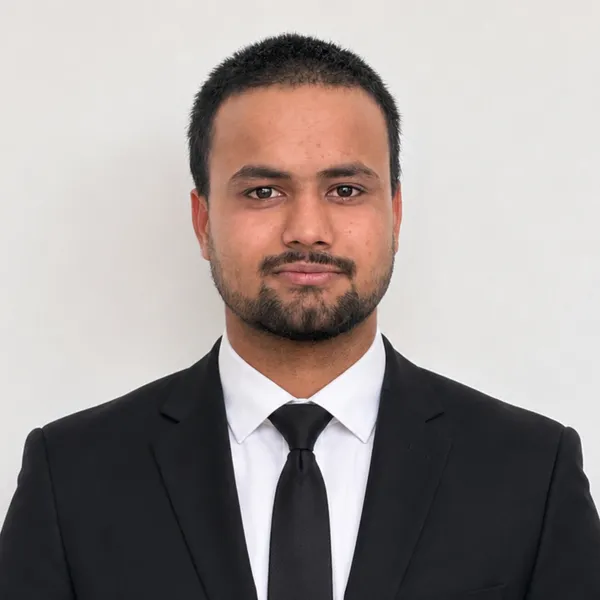
I still remember how far the nearest proper hospital felt when I was growing up in Darchula. Not far on a map, just far in every way that actually mattered. A few hours by road if the road was cooperating, longer if it wasn't, and for families further up in Darchula, Bajhang, or Bajura, "a few hours" could stretch into a day of walking mountain trails with a sick relative on a stretcher. That's not a statistic to me. That's the geography I grew up inside.
So when I read about how cloud infrastructure is starting to reshape healthcare delivery in Sudurpaschim, I didn't read it as an abstract case study. I read it as something happening or something that could happen in the hills I know by name.
The problem was never medicine. It was distance.
Nepal doesn't lack skilled doctors. What it lacks, in places like the Far West, is a way to get those doctors close enough to the people who need them without physically moving either party across terrain that fights you the whole way. Specialists cluster in Kathmandu and Dhangadhi because that's where the infrastructure to support their work exists. Everyone else makes do, or travels, or waits.
For years, the obvious fix build local data centers, wire up rural clinics with servers of their own never really worked here. Power cuts out. Landslides take fiber lines with them. There's no bench of local IT technicians to keep a server room alive through a monsoon. Physical infrastructure in this terrain isn't just expensive; it's fragile in ways that matter most exactly when you need it least to fail during an emergency.
What's different now is that the infrastructure doesn't have to live in the mountains at all. It just has to be reachable from them.
What actually changes with the cloud
As a Community Builder in the AWS ecosystem, I spend a lot of time thinking about this from the engineering side Lambda, S3, CloudFront, SageMaker but the part that actually moves me isn't the service names. It's what they quietly make possible for someone who has none of that vocabulary and never needs to.
A community health worker in a village health post doesn't need to know what serverless computing is. What matters to her is that the system she's using doesn't need a dedicated server humming in a back room, doesn't rack up cost when nobody's using it at 2 a.m., and doesn't fall over because a load-shedding schedule cut the power. Serverless architecture means the app is only "on" when someone needs it, which is exactly the kind of frugality rural clinics and the NGOs running them can't do without.
Then there's the connectivity problem, which anyone who's tried to make a video call from Bajhang will recognize instantly. Networks here swing wildly between 4G, 3G, and nothing at all. Applications built to assume fiber-grade bandwidth simply don't survive that. What's promising is seeing apps built to expect the opposite: ones that sense a weak connection and automatically compress images, strip away anything non-essential, and keep the core data moving even when the pipe is thin. Paired with edge caching through a global CDN, a health worker can pull up diagnostic guidelines or training material that's already sitting close by, instead of waiting for it to travel from a server on another continent.
And then there's the part that hits closest to home for a region that knows disaster firsthand. A monsoon landslide can take out a clinic's records in an afternoon if those records live in a filing cabinet or a single hard drive. Storing patient histories in the cloud instead means a family doesn't lose years of medical history along with the building it was kept in. If a clinic is damaged, a patient can walk into a facility in the next district, and a doctor can still pull up who they are, what they're allergic to, what's already been tried.

Where I'd want to be honest, not just optimistic
I want to be careful here, because I think enthusiasm without honesty does this region a disservice. AI-assisted diagnostics a model reading a chest X-ray for signs of tuberculosis or pneumonia in a clinic with no radiologist on staff is genuinely exciting, and it's technically very achievable with tools like SageMaker. But I'd describe that today as a promising direction and early pilot territory, not something running at scale across Sudurpaschim's health posts. The honest version of this story is that the foundation the storage, the low-bandwidth resilience, the telemedicine link between a village and a specialist in Kathmandu is real and being built now. The AI layer on top of it is where the real work is still ahead of us.
That distinction matters to me. I'd rather tell you accurately what's possible and what's still being proven than dress up a roadmap as a finished product.
Why this feels personal
I didn't get into cloud infrastructure because I found the acronyms compelling on their own. I got into it because I grew up somewhere that infrastructure of every kind has always been the hardest problem to solve. Roads take decades. Power lines take decades. But a well-architected system on AWS can reach a health post in Darchula the same week it's deployed, running on the same backbone that serves a hospital in Kathmandu or a bank in Singapore.
The mountains around Darchula aren't going anywhere, and they shouldn't have to. What can move, finally, is the expertise that used to require crossing them.
That's the part I find genuinely revolutionary, not the service catalog, but the idea that where you're born in Sudurpaschim no longer has to decide how good your medical care can be.
Enjoyed reading this content? Let the author know!
Your likes, comments, shares, and saves help creators reach more builders.

Loading recommendations
Loading article