
Kiro + Datadog in competition: solving infrastructure incidents with AI at DASH 2026
A Game Day isn't a workshop — it's competition with a clock, pressure, and a leaderboard. At DASH 2026, I used Kiro + Datadog to investigate, fix, and deploy under pressure. AI shined in some moments and broke in others. Here's the full story.
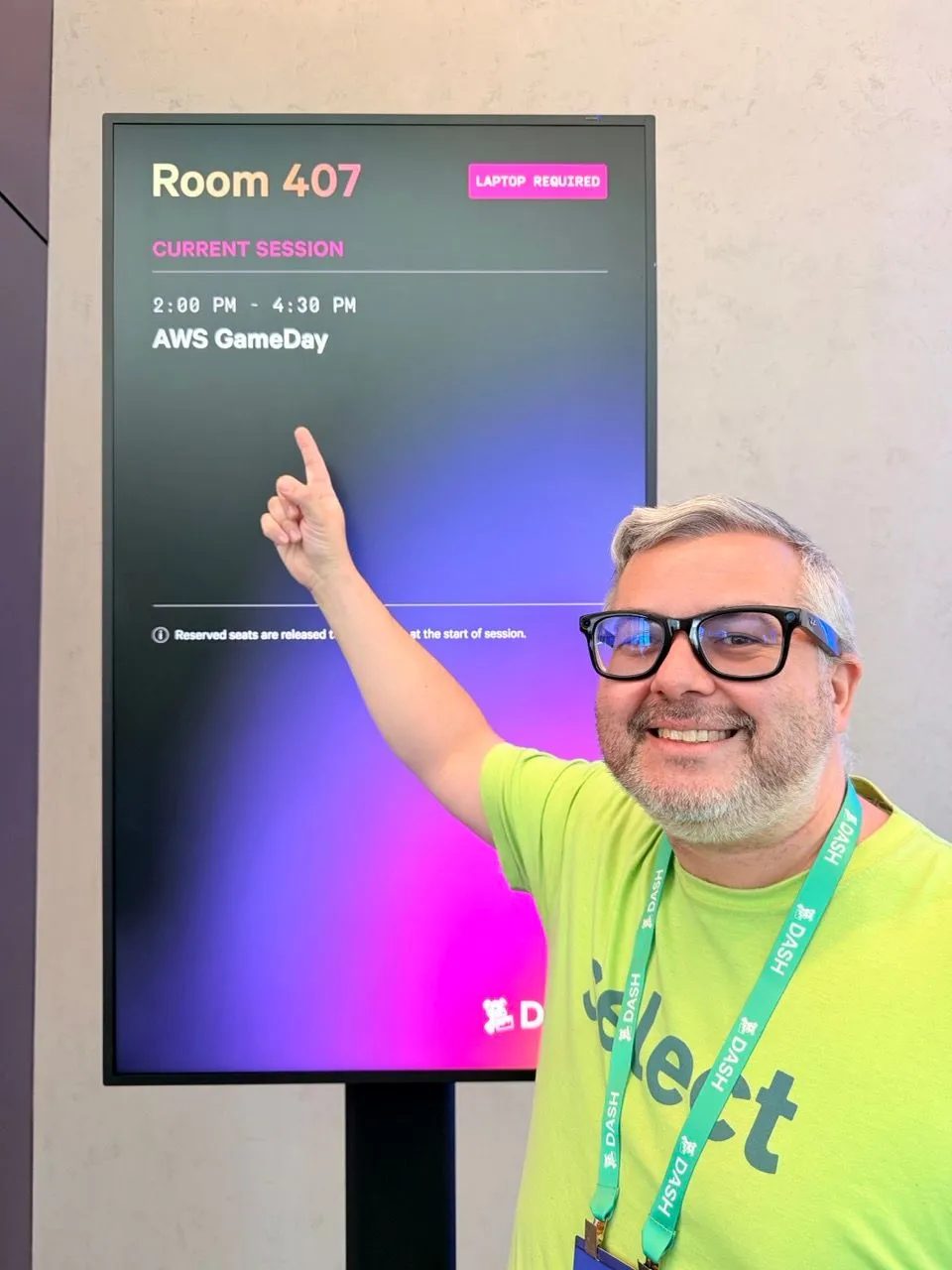
Only Brazilian at the AWS Game Day with Kiro at DASH 2026 in New York
Picture a room with 55 people, a live leaderboard, a fictional e-commerce site full of bugs, and a brand-new AI tool as your only weapon. Welcome to the AWS Game Day at DASH 2026 — and I was the only Brazilian in the room.
What is a Game Day?
Unlike a workshop where you follow a step-by-step tutorial, a Game Day is an "operative learning exercise" — you receive a problem, tools, and need to solve it under time pressure and competition. There's no predefined right or wrong. There's a leaderboard and a clock.
The organizer, who's been attending DASH for six years, described it as his "absolute favorite thing to do" at the event. After participating, I understand why.
The scenario: Stickerlandia
All teams were "employees" of a fictional company called Regulus. The objective: launch and keep running Stickerlandia — a sticker e-commerce site riddled with problems.
The event had 3 main quests:
- "All Paws on Deck: To Save Stickerlandia" — Launch the site and resolve issues affecting functionality
- "Maximum Canine Protocol" — Launch a first-day system with zero documentation
- "Ephemeral Transit" — Launch satellites into space, find unicorns, and make them carry treasure — all via AI agents
Yes, unicorns in space. The organizers' creativity was part of the fun.
The tools: Kiro + Datadog
Each team received:
- A temporary AWS account (100% risk-free — zero production impact)
- A temporary Datadog account for observability
- Kiro IDE — AWS's Gen AI tool, with pre-configured MCPs for Datadog, AWS services, and code security
- Premium user and general user credentials to test the site from different perspectives
The golden rule: "burn Kiro's tokens, not yours." — Use the provided AI, not your personal or company resources.
The live competition
It was 2.5 intense hours. The work pattern that emerged:
- Read the challenge in the Quest UI
- Ask Kiro to investigate the code and identify the problem
- Analyze the diagnosis in Datadog (traces, logs, metrics)
- Instruct Kiro to fix and deploy
- Wait 3-5 minutes for the service to update
- Verify and collect points
One of the coolest challenges: enabling the "Midnight Poppy" catalog only for premium users. The solution? An environment variable that needed to be set to
True. Kiro identified it, fixed it, and deployed — and we were the first to solve that quest.Another challenging quest: creating executive dashboards. The system provided feedback in 3 rounds ("Round 1 of 3") and you needed to iterate and improve. Kiro shined here — "Kiro was amazing at solving problems" came out spontaneously.
The issues (because nothing is perfect)
Kiro IDE authentication was the biggest obstacle. The process required:
- Opening the authentication URL INSIDE the VM (not on the local machine)
- Using incognito mode to avoid cross-contamination with personal accounts
- Frequent re-authentication when sessions expired
Some MCPs failed with timeouts. The organizer admitted: "Kiro is not great at telling why it's timing out to other MCPs when it needs that MCP to tell you why." New technology, with rough edges to smooth out.
But the workaround worked: closing and relaunching Kiro inside the IDE resolved most cases.
Strategy and lessons
The organizer gave a tip that perfectly sums up the dynamic:
"If your goal is to win, you probably want to do them all at once. If your goal is to learn something, it might be better to collaborate and do it together."
My strategy: tackle medium-difficulty quests first (more points than easy, less risk of getting stuck than hard) and use Kiro aggressively to accelerate each step.
The finale: scoreboard freeze and awards
In the last 5 minutes, the scoreboard was frozen — a lesson learned from a previous event where a team jumped to first place after prizes had already been awarded.
3rd place: "Token Maxers unite." Medals, special stickers, Datadog pickleball paddles, and Stanley Cups for the winners.
What struck me most was the closing: "Thank you for being willing to play and experiment with some new stuff." This was genuinely new technology. Kiro IDE in this competition format was experimental. And we were testing it in real time.
What I took away from this
Participating as the only Brazilian in an international Game Day with a tool still in preview was a unique experience. Key takeaways:
- Kiro + Datadog is a powerful combination — Observability investigation feeds the context AI needs to fix problems
- MCPs are the future of integration — When they work, resolution speed is insane. When they fail, you're stuck.
- Game Days > Workshops — Learning under competitive pressure sticks far more than guided tutorials
- The technology is new and still has rough edges — Authentication, timeouts, unstable MCPs. But the potential is clear.
The day before, at Datadog's internal Game Day, our Brazilian team placed 5th overall and 1st in Latin America. Two days of competition, two completely different experiences — and one certainty: this learning format works.
#AWS #Kiro #Datadog #DASH2026 #GameDay #Observability #AI #NewYork #VibeCoding
Enjoyed reading this content? Let the author know!
Your likes, comments, shares, and saves help creators reach more builders.

Loading recommendations
Loading article