
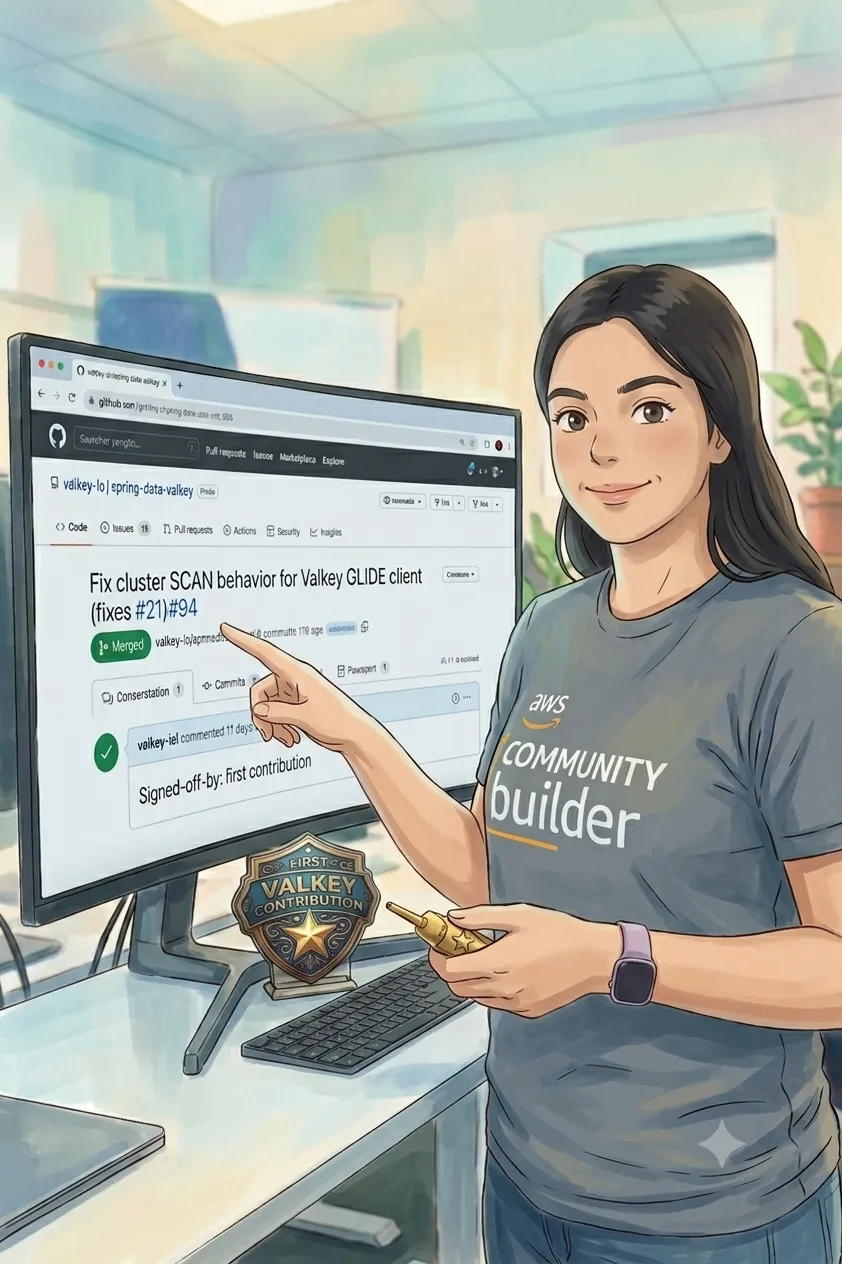
How I Made My First Contribution to Valkey Open Source (And Tips for Your Journey)
A practical guide to contributing to the Valkey open-source ecosystem. Discover how to get started, avoid common pitfalls, and master the often-overlooked Developer Certificate of Origin (DCO) requirement.

Contributing to a major open-source project for the first time can feel intimidating, but my recent experience contributing to the Valkey organization proved that with the right approach, anyone can make an impact.
As an AWS Community Builder in Security, I wanted to share my journey of fixing an issue in the
spring-data-valkey ecosystem, along with actionable tips to help you make your first contribution.
Myth Busting: "You Need to Be an Expert"
The biggest misconception about open source is that you need to be a seasoned guru to contribute.
- The Reality: There are many ways to contribute without deep technical skills.
Open source contribution is not just contributing to code and submitting PR, it heavily relies on diverse forms of contribution, including:
- Code: Building features or applying bug fixes.
- Documentation & Content: Writing blogs, creating vlogs, or clarifying guides.
- Community Support: Reporting bugs, triaging issues, and participating in code reviews.
- Quality Assurance: Testing new features and sharing your feedback.
Getting Started & Connecting
Before diving into the code, get to know the community. You can find multiple ways to interact with the team via the Valkey Connect Page . If you run into technical hurdles or want to help others, feel free to post or answer questions on Stack Overflow tagged with [valkey] .
When you are ready to look at repositories, remember that guidelines for contributing can be found in the CONTRIBUTING.md files across the various projects, such as the core Valkey Contributing Guide .
Finding the Right Issue
The Valkey organization hosts numerous projects. Head over to the Valkey Repositories page and use GitHub's filters to sort by your preferred Language (Java, C, Cpp, Go, etc.) or look for Labels like
good first issue or bug.I focused on Java and picked Issue #21 in the
spring-data-valkey repository, which aligned perfectly with my technical background.
The Power of Inclusivity
The Valkey community is highly collaborative. When I submitted my code via Pull Request #94 , the maintainers were incredibly supportive. A special shoutout to Jeremy Parr-Pearson, who reviewed my code, provided constructive feedback, and guided me through the final steps. Discussing the approach early with maintainers ensures everyone is aligned before you write too much code.
Bonus Tips for Success
- Look for Bugs in Your Expertise Area: Start with common, recognizable issues like a
NullPointerExceptionorIllegalArgumentException. - Target Detailed Issues: Pick bugs that already have a clear, detailed explanation written out by the reporter.
- Be Patient & Ask for Help: Open-source maintainers are often managing multiple moving parts. Give them time, and don't hesitate to ask questions when blocked.
Common Pitfalls to Avoid
❌ Ignoring Documentation: Skipping the CONTRIBUTING.md or CODE_OF_CONDUCT.md files.
❌ Ignoring Documentation: Skipping the CONTRIBUTING.md or CODE_OF_CONDUCT.md files.
❌ Submitting Massive PRs: Large pull requests are difficult to review. Keep your changes small and focused.
❌ Skipping Unit Tests: Always write or run tests to verify your changes don't break existing functionality.
❌ Blind Performance PRs: Avoid submitting performance improvement PRs without benchmarks or data to back them up.
⚠️ The One Thing Everyone Misses: Signing Your Commits
This is the most critical technical pitfall for new contributors. Valkey requires a Developer’s Certificate of Origin (DCO) for every single commit in a pull request. This certifies that your contributions are correctly attributed and licensed.
To agree to the DCO, you must sign off on your commits by adding
-s or --sign-off to your Git command:git commit -s -m "Your clear commit message"This automatically appends a
Signed-off-by: Your Name <email> line to the bottom of your commit message. Without this, the automated repository checks will fail your PR.If you have been hesitant to take the leap into open source, I highly encourage checking out the Valkey ecosystem. The community is ready to help you succeed!
Checkout all my opensource contributions on : https://github.com/wheresNasha
Enjoyed reading this content? Let the author know!
Your likes, comments, shares, and saves help creators reach more builders.

Loading recommendations
Loading article