

Vercel x Amazon Web Services (AWS) Databases & Vercel V0
@brooooke posted, announcing H0: Hack the Zero Stack with Vercel v0 and AWS Databases, "hackathon with $80k cash prizes for shipping a side project with the new v0 + AWS Databases integration, plus you can get AWS and v0 credits just for signing up!" Here's how we got started
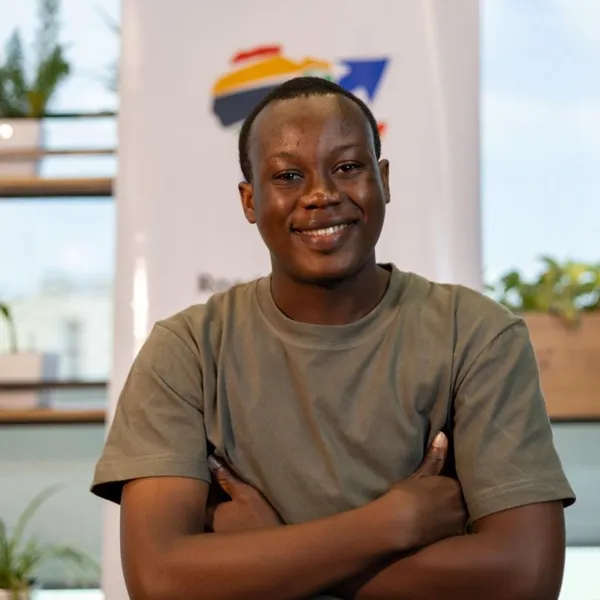
I recently achieved my first AWS certification. One of the methods I enjoyed in learning about cloud technologies and architectures that helped me get here is joining online AWS User Group events on Meetup.com. A favorite is the AWS Global Community Gatherings monthly meetup hosted by Yuki Sunaoka and AWS Community Hero Hiromi Ito. One of the recent speakers was Bryan Chasko, who spoke about using AI, AWS, and open-source IT networking tools to migrate his files off of Microsoft after 20+ years of paying them monthly. I connected with Bryan on LinkedIn and asked him if there was anything he was interested in collaborating on, and that's when we saw @brooooke's social posts
I'm a fan of DynamoDB, one of the 3 databases we were required to use as part of the hackathon. Brooke Jamieson used these bullet points to differentiate between the #H0Hackathon databases:
- Aurora Postgres -> Relational workloads
- DynamoDB -> Single-digit-ms latency at scale
Aurora DSQL -> Active-active multi-region writes
Bryan said he'd been looking for an excuse to dive into V0 & Vercel as he saw lots of young people utilizing the tools. One of Bryan's keys to staying relevant as an AWS Hero is paying attention to, in his words, "what the kids are doing. I always cheat off the kids, and they are adopting Vercel en masse"
I introduced an idea of mine for a Real-Time Emergency Response Platform. I envisioned citizen support experience including uploading multimedia, describing what is happening, adding context, reporting to someone who can help, and an ability to cancel alerts. Additionally I envision a first responder support experience that includes api & dashboard, incident reports, real time monitoring, historical monitoring, anomaly & severity flagging. Bryan, as it turns out, has 15+ years of alarm industry experience, and flagged false alarms from technology as a massive burden that drains emergency services rather than aiding them if rolled out incorrectly. We named our project Ðekawɔwɔ with a focus on the people of Ghana. Dekawowo means unity or oneness in my language Ewe.
Although the hackathon's brevity didn't allow us to do user experience surveys or build relationships with emergency services for integrations, Claude Opus 4.8 via kiro-cli established there is a need for emergency validation and routing - Ghana National Fire Service (GNFS) alone receives 500,000+ prank calls annually. We thought it would be fun to focus our "H0" hackathon prototype on the capital of the Volta Region Ho. H0xHO
We faced two massive challenges as a team - a diabolical time difference and the chaos that is life. During a one-month hackathon, we experienced pet emergencies, family health medivacs, video server failures, career changes, lightning storms, internet service provider latency, calendar glitches, and sleeping through middle-of-the-night alarms. We originally hoped to pair-program through this hackathon, but our video calls were distorted, making communication a slow process even in real time. If we win a prize in the hackathon, I'd like to continue building on our project Ðekawɔwɔ, and setting up asynchronous video chat within the Ðekawɔwɔ app will be a priority upon receiving prize AWS credits. As daunting as all that is, the real-world and logistical pains ended up being smaller than some of the time drains from the administrative part of the hackathon. But as preparation for my next certification, I am thankful for going through the pains in the following anyway
We evaluated the judges and found them to be a group obsessed with database engineering. #H0Hackathon powerhouse judging panel featured Joseph Idziorek, Tim Stoakes, Karthik Vijayraghavan, Aditya Samant, David Castro, Tony Gibbs, Rohan Bhatia, Ravi Yadav, Gowri Balasubramanian, and Abhinav Anand, who collectively evaluate innovations using their deep expertise across AWS databases, AI integration, and cloud architecture. We felt that given this group of judges, from a technical perspective, to win, we needed to prove our data models can handle massive scale. We had opportunities to do so by leveraging Amazon Aurora DSQL (Distributed SQL) &/or highly optimized DynamoDB global tables. Modeling distributed, ultra-low-latency data scares off a lot of casual hackathon participants. We felt that demonstrating our ability to build an app capable of a "global" scale of a million plus users would be the way to impress these judges
This hackathon would be an investment. The hackathon credits ($100 AWS) wouldn't handle my video validation dream, some of my ideas about how to utilize Amazon Bedrock & GenAI, and S3 was not one of the databases chosen to flex about. We knew we wanted to use AWS Kiro and would end up using 2 Kiro Power ($200/mo) & 1 Kiro Pro Max ($100/mo), as well as purchasing the domain dekawowow.com and utilizing Nova Act to test out simulated user testing for us to meet the time crunch
We put our money and time as down payments, confident in our ability to win one or more #H0Hackathon prizes, as winning AWS Credits (& cash!) would be the only way we wouldn't lose money on the hackathon. Both Bryan and I are working on certifications, so we figured this investment would be worth it alone on the merit of the opportunity to dive deep on the subjects we'd touch in the hackathon
Submission requirements included a Vercel Project ID, so we started with creating a Vercel account as well as an AWS account. Given the amount of new services we were interested in adopting, we felt it best to adopt AWS Dublin eu-west-1 as our data center of choice, sacrificing lower latency to Frankfurt for a mature service catalog and lower costs on services like EC2 and Lambda. We would use AWS Local Zone in Lagos, Nigeria, af-south-1-los-1a, to cache content in order to reduce latency experienced by our users, giving us a hybrid low-latency experience powered by af-south-1 in Cape Town, complemented by the state-of-the-art services and low cost of AWS Dublin. Ghana and Ireland are both green countries, so we'll take this as good tidings
Setting up the new AWS account, we immediately got an alert that we were not eligible for the free tier. Our account would not receive USD $200 in credit or Free Tier offers. We then had a decision about whether to take advantage of the AWS Business Support offer to get a full refund for the first 60 days. Bryan thought about it, as he said, getting approved to use services usually took free support several months, and this was a 30-day hackathon. But we decided to use a combination of existing accounts and migrate the project to my ownership, should we have the "problem" of winning the hackathon and having the funding to pursue this project further
Once our new AWS account was live, we next set up our root email Multi-Factor Authentication. A critical step in this is to set up a secondary MFA. Do this from the login screen of IAM Identity Center (prior to AWS console) by clicking on the top right menu where your account name is, and selecting "security."
Set a "passkey" to use with macOS or Google Chrome and to enable signing in with biometrics. Use your favorite authentication app including Google Authenticator. Using both ensures you are ready for the entropy of real life. Lose a phone or otherwise lose access to your authentication and survive. Setting a passkey enables quick access in your daily life, while a mobile authenticator makes switching devices and browsers painless. The ability to scan a qr code rather than navigating through manually entering passwords was one of the best parts of the authentication flow, a flow that looks familiar to the Amazon Cognito flow we specced out for Ðekawɔwɔ
We got through this process, and then our root account started getting a message "There was an error. An AWS account with that sign-in information does not exist. Create a new account." Ironically, though the root account still is having issues and Bryan cannot see anything when he logs into his IAM Identity Center, I was able to log in to my IAM Identity Center user fine. Again, given the crunch of the hackathon, we felt it best to go to places where we had billing and service established. I thought issues like these were because of my region, some sort of bias against Accra or similar, but seeing an AWS Hero in the states experience the same hurdles to getting going on AWS services was eye-opening. Our takeaway was that if you want to enter hackathons or take advantage of AWS credits, it's good practice to have a "lab" account or 3 ready to rock with billing history and service use established. We proceeded to purchase dekawowow.com from route53 and setup our Vercel team account. As we did not have prior Vercel experience, it was news to us that v0 is a standalone product where Artificial Intelligence superpowers your prototyping and frontend design process, producing a full-stack app in minutes capable of scaling when connected to databases by AWS.
Stay tuned here on AWS Builder center for more posts about AWS Databases &, and follow Bryan Chasko for the last of our posts, including a video demo of the Ðekawɔwɔ app we built using v0 over one single weekend (not counting a month of planning and infrastructure setup)
This content was created for the purpose of entering the H0: Hack the Zero Stack with Vercel v0 and AWS Databases hackathon. "Front-end in minutes. back-end designed to scale"
references:
The simplest, most secure way to sign into your accounts without a password
https://safety.google/intl/en_in/safety/authentication/passkey/
https://safety.google/intl/en_in/safety/authentication/passkey/
breaking a 225 Month Microsoft Recurring Billing Streak
https://builder.aws.com/content/3DlSYTsvaE1naOyIF4CBh7azJm2/breaking-a-microsoft-charge-streak-of-225-consecutive-months
https://builder.aws.com/content/3DlSYTsvaE1naOyIF4CBh7azJm2/breaking-a-microsoft-charge-streak-of-225-consecutive-months
AWS Community Gatherings
https://www.meetup.com/awsglobalcommunitygatherings/
https://www.meetup.com/awsglobalcommunitygatherings/
H0: Hack the Zero Stack with Vercel v0 and AWS Databases
https://h01.devpost.com/
https://h01.devpost.com/
Enjoyed reading this content? Let the author know!
Your likes, comments, shares, and saves help creators reach more builders.

Loading recommendations
Loading article