
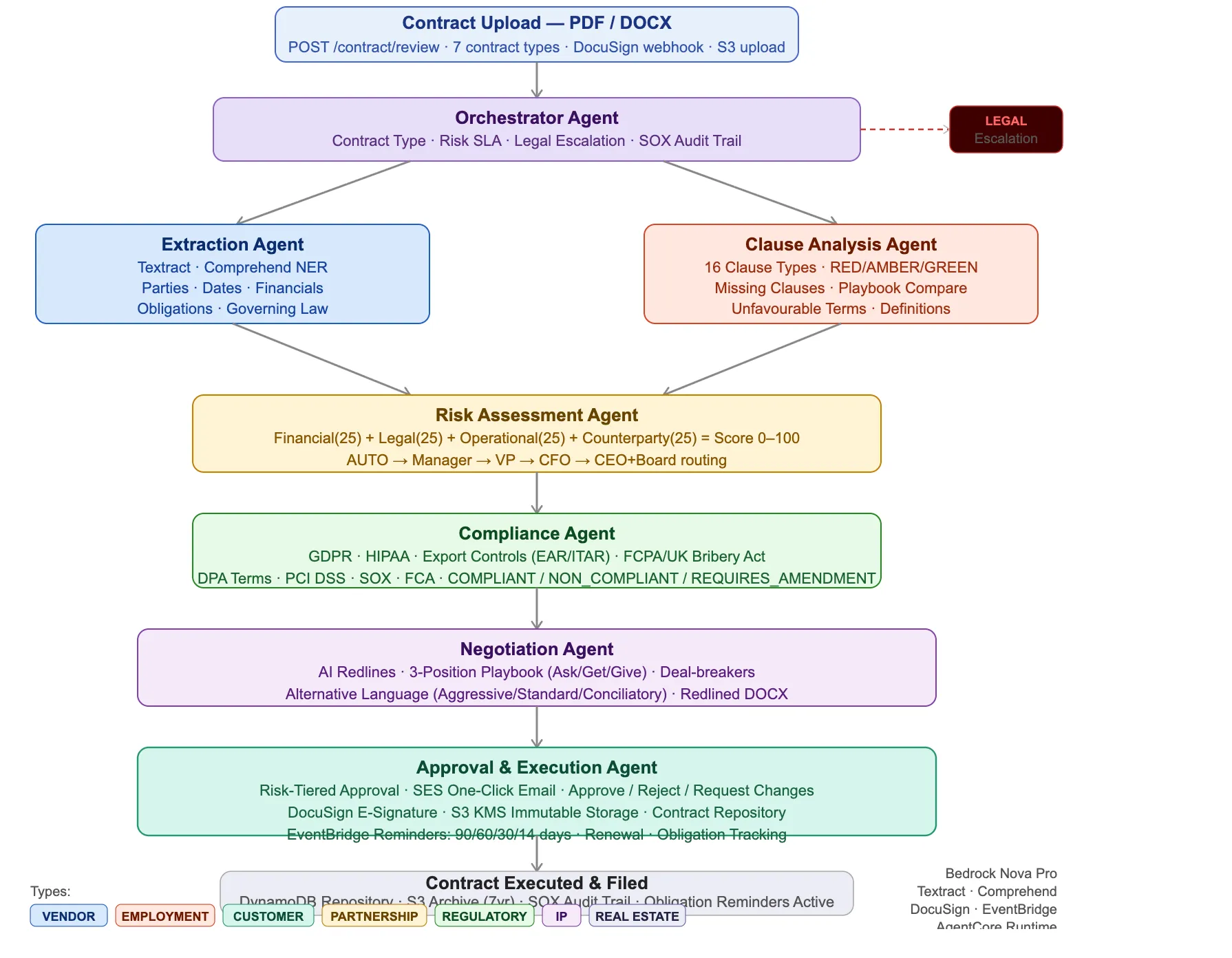
Building a Multi-Agent AI DevOps Incident Response Agent on AWS with Strands Agents SDK and Amazon Bedrock
When a production incident fires at 2 AM, every minute of downtime translates to lost revenue, eroded customer trust, and exhausted engineers. The typical incident response cycle — alert fires, on-call is paged, engineer logs in, diagnoses the issue, applies a fix, and writes a post-mortem — can stretch from minutes to hours depending on how well your systems, runbooks, and escalation paths are automated.


Building a Multi-Agent AI DevOps Incident Response Agent on AWS with Strands Agents SDK and Amazon Bedrock
GitHub: https://github.com/its-me-sweta/Devops_Inncident_Response_Agent.git
Introduction
When a production incident fires at 2 AM, every minute of downtime translates to lost revenue, eroded customer trust, and exhausted engineers. The typical incident response cycle — alert fires, on-call is paged, engineer logs in, diagnoses the issue, applies a fix, and writes a post-mortem — can stretch from minutes to hours depending on how well your systems, runbooks, and escalation paths are automated.
In this post I'll walk through a production-ready, eight-agent AI pipeline that automates the full DevOps incident response lifecycle — from CloudWatch alarm to blameless post-mortem — using:
- Strands Agents SDK with
@tooldecorators - Amazon Bedrock Nova Pro for RCA generation, runbook RAG, and post-mortem drafting
- Amazon Titan Embed v2 for runbook semantic search (FAISS + Titan)
- Amazon CloudWatch Logs Insights for real-time log forensics
- AWS X-Ray for distributed trace analysis
- AWS Systems Manager for automated EC2 and ECS remediation
- AWS CodeDeploy for deployment rollback
- Amazon DynamoDB for incident records, change management, and ITIL audit trail
- Amazon SES + SNS for stakeholder notifications and war room coordination
- Amazon EventBridge Scheduler for 30-minute recurring updates
- AgentCore Runtime for serverless agent deployment
Architecture Overview
1
2
3
4
5
6
7
8
9
10
11
12
13
14
15
16
17
18
19
20
21
22
23
24
25
26
27
28
29
30
31
32
33
34
35
36
37
38
39
40
41
42
43
                   ┌──────────────────────────────────────────────┐
                   │       Alert Sources                           │
                   │ CloudWatch · PagerDuty · Datadog · Synthetic  │
                   └───────────────────┬──────────────────────────┘
                                       │
                   ┌───────────────────▼──────────────────────────┐
                   │           Orchestrator Agent                   │
                   │  SEV-1→4 · ITIL Routing · Error Budget · SRE  │
                   └──────────┬────────────────────────────┬──────┘
                               │                            │
              ┌────────────────▼──────┐     ┌──────────────▼────────────┐
              │   Triage Agent         │     │   Diagnosis Agent          │
              │   Service Graph        │     │   CloudWatch Metrics       │
              │   SLO Impact           │     │   Logs Insights            │
              │   Affected Users       │     │   X-Ray Traces             │
              │   Change Correlation   │     │   Runbook RAG (FAISS)      │
              │   Blast Radius         │     │   RCA (confidence score)   │
              └────────────────┬──────┘     └──────────────┬────────────┘
                               └──────────────┬─────────────┘
                                              │
                   ┌──────────────────────────▼───────────────────┐
                   │         Auto-Remediation Agent                │
                   │  Deployment Rollback · ECS Restart            │
                   │  ASG Scale-Out · Cache Flush · SSM Runbook    │
                   │  Validate → Rollback-if-Failed                │
                   └──────────────────────────┬───────────────────┘
                                              │
               ┌──────────────────────────────┼─────────────────────────┐
               │                              │                         │
  ┌────────────▼───────────┐  ┌───────────────▼──────────┐  ┌──────────▼──────────┐
  │  Escalation Agent       │  │  Communication Agent      │  │  Change Mgmt Agent  │
  │  PagerDuty Page         │  │  Slack 30-min Updates     │  │  Emergency RFC       │
  │  War Room               │  │  Status Page              │  │  CAB Approval        │
  │  Jira Ticket            │  │  Customer Emails          │  │  Pipeline Freeze     │
  │  SLA Breach Alarm       │  │  Leadership Brief         │  │  Change Calendar     │
  └────────────────────────┘  └───────────────────────────┘  └─────────────────────┘
                                              │
                   ┌──────────────────────────▼───────────────────┐
                   │           Post-Mortem Agent                   │
                   │  Blameless Timeline · Five Whys               │
                   │  Action Items (Jira) · Confluence Doc         │
                   │  Runbook Update · SLO/Error Budget Tracking   │
                   └──────────────────────────────────────────────┘
ITIL/SRE Severity Framework
1
2
3
4
5
6
SEV_SLA = {
    "SEV-1": 30,   # minutes to resolve — war room + all-hands + pipeline freeze
    "SEV-2": 120,  # minutes — war room + status page
    "SEV-3": 240,  # minutes — on-call only
    "SEV-4": 480,  # minutes — next business day acceptable
}
Stage 1 — Triage Agent
The Triage Agent is the first responder — it contextualises the alert before any diagnosis or remediation.
Service Graph lookup from CMDB determines upstream/downstream impact:
1
2
3
4
5
SERVICE_GRAPH = {
    "api-gateway":    {"downstream": ["auth-service", "user-service", "order-service"]},
    "order-service":  {"downstream": ["payment-service", "inventory-service", "notification-service"]},
    "payment-service":{"downstream": ["payment-gateway", "fraud-detection"]},
}
SLO/Error Budget assessment:
1
2
3
4
5
def assess_slo_impact(service_name, severity) -> dict:
# Queries CloudWatch for 5xx error count (30-min window)
# Calculates error budget consumed this month
# Returns: slo_breached, monthly_budget_used_pct, budget_criticalChange correlation is the most powerful triage signal — if a deployment happened within 2 hours of the incident, the correlation probability is 0.80 (rollback is the right call):
1
2
correlation = 0.80 if recent_deployments else 0.10
recommended_action = "ROLLBACK" if correlation > 0.70 else "CONTINUE_DIAGNOSIS"
Stage 2 — Diagnosis Agent
Three parallel evidence streams feed the RCA:
CloudWatch Logs Insights — scans for error patterns in real-time:
1
2
3
4
query = """fields @timestamp, @message
           | filter @message like /ERROR|CRITICAL|FATAL|Exception|OutOfMemory/
           | sort @timestamp desc | limit 25"""
logs_cl.start_query(logGroupName=log_group, startTime=start, endTime=end, queryString=query)
AWS X-Ray trace analysis — finds error traces and slow segments:
1
2
3
xray.get_trace_summaries(
    FilterExpression=f'service("{service_name}") AND error',
    StartTime=start, EndTime=end)
Runbook RAG (FAISS + Titan Embed v2) — retrieves the most relevant troubleshooting procedure:
1
2
3
embedding = get_embedding(f"{service_name} {error_pattern}")
# Semantic search over runbook knowledge base
# Returns: troubleshooting steps, estimated resolution time, known fixes
RCA confidence scoring:
1
2
3
4
if deployment_correlation:   confidence = max(confidence, 0.88)  # HIGH → auto-remediate
if log_pattern_found:        confidence = max(confidence, 0.70)  # MEDIUM → remediate + monitor
if xray_errors > 5:          confidence = max(confidence, 0.72)
# < 0.60 → escalate to L2/L3 for manual diagnosis
Stage 3 — Auto-Remediation Agent
Selects the right fix based on root cause, with built-in safety gates:
Deployment rollback (most common — used for regression incidents):
1
2
3
def trigger_deployment_rollback(service_name, deployment_id, incident_id) -> dict:
codedeploy.stop_deployment(deploymentId=deployment_id, autoRollbackEnabled=True)ECS service restart (for OOM, deadlock, hung processes):
1
ecs.update_service(cluster=cluster_name, service=service_name, forceNewDeployment=True)
Infrastructure scale-out (for capacity incidents):
1
2
asg.set_desired_capacity(AutoScalingGroupName=resource_name,
                          DesiredCapacity=new_capacity, HonorCooldown=False)
Remediation validation — waits 3 minutes, then checks 3 consecutive clean data points:
1
2
3
4
def validate_remediation(service_name, incident_id) -> dict:
recent_errors = query_cloudwatch_5xx_count(last_5_minutes)
return {"validation_passed": recent_errors < 10}Rollback-if-Failed — if validation fails, immediately undoes the remediation and escalates to L2:
1
2
3
if not validation_passed:
    rollback_if_failed(incident_id, action_taken, rollback_procedure)
    # Escalate — maximum 2 auto-remediation attempts per incident
SAFETY RULES enforced in code:
- NEVER restart Tier-1 stateful services (RDS primary) without human confirmation
- ALWAYS take a snapshot before destructive operations
- Maximum 2 auto-remediation attempts per incident
Stage 4 — Escalation Agent
War room creation for SEV-1/SEV-2 — auto-creates a Slack channel with full incident context:
1
2
3
lambda_cl.invoke(FunctionName="devops-slack-create-channel",
                 Payload=json.dumps({"channel_name": f"incident-{incident_id.lower()}",
                                      "initial_message": context_summary}))
SLA breach alarm — CloudWatch alarm fires before SLA deadline with 15-minute warning:
1
2
3
4
cw.put_metric_alarm(
    AlarmName=f"SLA-BREACH-{incident_id}",
    AlarmActions=[ONCALL_TOPIC],  # Pages VP Engineering on SLA risk
)
Pipeline freeze for SEV-1 — no production deployments until resolved:
1
2
sns.publish(TopicArn=FREEZE_TOPIC,
            Message=json.dumps({"action": "FREEZE", "message": "FREEZE: No production deployments"}))
Stage 5 — Communication Agent
Structured 30-minute updates for SEV-1 via EventBridge Scheduler:
1
2
3
4
5
scheduler.create_schedule(
    Name=f"ir-update-{incident_id}-{update_number}",
    ScheduleExpression=f"at({next_update})",
    Target={"Arn": "arn:aws:lambda:...:function:devops-incident-update", ...}
)
Status page update format:
1
2
3
4
Investigating: "We are aware of issues affecting {service}. Our engineers are investigating."
Identified:    "We have identified the root cause as {cause} and are implementing a fix."
Monitoring:    "A fix has been deployed. We are monitoring to confirm resolution."
Resolved:      "This incident has been resolved. See our post-mortem for full details."
Stage 6 — Change Management Agent
Every incident remediation creates an Emergency Change Record (RFC) — ITIL-compliant:
1
2
3
4
5
6
def create_emergency_change(incident_id, description, rollback_plan, implementer) -> dict:
# RFC number: RFC-2025-XXXXXX
# Change type: EMERGENCY (bypasses normal CAB)
# SEV-1/2: VP Engineering pre-delegates approval authority
# Post-hoc CAB review required at next weekly meetingPipeline freeze is a critical SEV-1 safety measure — blocks all production deployments and notifies all engineering teams via SNS.
Stage 7 — Post-Mortem Agent
Blameless post-mortem with Four Key Metrics:
1
2
3
4
MTTD (Mean Time to Detect):      5 minutes  — first alert to incident declared
MTTA (Mean Time to Acknowledge):  8 minutes  — incident declared to engineer engaged
MTTC (Mean Time to Contain):     22 minutes  — engaged to fix deployed
MTTR (Mean Time to Resolve):     45 minutes  — fix deployed to service fully restored
Five Whys generated automatically from the RCA:
1
2
3
4
5
6
7
whys = [
    {"why": "Why did the service fail?",          "answer": root_cause},
    {"why": "Why was that possible?",             "answer": "Missing input validation"},
    {"why": "Why wasn't it caught in testing?",   "answer": "Integration tests missed this path"},
    {"why": "Why wasn't it detected sooner?",     "answer": "Alert threshold too high (5%, should be 0.5%)"},
    {"why": "Why did it take so long to resolve?","answer": "Runbook was outdated"},
]
Runbook self-update — the agent writes the fix that worked back into the runbook:
1
2
runbooks_table.update_item(
    UpdateExpression="SET steps=list_append(steps, :ns), known_fixes=list_append(..., :fix)")
Error budget tracking:
1
2
3
error_budget_consumed = (duration_minutes / (30 * 24 * 60)) * 100  # % of monthly SLO budget
if error_budget_consumed > 50:
    trigger_reliability_review()   # Mandatory architecture review
AWS Infrastructure Summary
| Resource | Purpose |
|---|---|
| Amazon Bedrock Nova Pro | RCA narrative, post-mortem drafting |
| Amazon Titan Embed v2 | Runbook semantic search (FAISS) |
| Amazon CloudWatch Logs Insights | Real-time log forensics |
| AWS X-Ray | Distributed trace analysis |
| AWS CodeDeploy | Deployment rollback |
| AWS Systems Manager | EC2/ECS automated remediation |
| Amazon DynamoDB (6 tables) | Incidents, runbooks, changes, post-mortems, comms, SLO |
| Amazon S3 | Post-mortem documents, runbook storage |
| Amazon SES | Stakeholder emails, customer notifications |
| Amazon SNS | War room, on-call pages, pipeline freeze, status page |
| Amazon EventBridge Scheduler | 30-minute incident updates |
| AgentCore Runtime | Serverless agent deployment |
Try It Yourself
1
2
3
4
5
6
7
8
9
10
11
12
13
14
15
16
17
18
git clone https://github.com/its-me-sweta/Devops_Inncident_Response_Agent.git
cd devops-incident-response-agent
pip install -r requirements.txt
uvicorn main:app --reload

# Simulate a SEV-2 production incident
curl -X POST http://localhost:8000/incident/create \
  -H "Content-Type: application/json" \
  -d '{
    "alert_source": "cloudwatch",
    "title": "order-service: 5xx error rate > 5% for 5 minutes",
    "description": "HTTPCode_Target_5XX_Count exceeded threshold. Error rate: 8.3%.",
    "affected_service": "order-service",
    "severity": "SEV-2",
    "region": "us-east-1",
    "log_group": "/aws/ecs/order-service",
    "cluster_name": "production-cluster"
  }'
Built with Strands Agents SDK · Amazon Bedrock Nova Pro · AgentCore Runtime
Enjoyed reading this content? Let the author know!
Your likes, comments, shares, and saves help creators reach more builders.

Loading recommendations
Loading article