
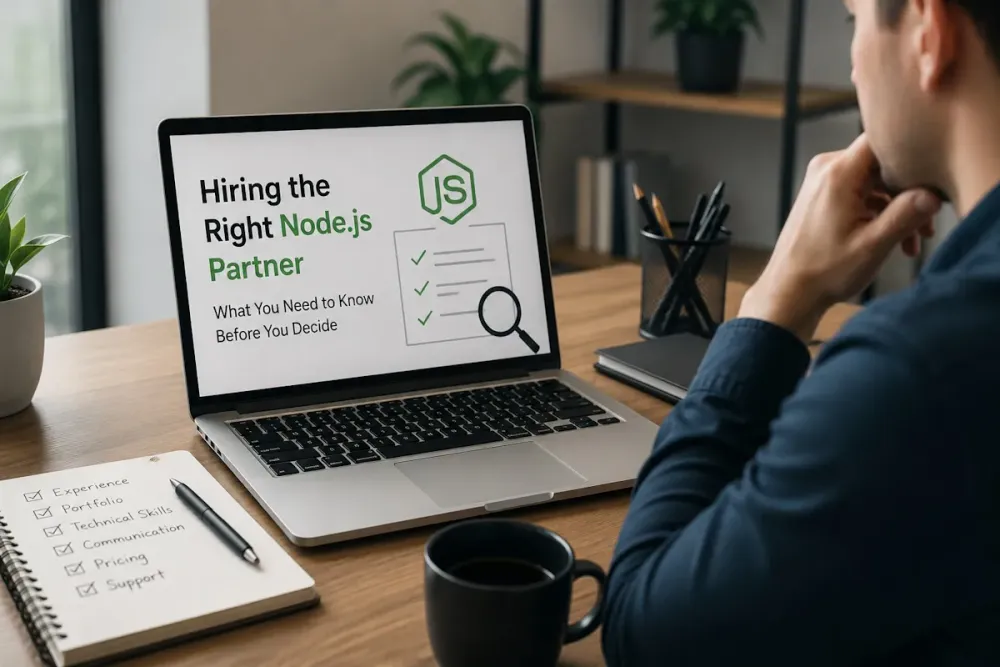
Key Factors to Consider Before Hiring a Node.js Development Company
Learn key factors to check before hiring a Node.js development company, from skills and pricing to security, support, and long-term project fit.


Hiring a Node.js team sounds simple at first. You search online, shortlist a few companies, ask for quotes, and pick one. Easy, right? Not really.
The company you choose will shape your product’s speed, structure, security, and long-term cost. A poor choice can leave you with messy code, missed deadlines, unclear updates, and a product that becomes hard to maintain after launch.
Node.js is a strong choice for real-time apps, APIs, SaaS platforms, dashboards, streaming tools, marketplaces, and high-traffic web apps. But the tool alone does not guarantee a good product. The real difference comes from the people writing the code, planning the architecture, testing the build, and supporting it later.
So, before you hire a NodeJS Development Company , you need to look beyond pricing and sales pitches. You need to check how they think, how they work, and how well they understand your business goals.
Start with Their Node.js Experience
The first thing to check is direct Node.js experience. Not general web development. Not just JavaScript skills. You need a team that has worked on Node.js projects across different use cases.
Ask what kind of Node.js apps they have built. Have they worked on REST APIs, GraphQL, microservices, real-time chat, payment systems, admin panels, or cloud-based products? Have they handled apps with many users at once? Have they worked with databases like MongoDB, PostgreSQL, MySQL, or Redis?
A strong company should be able to explain past work without making it sound complicated. They should tell you what problem they solved, what tech stack they used, and why they picked that approach.
Also, check if their developers understand asynchronous programming, event-driven architecture, package management, error handling, and server-side performance. These are not fancy extras. They are basic parts of solid Node.js development.
Check Their Portfolio with a Sharp Eye
A portfolio can tell you a lot, but only if you look closely. Do not just scan screenshots. Screenshots can look nice while the backend is a mess.
Ask for details. What was the client’s challenge? What role did the company play? Did they build the app from scratch or only fix a small part? How long did the project take? What features were included?
Try to find projects close to your own idea. For example, if you are building a SaaS platform, a company with SaaS experience will already understand user roles, subscriptions, dashboards, API design, and admin controls. If you need a real-time app, look for chat, tracking, gaming, or live update experience.
You do not need an exact match. But the closer their experience is to your needs, the less guesswork there will be.
Look at Their Technical Planning Process
Good Node.js development starts before the first line of code is written. Planning matters. A lot.
A reliable company will ask questions about your users, business model, feature priorities, traffic expectations, security needs, third-party tools, and future plans. They will not rush into coding just to close the deal.
Ask how they handle discovery and planning. Do they prepare feature lists? Do they create wireframes or technical documents? Do they define milestones? Do they explain the project flow in plain English?
This matters because unclear planning often leads to scope creep, budget jumps, and delays. You may start with a simple app and end up with confusion because nobody mapped the core requirements properly.
A good team helps you get clarity early. They may even question some of your ideas, and that is a good sign. You do not need yes-people. You need people who can spot issues before they become costly.
Review Their Communication Style
You can hire the smartest developers in the world, but if they do not communicate well, your project can still become painful.
Pay attention from the first call. Do they listen? Do they explain things clearly? Do they answer your questions directly? Do they ask useful questions? Or do they reply with vague promises and buzzwords?
Communication becomes even more important when you are working with an offshore team. Time zones, work culture, and project updates need to be handled properly.
Ask how often they share updates. Will you have a project manager? What tools do they use for tracking tasks? Can you join sprint calls? Will you get access to project boards, reports, or demos?
You should never feel like your project has disappeared into a black box. Regular updates keep everyone on the same page.
Understand Their Development Team Structure
Before signing anything, find out who will actually work on your project. Sales teams often make big promises, but the real work happens with developers, testers, designers, and project managers.
Ask about the team setup. Will you get dedicated developers? Will there be a senior developer reviewing the code? Is there a QA person involved? Who handles deployment? Who will be your main contact?
This is where many companies differ. Some offer full teams. Some only provide developers. Some outsource parts of the work to unknown freelancers. You need to know this upfront.
A balanced team usually gives better results. Developers build the product, QA checks it, project managers track progress, and technical leads guide the architecture. Without that structure, things can get messy fast.
Ask About Code Quality Practices
Code quality is not something you can judge from the outside easily. Still, you can ask the right questions.
Do they follow coding standards? Do they use code reviews? Do they write comments where needed? Do they follow naming conventions? Do they maintain clean folder structures? Do they use Git properly?
Poor code may work at first, but it creates problems later. New features take longer. Bugs become harder to fix. Scaling becomes expensive. Developers may struggle to understand what was built.
Ask if they can share sample code from a public repository or explain their code review process. A professional team will not hesitate to talk about how they keep code clean and maintainable.
Check Their Security Awareness
Security should not be treated as an afterthought. Node.js apps often handle user data, payments, logins, APIs, and third-party services. A weak setup can expose your business to serious risk.
Ask how they handle authentication, authorization, input validation, data encryption, API protection, dependency checks, and secure server setup. Do they protect against common risks like injection attacks, cross-site scripting, broken access controls, and exposed credentials?
Also, check how they manage environment variables, API keys, and database access. These small details matter.
You do not need to be a security expert. Just ask direct questions and listen to how they respond. If they only say “we follow best practices” without details, push further.
Review Their Testing Process
Testing saves money. That may sound odd, but it is true. Bugs found late are more expensive to fix.
Ask what kind of testing they perform. Do they test APIs? Do they test user flows? Do they write unit tests or automated tests where needed? Do they check performance under load? Do they test across browsers and devices?
For Node.js projects, backend testing is especially important. APIs need to return the right data, handle errors properly, and stay stable when many users are active.
Also, ask when testing happens. If testing is only done at the very end, that can create a pile of problems right before launch. A better approach is to test throughout the project.
Consider Scalability from Day One
Your first version may only have a few users. That is normal. But what happens when traffic grows?
A smart Node.js team will build with future growth in mind. That does not mean overbuilding. It means making practical choices so your app does not collapse when usage increases.
Ask how they plan for scaling. Do they use proper caching? Can the backend handle more users later? Is the database structure suitable for growth? Can services be separated if needed? Will the app work well in cloud environments?
You do not need a giant enterprise setup from day one. But you do need a foundation that does not trap you later.
Compare Pricing Without Chasing the Cheapest Quote
Budget matters. No one wants to overspend. But choosing the cheapest company often costs more in the long run.
Low quotes can mean rushed work, junior-only teams, poor testing, weak planning, or hidden charges later. That does not mean expensive is always better. It means you need to understand what is included.
Ask for a clear breakdown. What is covered in the quote? Design? Backend? Frontend? QA? Project management? Deployment? Support? Revisions?
Also, ask how changes are handled. Projects often shift as ideas become clearer. You need to know how the company manages extra features, timeline changes, and added costs.
A fair price with clear scope is better than a cheap quote full of surprises.
Check Client Reviews and References
Reviews can reveal patterns. One bad review may not mean much, but repeated complaints about delays, poor updates, or bad support are red flags.
Check platforms like Clutch, GoodFirms, Google reviews, and LinkedIn. Look for comments about communication, technical skill, deadline handling, and post-launch support.
Ask for references too. Speaking with a past client can give you real insight. You can ask whether the company met deadlines, handled issues well, and stayed responsive after launch.
If a company avoids sharing references or has no visible track record, be careful.
See If They Understand Your Business Goals
You are not just hiring people to write code. You are hiring a team to help build something useful for your business.
A good company will try to understand your target users, revenue model, market, internal workflow, and long-term plans. They should ask why a feature matters, not just how to build it.
For example, if you want a dashboard, they should ask who will use it, what data matters most, and what actions users need to take. If you want a booking system, they should ask about cancellations, payments, user roles, reminders, and admin control.
This business thinking can save you from building features that look good but do little.
Ask About Post-Launch Support
The project does not end at launch. In fact, launch is often when real feedback starts coming in.
Users may find bugs. You may need small changes. Servers may need monitoring. Packages may need updates. New features may become urgent.
Ask what support they provide after delivery. Is there a warranty period? Do they offer monthly maintenance? How fast do they respond to issues? Who handles urgent fixes?
This is important because many companies disappear after final payment. You need a partner who can stay involved when needed.
Check Their Knowledge of Related Technologies
Node.js rarely works alone. Your project may need React, Angular, Vue, mobile apps, cloud hosting, DevOps, databases, payment gateways, analytics tools, CRM systems, or third-party APIs.
So, check the company’s wider skill set. Can they handle the full product or only the backend? Do they understand cloud platforms like AWS, Azure, or Google Cloud? Can they work with Docker, CI/CD pipelines, and server monitoring?
This matters when your project grows. Hiring separate teams for every small task can slow things down. A company with broader technical skills can handle more under one roof.
Pay Attention to Ownership and Transparency
Before you start, make sure the contract is clear about code ownership, repository access, documentation, credentials, and deliverables.
You should own your source code. You should have access to your Git repository. You should receive project documents, setup guides, and deployment details. Your hosting and third-party accounts should be under your control.
This may sound basic, but it is often ignored. Some clients only realize later that they do not have full access to their own product.
Ask these questions early. A trustworthy company will be open about ownership and access.
Look for Cultural Fit
Skills matter, but working style matters too. Some companies are very formal. Some move fast and communicate casually. Some need detailed instructions for every task. Others take more ownership.
Think about what works best for you. Do you want a team that can guide you? Do you prefer daily updates or weekly summaries? Do you want detailed documentation or quick working demos?
There is no single right answer. The right fit depends on your project and your own way of working.
A quick discovery call can tell you a lot. If the conversation feels forced, unclear, or one-sided, that may continue during the project.
Be Careful with Big Promises
Some companies promise everything. Fast delivery, low cost, perfect quality, unlimited changes, full support, and zero issues.
Sounds nice. But real projects do not work that way.
Good companies are honest about trade-offs. If you want faster delivery, scope may need to be smaller. If you want advanced features, the budget may rise. If you want high performance, extra planning may be needed.
Honesty is a good sign. A company that explains risks clearly is usually better than one that says yes to everything.
Consider Location, Time Zone, and Value
Many US businesses hire offshore teams to balance cost and skill. India is a common choice because of its large developer talent pool, English communication, and experience with global clients.
Still, you should choose carefully. Not every offshore company works the same way. Check communication overlap, project management style, developer quality, and long-term support.
If you are comparing vendors, this guide on choosing a node js development agency in india can help you understand what to look for before making a decision.
The goal is not just to reduce cost. The goal is to get the right mix of skill, communication, reliability, and business understanding.
Questions You Should Ask Before Hiring
Before you sign a contract, ask direct questions like these.
How many Node.js projects have you completed? Who will work on my project? How do you manage tasks and timelines? What happens if requirements change? Do you provide testing? How do you handle security? Will I own the source code? What support do you provide after launch? Can you share references? How do you handle urgent bugs?
The answers will tell you a lot. Clear answers show maturity. Vague replies usually signal trouble.
Do not be afraid to ask follow-up questions. A good company will respect that. After all, you are trusting them with your product, money, and time.
A Smarter Way to Make the Final Choice
The best Node.js development company is not always the biggest one, the cheapest one, or the one with the flashiest website. It is the one that understands your goals, communicates clearly, writes clean code, tests properly, and stays accountable after launch.
Take your time during the selection process. Compare portfolios. Talk to the team. Review their process. Check client feedback. Look at how they respond when you ask hard questions.
A strong partner will make your project smoother from planning to launch. A weak one can turn even a simple idea into a long headache.
So, before you hire, ask yourself one simple question.
Do they feel like a vendor, or do they feel like a team that can actually help you build this the right way?
Enjoyed reading this content? Let the author know!
Your likes, comments, shares, and saves help creators reach more builders.

Loading recommendations
Loading article