
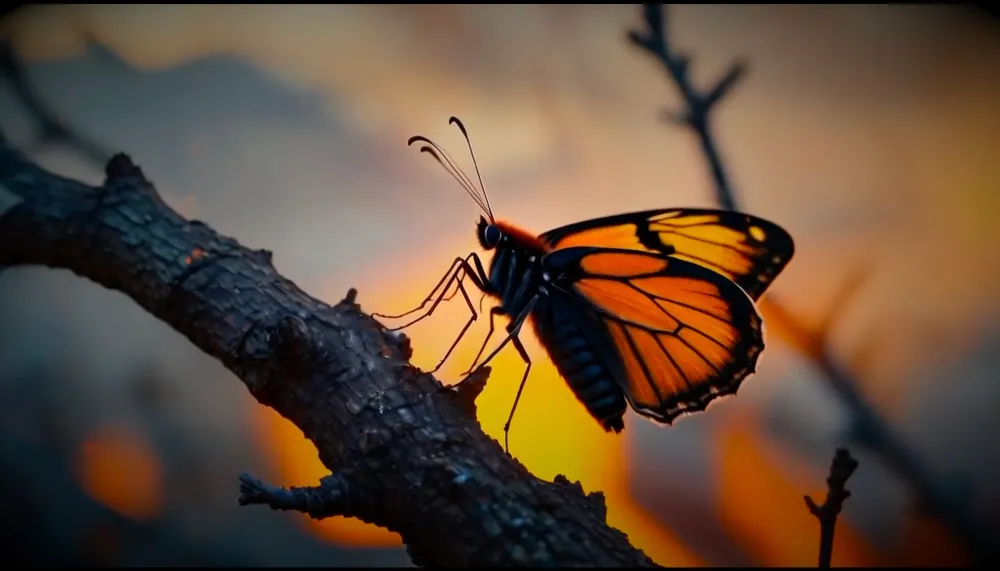
AI-Generated Metal Music Video for $23: AWS Bedrock + Kiro
We created a cinematic metal music video using generative AI with AWS Bedrock and Kiro for just $23 USD. See how AI adapts to complex artistic expression.

Manager, Solutions Architecture
When AI Dared to Make Art: How We Created a Metal Music Video with AWS Bedrock and Kiro
An experiment where artificial intelligence stopped solving technical problems and faced something far harder: interpreting human emotions and turning them into cinema.
Disclaimer: This is a personal blog. The opinions and experiences expressed here are my own and do not in any way represent the views of AWS, Amazon, or their affiliates. My opinions, my own.
AI already knows how to write code and summarize documents. That's no longer surprising. The question we asked was different:
Can an AI understand a metal song, feel its emotional narrative, and translate it into a cinematic music video that actually works as an artistic piece?
The short answer: yes. And it cost $23.
The Challenge
"Fire Escape" is the new single from Indheo, a Chilean metal band with three albums under their belt. The song speaks of cycles of pain, of waiting for storms that never end, of reaching for someone's hand in the darkness, and of being reborn through fire. It has emotional layers, visual metaphors, and a narrative arc that goes from despair to collective transformation.
A traditional music video for something like this requires a production crew, locations, actors, and a budget of $5,000 to $50,000. For an independent Chilean band, that's simply impossible.
But what interested us went beyond cost: can AI go from "generate a report" to "interpret this emotion and turn it into moving images"?
The Tools
Amazon Bedrock: The Creative Engine
We used two video generation models through Amazon Bedrock:
- Luma Ray2: Text-to-video that generates photorealistic clips from written descriptions. You describe a scene and it returns a cinematic video. Our primary model.
- Amazon Nova Reel 1.1 (currently in legacy mode): Allows generating takes with multiple shots in a single invocation, ideal for maintaining visual coherence across sequences.
Bedrock's infrastructure was key: asynchronous parallel processing, direct S3 integration, and standard AWS APIs with boto3.
Kiro: The Creative Partner
Kiro is an AI-powered IDE, but in this project it was much more than a code editor. It did the work of a creative director, a technical writer, and a developer:
- Analyzed the song lyrics and proposed an 8-act narrative structure
- Designed a cinematic storyboard with camera descriptions, lighting, and emotion
- Wrote video generation prompts optimized for each model
- Generated the Python scripts to orchestrate the entire process with Bedrock
- Iterated on the visual concept when early results didn't capture the right emotion
The Process
Understanding the Song
Before generating a single frame, we analyzed the lyrics verse by verse with Kiro. Not literally, but emotionally:
- "The black will turn to gray" → It's not hope yet. Just a shift from one kind of emptiness to another.
- "I'M WAITING IN THE DARKNESS" → Patience in adversity.
- "GIVE ME YOUR HAND" → The pain returns, but there's a cry for connection.
- "IN THE FIRE ESCAPE" → Fire doesn't destroy. It transforms.
From this, a visual arc was born:
Darkness → Desolation → Waiting → Storm → Connection → Fire → Rebirth and a color palette that evolves with the emotion, from pure black to white.The Cinematic Storyboard
Not a generic storyboard. One written in the language of a director of photography:
"Slow 360-degree orbiting shot around a kneeling figure in the eye of a massive storm, the figure is perfectly still with head bowed, surrounding them a wall of swirling dust and debris rotates like a living cylinder..."
Each prompt included camera movement, color temperature, cinematographic references (Tarkovsky, Lubezki, Deakins), specific emotion, and internal transitions. The difference between a generic video and a cinematic one lies in these details.
Video Generation with Bedrock
The technical process was straightforward. One API call per take:
Python
response = bedrock_runtime.start_async_invoke(modelId="luma.ray-v2:0",modelInput={"prompt": prompt,"duration": "5s","resolution": "720p","aspect_ratio": "16:9"},outputDataConfig={"s3OutputDataConfig": {"s3Uri": f"s3://{bucket}/{prefix}{scene_id}/"}})
We submitted all requests and Bedrock processed them in parallel. Within 2-4 hours we had all videos ready in S3. They were downloaded and edited in iMovie (yes, iMovie — you don't need $300 professional software).
The Numbers
Item | Value |
|---|---|
Total cost | ~$23 USD |
Project time | 10-15 hours |
Takes generated | 16 long + 76 short |
Paid tools | Only AWS Bedrock |
Editing software | iMovie (free) |
For context: a traditional professional music video costs $5,000 to $50,000 USD and takes weeks.
What We Learned
AI can understand emotional context. When we gave Kiro the lyrics, it didn't return something generic. It understood that fire is a metaphor for transformation, that the opening darkness is gestation, and that human connection is the story's turning point. Is it real understanding? Philosophical debate. But the result works artistically.
Prompt engineering is artistic direction. The difference between "person walking in desert" and "lateral tracking shot following a lone figure through an endless ash-gray wasteland, Roger Deakins landscape composition" is the difference between stock footage and cinema. Kiro demonstrated it can make that translation.
Infrastructure matters as much as the model. Orchestrating dozens of generations in parallel, storing results automatically, monitoring progress — Bedrock solves all of this. And as it incorporates newer models, the workflow remains identical.
Iteration is cheap. At $0.30-$0.48 per video, you can experiment and fail without blowing the budget. In traditional production, every failed take costs thousands. Here, pennies.
What Does This Mean?
For independent artists: for the first time they can produce a cinematic music video without a production crew or a budget of thousands. The barrier to entry has disappeared.
For businesses and brands: if AI can create a metal music video with complex emotional narrative, imagine what it can do with brand content or advertising campaigns.
For developers: AWS Bedrock puts video generation models one API call away. If you know boto3, you already know how to generate video with AI.
Try It Yourself
All you need: an AWS account with Bedrock access, Python and boto3, a video editor, and a creative idea.
Plain text
Your idea → Kiro (analysis, storyboard, prompts, scripts) → AWS Bedrock (video generation) → S3 → Video editor → Your music video
Estimated cost for a 3-4 minute video: less than $25 USD.
Final Thoughts
It's not whether AI can make art. It's what happens when you give an artist access to tools that previously only existed in Hollywood production studios. What happens when the barrier between "what you imagine" and "what you can create" shrinks to a conversation with an AI and $23.
The "Fire Escape" music video isn't perfect. It has the limitations of current technology. But it's real, it's cinematic, and it tells an emotional story that connects with the music. For a $23 project made over a weekend, that was impossible a year ago.
Generative AI isn't replacing human creativity. It's democratizing it.
Enjoyed reading this content? Let the author know!
Your likes, comments, shares, and saves help creators reach more builders.

Loading recommendations
Loading article