
AIdeas: WorldWisp - Turning Daily Walks into Creature Collection Adventures
WorldWisp turns everyday photos into collectible creature encounters, making familiar streets feel explorable again. This article shares the deployed AWS architecture, design decisions for species continuity and natural blending, and a live demo with video. Demo App: https://d1dw09up2uj5eg.cloudfront.net
3-line summary:
- What I built: An AI experience that turns everyday walk photos into collectible creature encounters.
- What's novel: It preserves species continuity across encounters, so the collection grows like a living field guide instead of generating disconnected one-off characters.
- What I proved: Familiar places can become a repeatable discovery loop when image understanding, continuity logic, and encounter generation are designed together.
Vision
WorldWisp is an AI experience that turns ordinary photos from your daily walk into collectible creature encounters.
Take a photo of a puddle, a streetlight, a tree, or a sofa.
WorldWisp analyzes the scene, generates a creature that fits that moment, and adds it to a growing encyclopedia so the experience feels cumulative instead of one-off.
WorldWisp analyzes the scene, generates a creature that fits that moment, and adds it to a growing encyclopedia so the experience feels cumulative instead of one-off.
The goal is simple:
make everyday movement feel like exploration, and make people want to come back tomorrow to discover what else is hiding in familiar places.
make everyday movement feel like exploration, and make people want to come back tomorrow to discover what else is hiding in familiar places.
Most photo-based AI experiences are interesting once, but they do not create a reason to come back.
WorldWisp is designed around a different idea:
what if the places you already pass every day could become a repeatable discovery game?
WorldWisp is designed around a different idea:
what if the places you already pass every day could become a repeatable discovery game?
The experience is simple.
Take a photo. Discover a creature. Add it to your encyclopedia. Feel curious about what you might find tomorrow.
Take a photo. Discover a creature. Add it to your encyclopedia. Feel curious about what you might find tomorrow.
This project does not try to pull people away from daily life.
It tries to make daily life itself feel more alive, collectible, and worth noticing again.
It tries to make daily life itself feel more alive, collectible, and worth noticing again.

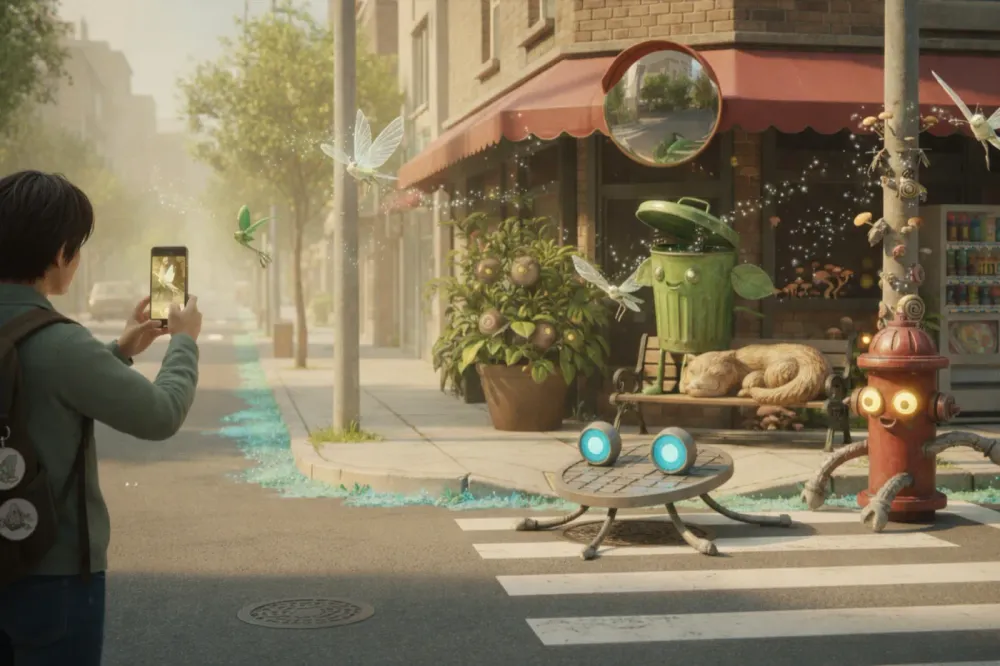
Everyday objects become collectible encounter experiences.
Why This Matters
Daily routines often become visually invisible.
The same commute, the same neighborhood, and the same objects fade into the background.
The same commute, the same neighborhood, and the same objects fade into the background.
WorldWisp uses AI to reverse that effect.
Instead of asking users to travel farther, spend more, or learn a new system, it turns familiar places into a lightweight exploration loop.
Instead of asking users to travel farther, spend more, or learn a new system, it turns familiar places into a lightweight exploration loop.
That matters for three reasons:
- It increases curiosity without adding friction.
- It creates personal meaning because the collection is shaped by the user's real environment.
- It supports repeat use because the experience builds over time instead of ending after a single generation.
What makes the concept compelling is not just image generation.
It is the combination of recognition, continuity, and collection design that transforms ordinary movement into a habit-forming discovery experience.
It is the combination of recognition, continuity, and collection design that transforms ordinary movement into a habit-forming discovery experience.
Caption: The same path transforms from background noise to a place of discovery.
How I Built This
WorldWisp is implemented as a serverless web application.
Architecture
- Frontend: React
- Backend: AWS Lambda + API Gateway
- Data: DynamoDB (captures / characters / core_word_registry / encounters / daily_quotas)
- Image Storage: S3 (only public encounters stored)
- Models:
us.anthropic.claude-haiku-4-5-20251001-v1:0(capture/discover VLM + structured JSON output)amazon.nova-lite-v1:0(output moderation)amazon.nova-2-multimodal-embeddings-v1:0(similarity matching)gemini-2.5-flash-image(image generation/editing)
Implementation Scope and Pipeline Logic
- Flow (public summary):
- Capture
- Input moderation
- Photo understanding with a VLM
- Core motif extraction and embedding generation
- Discover
- Core-word reservation and continuity control
- Candidate design generation and validation
- Similarity checks with S3 Vectors for species continuity
- Encounter
- Context-aware image editing from photo + character profile
- Output moderation
private/publicvisibility branching
- Capture
- Implemented (implemented and demoed):
- Basic flow from single upload to encounter generation (
/capture -> /discover -> /encounter) - Experience loop accumulating in encyclopedia
private/publicstorage policy- Artifact logging (prompts/intermediate outputs per step) with async persistence (SQS + worker + S3 Artifacts)
- Similarity support for species continuity using S3 Vectors
- Basic flow from single upload to encounter generation (
- Validation in progress (under verification and improvement):
- More appealing character designs
- Encounter image generation that blends more naturally into backgrounds
- Future (upcoming UX):
- Mobile app (complete capture -> encounter -> encyclopedia browsing in one hand)
- Strengthening UX design to encourage continued use

WorldWisp architecture (React + CloudFront + API Gateway + Lambda + DynamoDB + S3/S3 Vectors + Bedrock Claude Haiku 4.5 + Bedrock Nova + Gemini Image).
Technical Challenges and Design Decisions
Challenge A: The Problem of Random Characters Every Time
If each photo independently generates a completely new character, it's interesting in the moment but loses cohesion as an encyclopedia.
WorldWisp adopts a design where the same motif grows as the same species, with variations in appearance and atmosphere with each encounter.
The experience doesn't end with "one generation" but becomes continuous play: "discover -> collect -> discover again."
This is the biggest difference from single-generation-focused experiences.

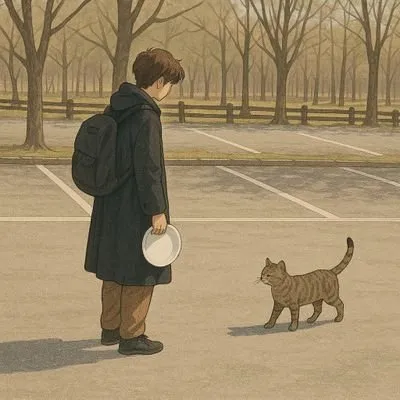
Single generation creates fragmented characters, losing collection continuity.

Species-based loops maintain continuity while preserving encounter variation.
Challenge B: The Problem of Naturally Placing Creatures in Photos
To avoid a "pasted-on" feeling in generation results, I used the subject's context to control appearance position and atmosphere.
This made it easier to create a single experience image while preserving the original photo's ambiance.
This made it easier to create a single experience image while preserving the original photo's ambiance.

Without context consideration, generated creatures look pasted onto the photo.

Context-aware generation makes creatures blend naturally into the original scene.
Demo
Video:
The demo shows the full loop in a simple way:
1. Upload one everyday photo
2. Generate a creature encounter from that scene
3. See the result added to a growing encyclopedia
This is important because WorldWisp is not just a single-image generation demo.
The core idea is that repeated encounters build a collection people want to grow over time.
The basic verification steps are these three:
- Open the demo URL (https://d1dw09up2uj5eg.cloudfront.net) and upload one photo
- Check the encounter result (generated image, character name, description)
- Check accumulated species and history in the encyclopedia list
Encounter result is for validating a single encounter moment, while Character collection is for viewing accumulation and history of the same species.
The entry screen is a simple operation: just select one photo and start.

The collection screen displays accumulated species and recent encounters.
What I Learned
The biggest shift was moving from idea validation to a deployable product.
With Kiro-driven IaC (CDK), I could provision and deploy on AWS without manual console steps.
With Kiro-driven IaC (CDK), I could provision and deploy on AWS without manual console steps.
Another major lesson was model selection.
It is a difficult tradeoff across multiple dimensions, including quality, required features, cost, and infrastructure constraints.
I learned that fixing one provider first for convenience is risky; broad upfront evaluation and validation are more effective.
It is a difficult tradeoff across multiple dimensions, including quality, required features, cost, and infrastructure constraints.
I learned that fixing one provider first for convenience is risky; broad upfront evaluation and validation are more effective.
Coding Agent + IaC also changed the practical boundary here.
When infrastructure is managed as code, operating across providers is much easier to control than expected, so provider diversity becomes a realistic option instead of an operational burden.
When infrastructure is managed as code, operating across providers is much easier to control than expected, so provider diversity becomes a realistic option instead of an operational burden.
Conclusion
WorldWisp is a product for expanding how daily life looks, not replacing it.For this submission, I reached not just experience concept verification, but a working AWS demo provisioned through Kiro-based IaC (CDK) without manual console-centric setup.
With this learning as a foundation, I'll continue expanding toward mobile-centric UX while further enhancing the naturalness and continuity of encounter experiences.

WorldWisp transforms familiar landscapes into moments of discovery.
Enjoyed reading this content? Let the author know!
Your likes, comments, shares, and saves help creators reach more builders.

Loading recommendations
Loading article