
Building AI-Ready Data Lakes: Amazon S3 Tables, Apache Iceberg, and S3 Vectors
AWS introduces next-gen data lakes with S3 Tables (managed Apache Iceberg), delivering 3x faster queries and 10x higher transactions. S3 Vectors enables native vector storage with 90% cost savings for AI workloads. Together, they create unified lakehouse architecture supporting analytics, transactions, and GenAI with ACID compliance, real-time insights, and enterprise-scale vector search capabilities.

Building AI-Ready Data Lakes: Amazon S3 Tables, Apache Iceberg, and S3 Vectors
Introduction: Solving the AI Data Foundation Challenge
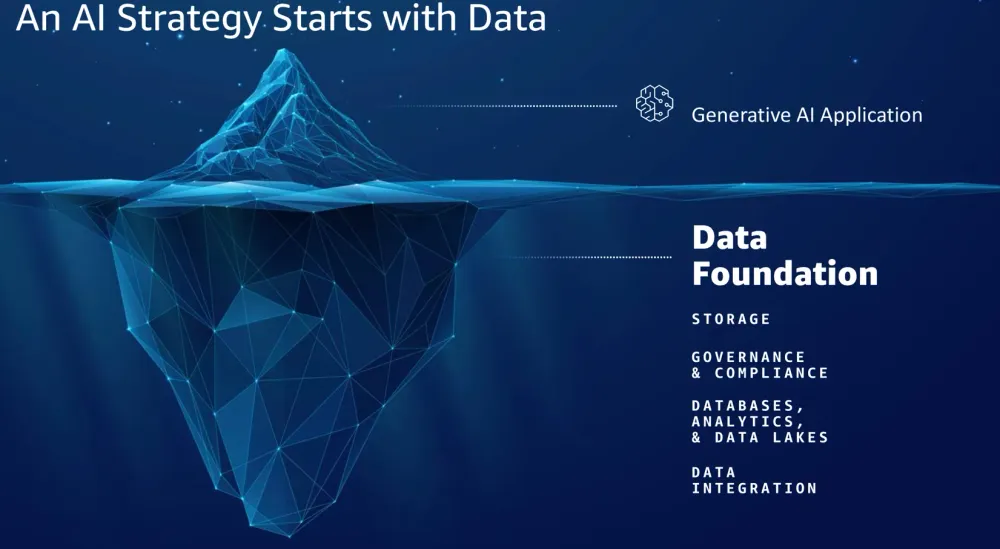
Organizations today face a critical challenge when building AI applications. You need robust data foundations that support both traditional analytics and emerging AI workloads. Many companies rush to build AI applications without establishing solid data infrastructure first. This oversight creates significant barriers to successful AI implementation and scalable data operations.
Modern data architecture must handle analytical, transactional, and generative AI workloads while providing ACID compliance and integrated governance. You need real-time analytics with elastic compute scaling, support for diverse data sources, and optimal price performance ratios. Amazon Web Services (AWS) addresses these requirements through three key innovations: Amazon S3 Tables with Apache Iceberg, and Amazon S3 Vectors.
The Evolution of Data Architecture
Data warehouses and data lakes have transformed significantly to meet changing analytics needs. Early data warehouses focused on structured data from transactional systems using traditional relational database management systems. As data volumes grew, new technologies emerged including massively parallel processing databases, columnar storage, and advanced compression techniques.

Data lakes evolved from simple repositories where organizations stored data in any format to sophisticated data lakehouse architectures. These modern architectures combine the best aspects of both warehouses and lakes. Today's customers demand unified platforms that handle diverse workloads with integrated governance and real-time insights.

The abundance of raw, granular data in modern data lakes enables sophisticated analytics, machine learning, and AI capabilities that traditional warehouse architectures cannot support.
Open Table Formats: The Foundation of Modern Data Lakes
Open table formats provide database-like capabilities while maintaining cost-effective storage on Amazon S3. The three primary formats leading this transformation are Apache Iceberg, Apache Hudi, and Delta Lake.
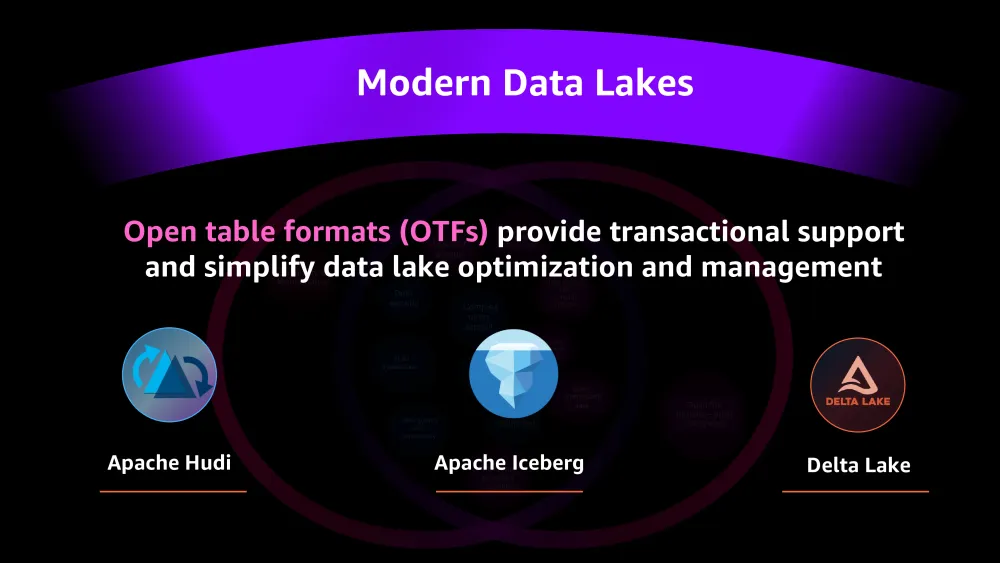
These formats deliver ACID compliance and data integrity through complete write success or rollback capability. They provide isolation between read and write operations and support UPDATE and DELETE operations on specific records. Atomic table changes prevent partial or uncommitted data visibility.

Advanced performance features include time travel support for querying data at specific points in time. Schema evolution allows you to add, drop, update, or rename columns without side effects. Partition layout evolution adapts table layouts as data volume and query patterns change. Hidden partitioning prevents user errors that cause incorrect results or slow queries.
Operational excellence emerges through fast scan planning with O(1) remote calls for query planning instead of O(n). Advanced filtering leverages table metadata for partition and column-level statistics. Version rollback quickly corrects problems by resetting tables to known good states. Multiple concurrent writers use optimistic concurrency with automatic retry mechanisms.
Amazon S3: The Tabular Data Powerhouse
Amazon S3 has evolved beyond simple object storage to serve as a primary destination for analytics, machine learning, and AI workloads. Apache Parquet has become one of the fastest-growing file formats, with exabytes of Parquet files now stored in S3.
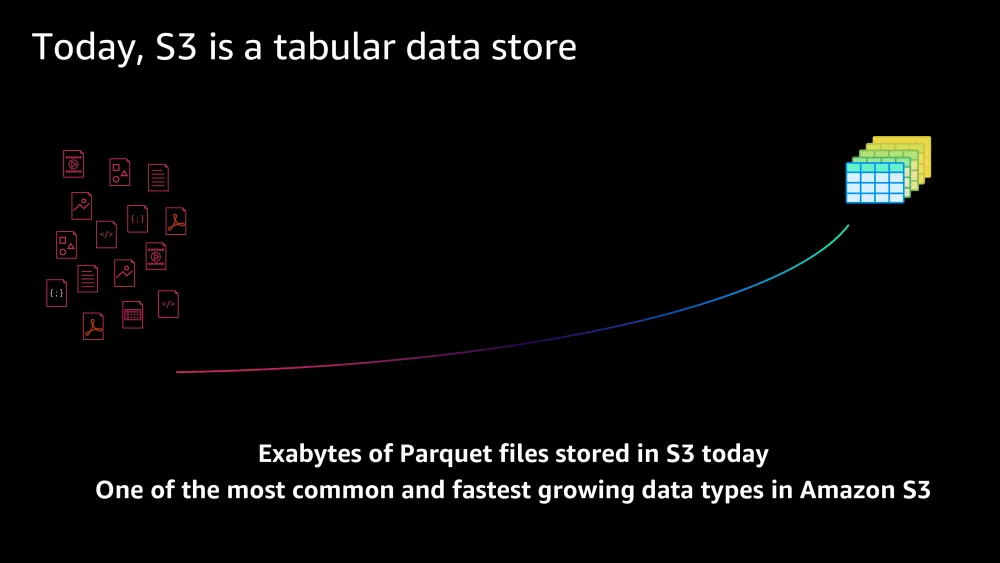
S3 Tables represents the first cloud storage service with built-in Apache Iceberg support. This managed service removes the heavy lifting of table management while delivering up to 3 times faster queries and 10 times higher transaction rates through fully managed Apache Iceberg tables.
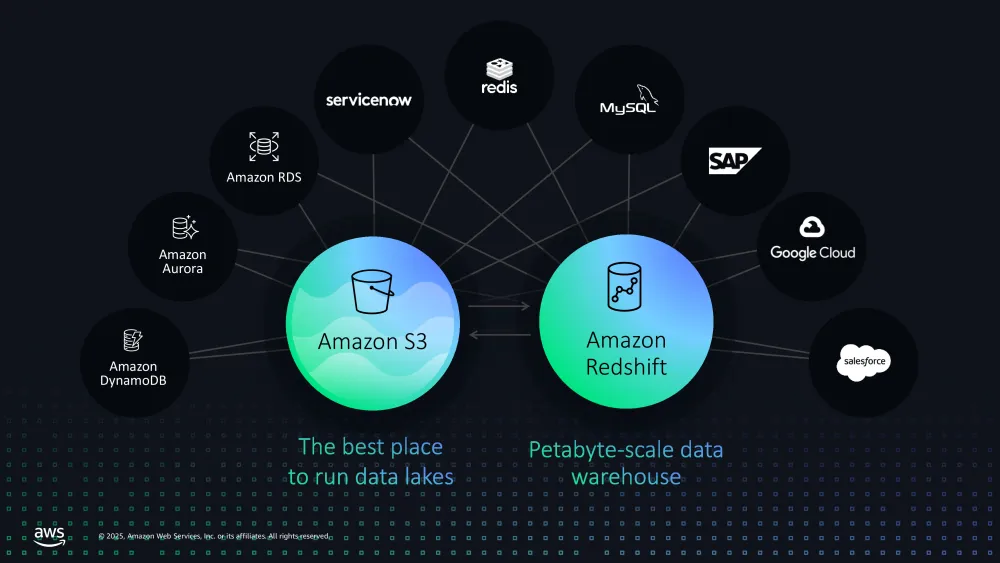
Within two months of launch, nearly 1,000 customers created over 5,000 tables, processing tens of millions of requests weekly. This adoption demonstrates the immediate value customers find in managed Iceberg table operations.


Apache Iceberg Deep Dive
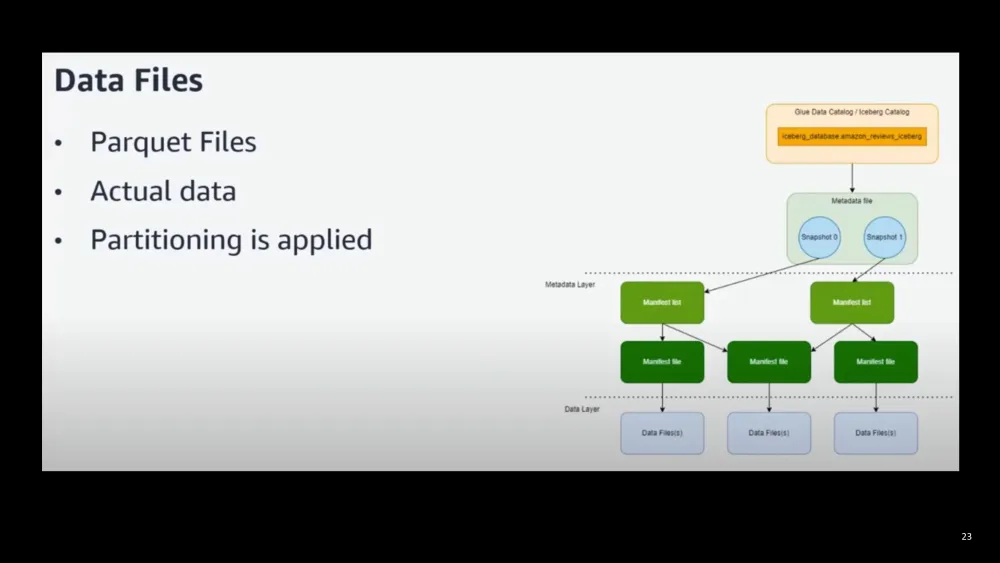
Apache Iceberg is a high-performance, open table format designed for huge analytic tables. The Apache Foundation defines Iceberg as bringing "the reliability and simplicity of SQL tables to big data, while making it possible for engines like Spark, Trino, Flink, Presto, Hive, and Impala to safely work with the same tables, at the same time."
Netflix originally developed Iceberg to solve data lake challenges before open sourcing it in 2018. The project graduated from the Apache Incubator in 2020. AWS announced native support in 2022 through Amazon EMR and Amazon Athena.

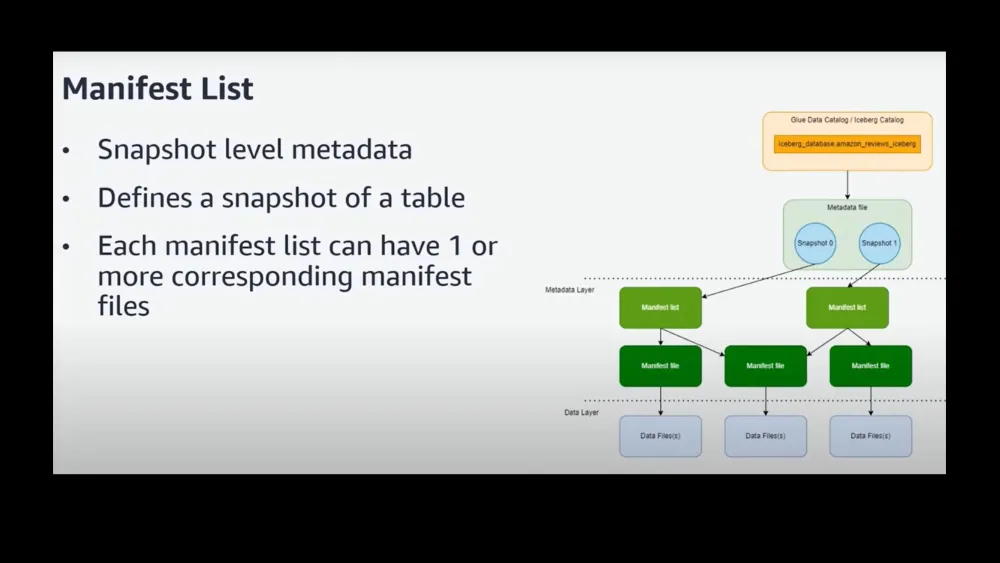
Iceberg ensures correctness and reliability through ACID transactions that make changes visible only after commitment. This eliminates data corruption issues common with legacy formats. Performance and scale optimization includes O(1) query planning for rapid data dismissal and optimization for tables containing tens of petabytes of data.
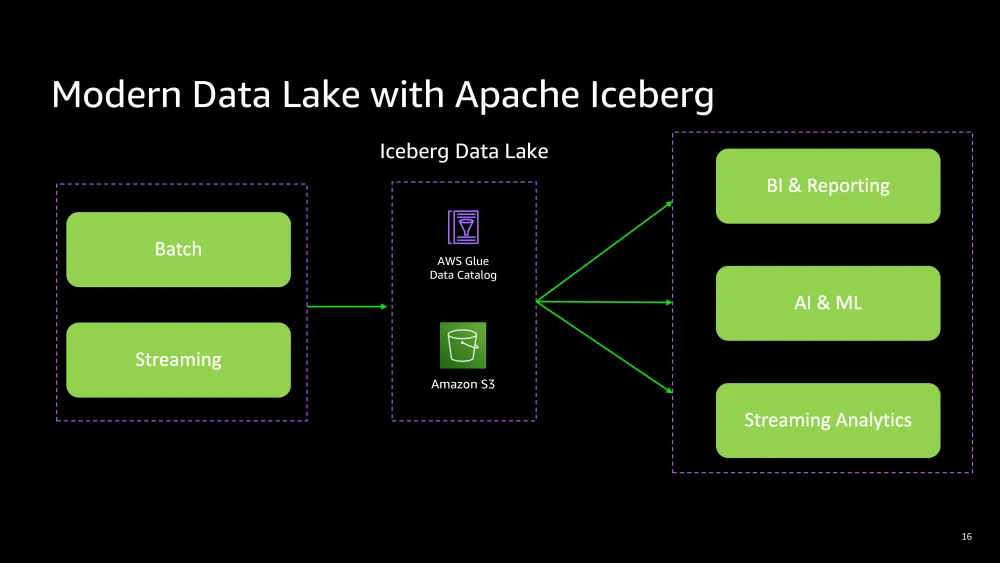
The developer experience improves through expressive SQL that brings familiar SQL behavior to data lakes. Engine-agnostic design works with multiple processing engines without vendor lock-in. Schema flexibility enables in-place table evolution with flexible schema and partition management.
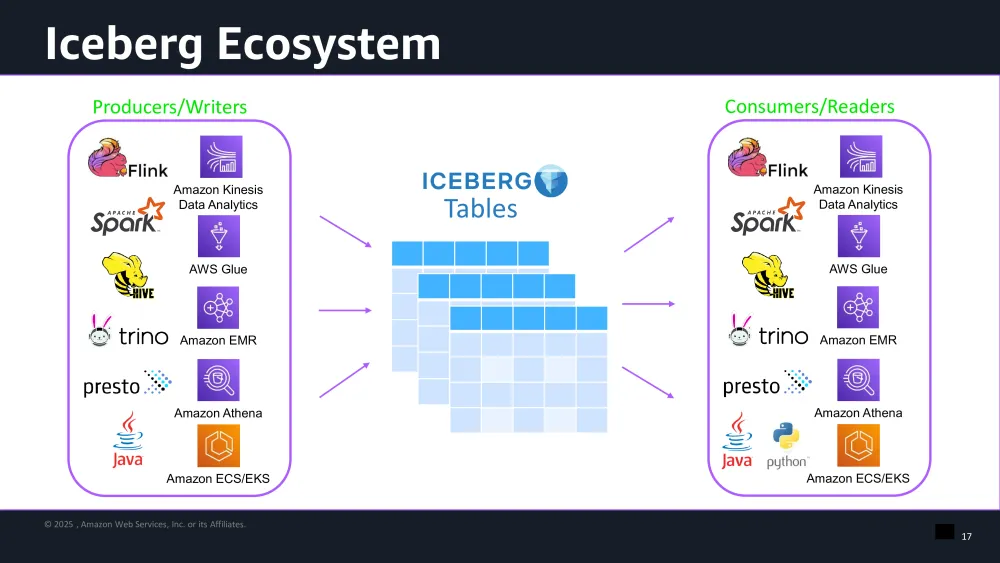


Iceberg excels in scenarios requiring frequent deletes for GDPR compliance, record-level updates for sales data corrections, slowly changing dimensions for customer information updates, guaranteed ACID transactions for data validity, and historical data analysis through time travel capabilities.


Amazon S3 Vectors: Revolutionizing Vector Storage and Search
AI applications create mounting challenges with vector data management. You face prohibitive costs for deploying search and AI-driven applications with large vector datasets. Scaling efficiently from small to very large vector datasets becomes difficult. Fine-grained vector embeddings compound these challenges.

Amazon S3 Vectors is the first cloud object store with native support for storing and querying vectors. This service offers up to 90 percent lower overall costs for uploading, storing, and querying vectors. You achieve sub-second vector query performance at scale while storing billions of vectors at low cost.


S3 Vectors introduces purpose-built vector buckets in S3 for cost-effective, long-term vector storage. These new resource containers optimize data structures for efficient similarity searches. The service supports cosine or Euclidean distance metrics with up to 4,096 dimensions per vector. Strongly consistent writes provide immediate query availability.


Advanced APIs include dedicated S3 Vector APIs: PutVectors, GetVectors, DeleteVectors, QueryVectors, and ListVectors. JSON metadata support accommodates up to 10 keys per vector with advanced filtering capabilities using logical operators. You can store up to 40 KB total metadata per vector with 2 KB filterable.
Integration with Amazon Bedrock enables direct integration with Bedrock Knowledge Bases for cost-effective Retrieval-Augmented Generation implementations. Amazon OpenSearch Service integration allows you to export snapshots to OpenSearch for high queries per second and low latency searches. You can use OpenSearch as a caching mechanism for frequently accessed vectors while maintaining OpenSearch APIs and optimizing costs with S3 Vectors backend.


Real-World Success Stories
BMW implemented S3 Vectors in their Cloud Data Hub platform. Ruben Simon, Head of Product Management at BMW, explains that they provide the largest data platform at BMW with thousands of records stored in S3 using Apache Iceberg. S3 Vectors fits perfectly by balancing cost and performance while synergizing with their S3 Iceberg storage and aligning with their IAM framework.
xCures uses S3 Vectors for healthcare analytics. Zach Kaufman, VP of Product Management at xCures, reports that S3 Vectors provides a cost-effective complement to OpenSearch for vector management. This helps them scale efficiently while maintaining performance requirements for distinct workloads, enabling better identification of meaningful clinical content in medical records and supporting high-quality structured data extraction at scale.
Twilio leverages S3 Vectors for customer engagement. Zachary Hanif, Head of AI, ML, and Data at Twilio, notes that S3 Vectors puts an accessible vector interface directly inside the storage they already trust, providing the scale of S3 with the intelligence of semantic search in a single click.

Twelve Labs uses S3 Vectors for video intelligence. Jae Lee, Co-Founder and CEO, explains that their foundation models enable customers to turn petabytes of video into searchable, actionable knowledge. With scalable infrastructure like Amazon S3 Vectors, they deliver semantic search and video analysis at enterprise scale.

Architecture Best Practices
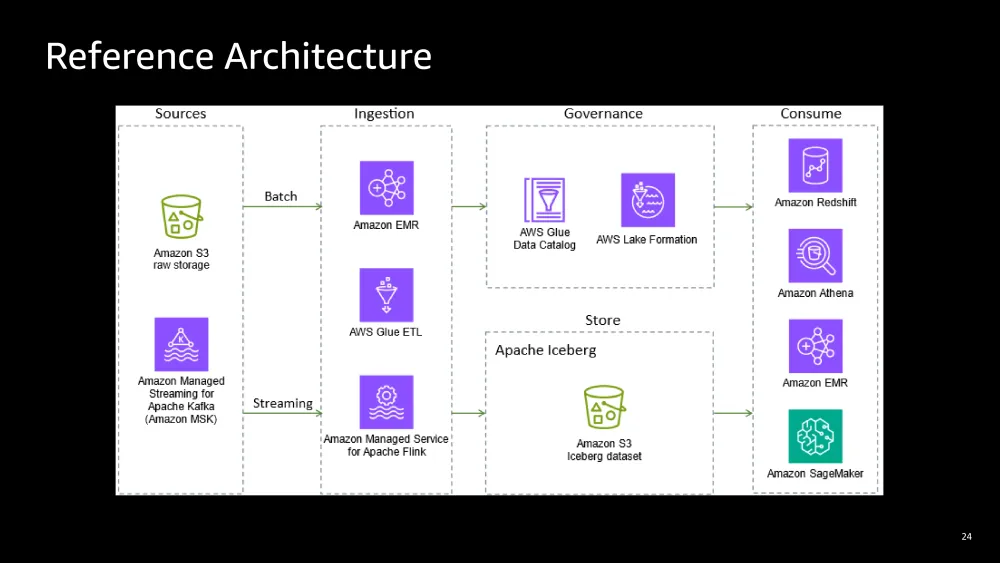
Modern data architecture brings together data lakes and data warehouses in a unified platform. Operational and enterprise application data flows through zero-ETL integrations. Federated query capabilities work with over 100 AWS Glue connectors. Apache Iceberg open APIs ensure engine compatibility while fine-grained access controls provide security and governance.
For Apache Iceberg tables, you should leverage S3 Tables for fully managed Iceberg table operations. Implement proper partitioning strategies for optimal query performance. Utilize time travel features for data lineage and debugging. Plan schema evolution carefully to maintain backward compatibility.
For S3 Vectors, design appropriate chunking strategies for your embedding models. Implement metadata schemas that support your filtering requirements. Consider hybrid architectures with OpenSearch for high-frequency access patterns. Plan for cost optimization through appropriate index sizing.

Conclusion: Unlocking Your Data Potential
The convergence of Apache Iceberg, S3 Tables, and S3 Vectors represents a fundamental shift in data architecture. You can combine the reliability and performance of traditional data warehouses with the flexibility and cost-effectiveness of data lakes while adding native vector capabilities for AI workloads.
Organizations implementing these technologies report significant improvements in cost efficiency through optimized storage and compute separation. Performance gains emerge through advanced indexing and query optimization. Operational simplicity develops through managed services and unified APIs. AI readiness accelerates with native vector storage and search capabilities.
Success in the AI era requires robust, scalable, and AI-ready data foundations. S3 Tables, Apache Iceberg, and S3 Vectors provide exactly that foundation. You can transform your data from a static asset into a dynamic, intelligent platform that powers innovation and drives competitive advantage.
The future of data builds on open standards, cloud-native architectures, and AI-first design principles. You can implement these technologies today to unlock your organization's data potential and accelerate your AI initiatives with confidence.
Enjoyed reading this content? Let the author know!
Your likes, comments, shares, and saves help creators reach more builders.

Loading recommendations
Loading article