
From Zero to Cloud: Empowering Women Through My First AWS Lab at EMTI 2026
An introductory AWS lab experience guiding beginners through cloud fundamentals and a practical static website deployment.
1. A Special Day at EMTI 2026
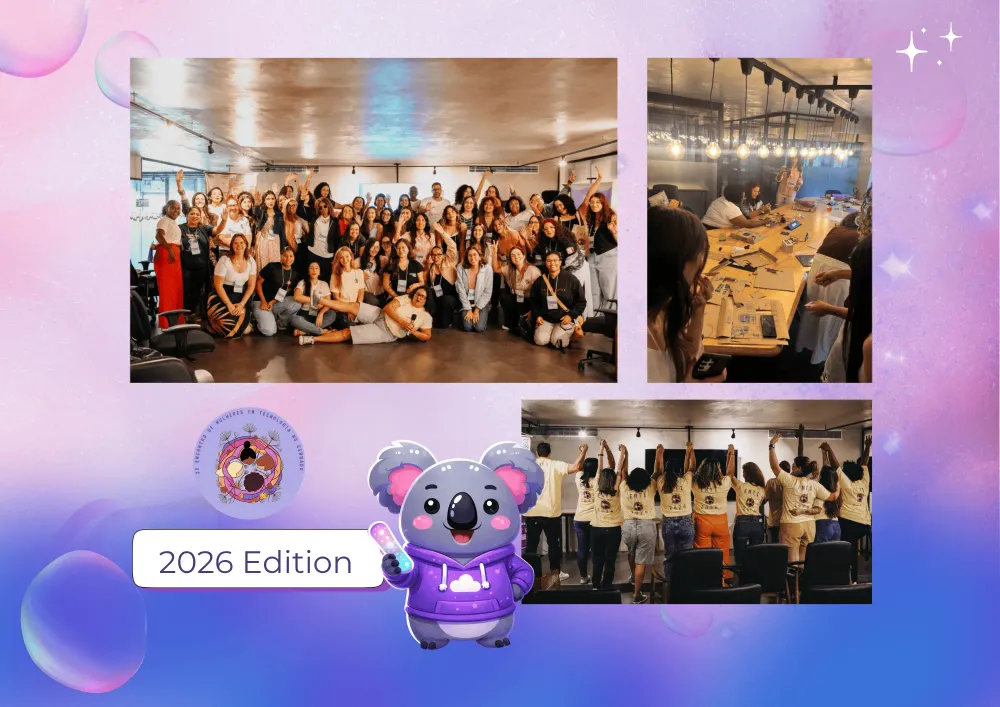
On Saturday, March 28, 2026, we had the opportunity to take part in one of the largest women-in-technology events in Brasília , Brazil's capital. We welcomed more than 15 girls to an AWS cloud workshop — and it was actually my very first LAB as an AWS Community Builder. It was a great joy to share this moment with our AWS Hero from São Paulo, Brazil, Vanessa Santos , as well as the AWS DevRel team, who provided valuable tips and resources for the workshop. Special thanks to Ana Cunha and Giovana Armani .
To begin, we asked the participants whether they already had a valid AWS account and if they had ever accessed the AWS Console. Most of them hadn’t, so our first step was to introduce the AWS Console and explain some fundamental computing concepts, such as client-server architecture and how these ideas have evolved and are now available through cloud computing via AWS APIs.
We also talked about essential and long-standing services like Amazon S3, as well as newer services that connect through highly decoupled architectures to build scalable cloud infrastructure for a wide range of applications.
For this beginner audience, we chose to deploy a very simple solution — something that could naturally demonstrate the power of the cloud and how easy it is to create services using it.
This is a brief story of that fun and inspiring journey. I hope you can learn from our experience or share it with others who are transitioning into tech or just getting started.
Let’s go!
2.My First LAB as an AWS Community Builder
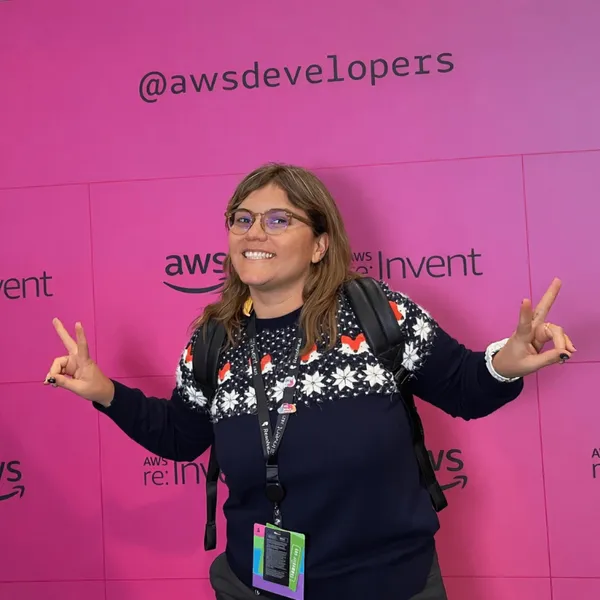
Recently, I received a recognition that made me even more excited to study cloud computing, create content, and share everything I learn!
The AWS Community Builders program is an initiative that supports professionals who are passionate about technology and community. It provides access to technical content, training, and connections with AWS experts.
The program encourages collaboration, continuous learning, and the strengthening of the AWS ecosystem across communities around the world. You can learn more at:
https://builder.aws.com/community/community-builders
https://builder.aws.com/community/community-builders
Since 2023, being actively involved in the local community in Brasília , I have been deepening my journey into cloud computing — learning more so I can give back and share that knowledge with others.
I aim to build more cloud projects, expand my expertise, and support clients and teams along the way.
Come along with me on this journey!
3. A Community That Builds Together
To begin with, I realised we had a great opportunity to both learn and teach when I was invited to participate in the women-in-tech event in Brasília in March 2026. After all, everything we do, we do in community.
So, I reached out to my friend and fellow community member from São Paulo, Vanessa Santos, inviting her not only to support the event but also to join me in leading our women’s meetup — a hands-on workshop! She said yes and came!
In addition to Vanessa’s support during the event, she also helped with account setup and the initial navigation through the AWS Console, which, by itself, already involves several steps for beginners.
We also shared resources and helpful links from the AWS DevRel (Developer Relations) team, who supported us with materials for this part of the workshop.
This moment reinforced something very important: we are not alone, and we can always rely on our community to build and grow together.
4. The Starting Point: No One Knew AWS (And That’s Okay)
We asked whether the participants had ever used the cloud to build something or even just navigated the AWS Console . And we discovered that more than 90% of them had never even accessed it.
At that moment, I found myself reflecting on something I often think about as a community organiser and cloud enthusiast: Is what I know really relevant? Can someone learn from a Builder like me, who spends most of her time supporting people and organizing events?
My background has always been in telecommunications, so understanding infrastructure and networking came naturally to me. However, over the past six years, I have been more focused on projects and business, which has created some distance from the technical side.
I started exploring cloud computing in 2021, and as I saw the growing trends and opportunities in this field, I decided to dive deeper. And here I am today — a content creator, but above all, an eternal explorer.
5. Before the Cloud: Understanding the Basics
Many of the participants were already familiar with technical terminology, as they had backgrounds in electronics or software. However, to ensure we were all on the same page, we started with the basics in a simple and accessible way.
We explained the client-server relationship in computing: the client is the one making a request (such as your phone or computer accessing a website), and the server is the one that responds by delivering the information. For example, when you open a website, your browser (the client) requests data, and a server on the internet sends back the page for you to view. We also highlighted that, in the past, these servers were often hosted locally — sometimes even as a pool of computers dedicated to running specific services.
When discussing traditional computing, we explained that before the cloud, companies needed to maintain their own physical servers, typically located in dedicated rooms or data centers . This required significant investment in hardware, maintenance, power, and technical teams. Everything had to be planned, making the process more expensive and less flexible. This is what we commonly refer to as on-premises infrastructure.
We also discussed how a major shift in computing came with the rise of the cloud. It became much easier to access infrastructure over the internet. Instead of purchasing servers, companies could “rent” resources on demand and pay only for what they use. This brought greater agility, scalability, and opened the door to innovation — especially for those just starting their journey in technology.
Finally, we explained that the real magic lies in AWS APIs, which allow different services to connect and interact with each other when needed, thanks to their inherently decoupled nature.
6. What Is Cloud in Practice, and Where Does AWS Fit In?
AWS works as a large platform on the internet that offers a wide range of ready-to-use services, such as storage, servers, databases, and much more. Instead of installing everything locally on your computer or within a company’s infrastructure, you can access these resources directly through the cloud.
These services can be used in different ways. In the workshop, I chose an approach closer to beginner users, using the AWS Console — a simple and intuitive graphical user interface (GUI).
However, in more advanced or large-scale scenarios, it is common to use other forms of interaction, such as command-line interfaces (CLI), using tools like Bash or PowerShell, as well as automation through code. These approaches are widely used by developers, system administrators, and cloud professionals to create, manage, and scale infrastructure more efficiently.
In our case, we worked with one essential AWS service: Amazon S3 , which we used to deploy a static HTML page. We also applied a simple policy to demonstrate, in practice, how access control works in the cloud. Later on, we showed the final result of this process.
Behind everything in AWS, there is an API (Application Programming Interface). This means that all services can be accessed and controlled through commands — whether via the console, command line, or code. In a world where software can define everything, AWS’s key innovation was enabling the rapid provisioning of infrastructure resources for any customer, in any data center around the world — all you need is an account.
In AWS, services are designed to work together to form complete solutions. You can combine different services to build more robust and scalable applications. This is what we call highly decoupled architectures — and you can forget about the old “big monolith”!
In this model, each component has its own responsibility. Unlike traditional monolithic systems, where everything is centralised, cloud architectures allow us to build solutions that are more flexible and easier to evolve. Changes can be made to individual components without impacting the entire system.
It’s possible to combine multiple services to create applications that are not only scalable but also resilient.
7. From Amazon S3 to Decoupled Architectures
One of the most important moments of the workshop was when we moved from theory to actually seeing how the cloud works in practice. We asked the participants to access the main screen of the AWS Console, use the search bar, and type “S3.”
And that’s where everything began — with a simple yet incredibly powerful service: Amazon S3.
Which, by the way, has been around for about 20 years already
7.1 Amazon S3: The First Step into the Cloud
Amazon S3 is an object storage service provided by AWS, ideal for storing files such as images, videos, and web pages.
In our case, we used S3 to host a static HTML website. This was an intentional choice: simple enough for beginners, yet powerful enough to demonstrate how the cloud really works.
With just a few steps — creating a bucket, uploading a file, and adjusting permissions — we were able to put a website live. This was a very special moment, as it showed that you don’t need a complex infrastructure to get started in the cloud.
But don’t be mistaken: while using S3 can be simple for this type of use case, in real-world business scenarios, managing this service can become more complex. It may involve defining object lifecycle policies, access control policies, storage strategies, and data retention or deletion rules.
In other words, even though it is simple to get started with, Amazon S3 also supports advanced configurations that meet more robust enterprise needs.
7.2 Before and After: From Traditional Infrastructure to the Cloud
Before cloud computing, publishing a website required several technical steps:
- Purchasing or renting servers
- Installing operating systems
- Configuring web servers
- Maintaining the infrastructure
With AWS, this scenario has changed completely.
With S3, for example, there is no need to manage servers or install anything — you simply use the service.
This shift represents a major evolution: we moved from a model focused on infrastructure to one focused on solutions. At this point, it becomes important to understand — and see in practice — the cloud service models we often talk about: IaaS, PaaS, and SaaS. I explain these concepts in a simple yet meaningful way in this article:
And since S3 provides storage infrastructure as an on-demand resource, you guessed it — it fits into the IaaS (Infrastructure as a Service) model, where AWS takes care of the underlying physical infrastructure for organisations.
8. Hands-On: Building Something Real in the Cloud
So, what did we build with these amazing girls?
The hands-on moment of the workshop
After creating our AWS account… wait — you don’t have one yet? 😄
No worries — check out this article we created and get started there:
No worries — check out this article we created and get started there:
As a second option, you can also use the QR code below with official AWS guidance for this step:

Now that we have our AWS account set up, let’s move on to the hands-on part.
To check this part of my content, please find the full article with many prints!
If you tested it and it worked, share it with us!!! Or tag us on LinkedIn!
Here are some Purple Pills for you!!
1 Workshop presentation in Brazil:
2 — Article on getting started with cloud:
3 — Article to help you create your account:
4 — A fun article on cloud fundamentals by my friend Palominha (Paloma Lataliza):
Thanks, guys!
Enjoyed reading this content? Let the author know!
Your likes, comments, shares, and saves help creators reach more builders.

Loading recommendations
Loading article