
Beyond Relational: Designing Resilient, Scalable Data Platforms on AWS
Learn how to design resilient, scalable data architectures on AWS by exploring alternatives to traditional relational databases, providing a practical tips for choosing the right datastore.

Lydia Ray
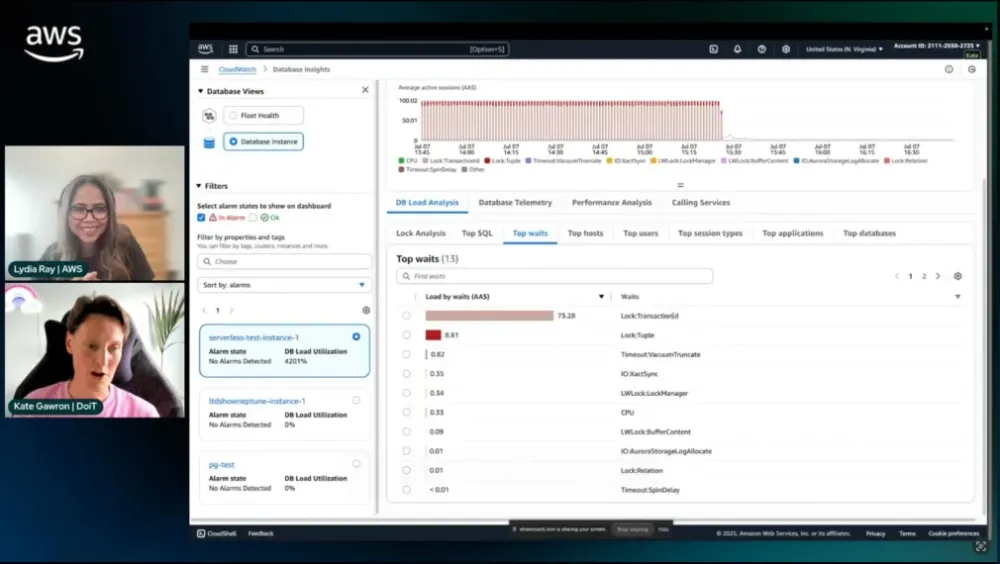
In this episode, we discuss how to design resilient, scalable data architectures on AWS beyond traditional relational databases. Kate shares her extensive experience as a database solutions architect, highlighting the evolution from traditional relational databases to purpose-built options. We explore how to identify when relational databases reach their limits and examine the decision-making framework for choosing alternatives like DynamoDB, Aurora DSQL, Amazon Neptune, and others. The conversation covers key considerations including data access patterns, scaling challenges, operational support requirements, and real-world performance limitations. Kate also demonstrates how connection limits and locking mechanisms in relational databases can create bottlenecks, and explains why sometimes duplicating data across purpose-built databases can be more efficient than maintaining strict normalization.
Key Highlights
- Identifying Database Limitations: Common signs to consider alternatives include increasing connection counts, high commit latency, and performance issues despite adequate CPU/memory resources.
- Decision Framework: Start by defining your problem precisely (scale, read/write pattern, query complexity) and rule out databases that don't match your requirements.
- Aurora DSQL Innovation: Uses optimistic locking rather than pessimistic locking, allowing massive scaling by isolating transactions in separate compute environments
- Amazon DynamoDB Advantage: Often the first alternative when outgrowing relational databases due to its familiar structure and excellent scaling capabilities
- Data Access Patterns: Understanding exactly how your application accesses data is critical in choosing the right database technology.
- Columnar vs. Row Storage: Understanding the difference helps determine when to use OLTP databases (Amazon RDS/Aurora) versus OLAP solutions like Amazon Redshift for analytics workloads.
Hosts of the show
Guest
🎤 Kate Gawron - Dtabase Cloud Architect @ DoiT
Links from today's episode
Enjoyed reading this content? Let the author know!
Your likes, comments, shares, and saves help creators reach more builders.

Loading recommendations
Loading article