
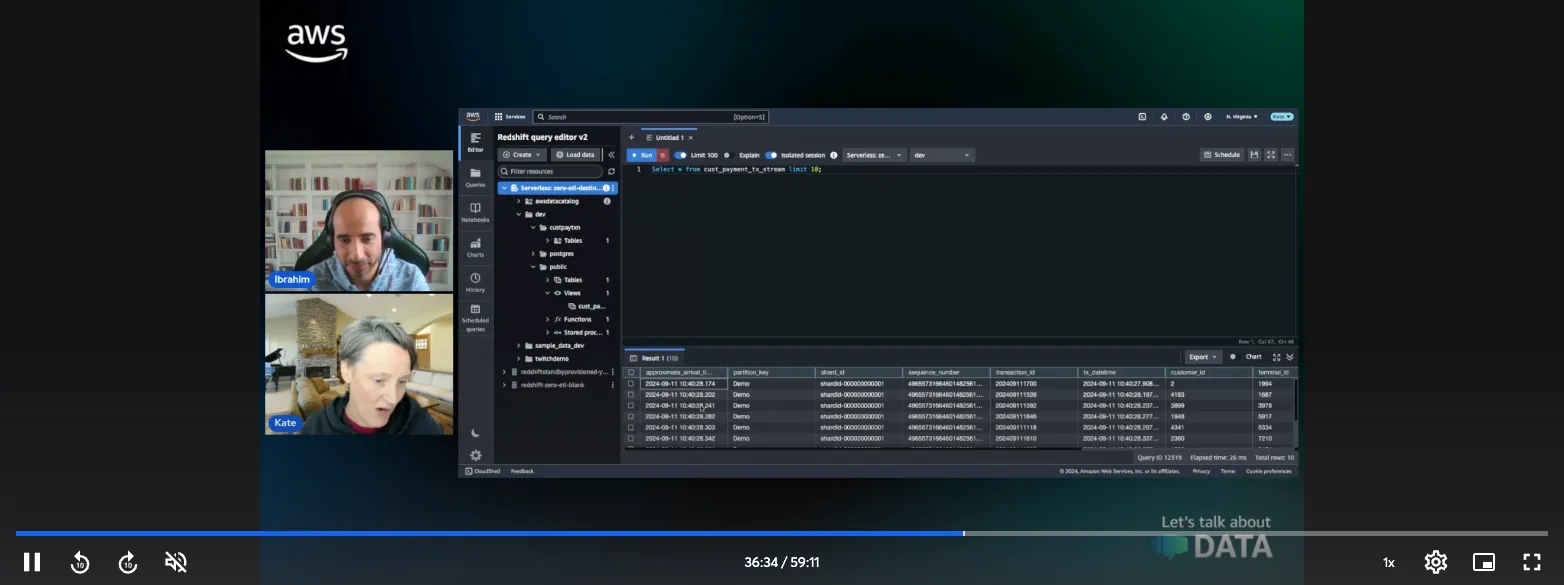
Zero-ETL | S02 EP34 | Lets Talk About Data
In this session, we delve into the capabilities and strategic use of Zero-ETL integration versus federated querying. We explore when to use each approach, their advantages and disadvantages, and tips on optimizing your queries for maximum efficiency. Additionally, we discuss Redshift ML options to empower your data with advanced analytics.


Explaining what ETL (Extract, Transform, Load) means and how it allows companies to work with data from multiple sources. We discussed traditional ETL methods involving coding and cloud tools like AWS Glue.
After that, we discussed "Zero ETL", which is a concept that allows quickly setting up a proof-of-concept data warehouse without the overhead of building extensive ETL workflows upfront. Zero ETL enables connecting data sources like databases and data lakes to a data warehouse like Amazon Redshift with just a few clicks. This allows quickly evaluating the value of integrating the data, before investing in more complex ETL processes. The hosts explain the tradeoffs between using federated queries versus fully importing data into Redshift.
Finally, Kate demonstrated setting up a Zero ETL integration between an Aurora Postgres database and Amazon Redshift, as well as ingesting real-time data from Amazon Kinesis. They then build a machine learning model in Redshift to detect fraudulent credit card transactions based on the combined historical and streaming data. The model is trained on known fraud data, and then used to flag potentially fraudulent transactions in real-time as new data arrives.
Show Highlights
- Zero ETL allows quickly setting up a data warehouse to evaluate the value of integrating data sources.
- It provides a "minimum viable product" approach to data integration.
- Federated queries allow querying external data sources, while fully importing data into Redshift provides better performance.
- It provides a "minimum viable product" approach to data integration.
- Federated queries allow querying external data sources, while fully importing data into Redshift provides better performance.
Loading
Hosts of the show 🎤
Ibrahim Emara , RDS Specialist Solutions Architect @ AWS
Guests
Kate Gawron , Leader in cloud databases
Enjoyed reading this content? Let the author know!
Your likes, comments, shares, and saves help creators reach more builders.

Loading recommendations
Loading article