

Hacking GraphRAG with Amazon Bedrock 🌄
Learn how to run GraphRAG pipelines backed by Amazon Bedrock using LiteLLM proxy.
From RAG to GraphRAG
Later this week, I'll be traveling to the UK to attend the Oxford ML School hosted by AI for Global Goals (just DM me if you want to learn more about it).
Before going on that well-deserved "rest" though (if you've been following along, it won't come as a surprise that I have these strange notions of what PTO and fun actually looks like), I'd like to do something cool... and crazy.
Yes, you read that right... but first things first - what exactly is GraphRAG?
In a nutshell, GraphRAG is a suite of data transformations in the shape of a pipeline that turns raw text into hierarchical, graph-like structures.
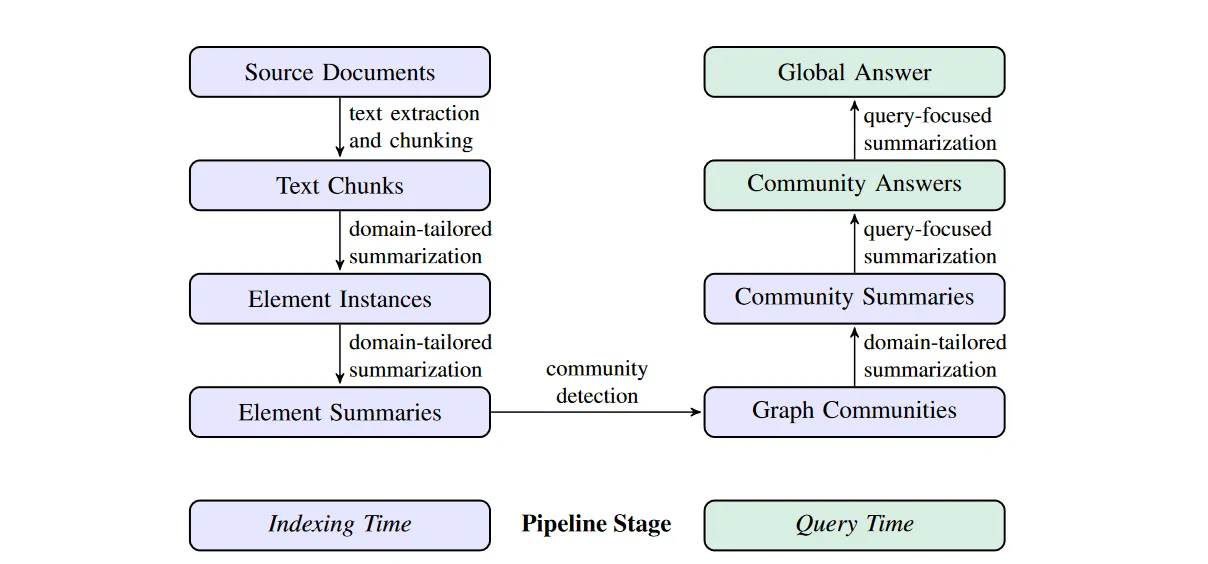
As you may have guessed, the motivation is that this is better for Retrieval Augmented Generation (RAG) workflows than plain semantic search because... well, graphs have a lot of additional structure (Entities, Relationships, Communities and the like) that make the retrieval part more effective and efficient.
In this post, I won't delve into the details of how we come by this structure (for that you have the original paper and a blog ), but this structure will become apparent once we get into the visualization part.
💡 Tip: If you want to deep dive into the GraphRAG knowledge model, I recommend reading the Dataflow section of the GraphRAG docs.
Ready, set... hack! 👨🏻💻
So, how are we going to hack this thing? Well, the good news is that the only thing we really need is an OpenAI-compatible proxy that can serve as a go-between.
Fortunately, there are (at least) two projects out there that do just that:
- 🚅💥 LiteLLM Proxy (preferred)
Let's start by creating a Conda environment with everything we need
Bash
conda env create -f environment.ymlconda activate graphrag
environment.yml
yml
# For more information on how to manage conda environments from an environment.yml file, refer to# https://conda.io/projects/conda/en/latest/user-guide/tasks/manage-environments.html#creating-an-environment-from-an-environment-yml-file# https://conda.io/projects/conda/en/latest/user-guide/tasks/manage-environments.html#creating-an-environment-file-manuallyname: graphragchannels:- defaultsdependencies:- python=3.11- pip- pip:- boto3- graphrag- litellm[proxy]
YAML
# Adapted from https://litellm.vercel.app/docs/proxy/configsmodel_list:# Chat- model_name: anthropic-claude-3-sonnetlitellm_params:model: bedrock/anthropic.claude-3-sonnet-20240229-v1:0aws_region_name: us-east-1temperature: 0.0# Embeddings- model_name: amazon-titan-embedlitellm_params:model: bedrock/amazon.titan-embed-text-v2:0aws_region_name: us-east-1litellm_settings:drop_params: Truegeneral_settings:master_key: correct-horse-battery-staple# Did you get that reference? ☝️
In this case, we're using Anthropic's Claude 3 Sonnet as our chat model and Amazon Titan Text Embeddings V2 as our embeddings model.
Let's fire up our proxy 🔥
Bash
litellm -c config.yaml
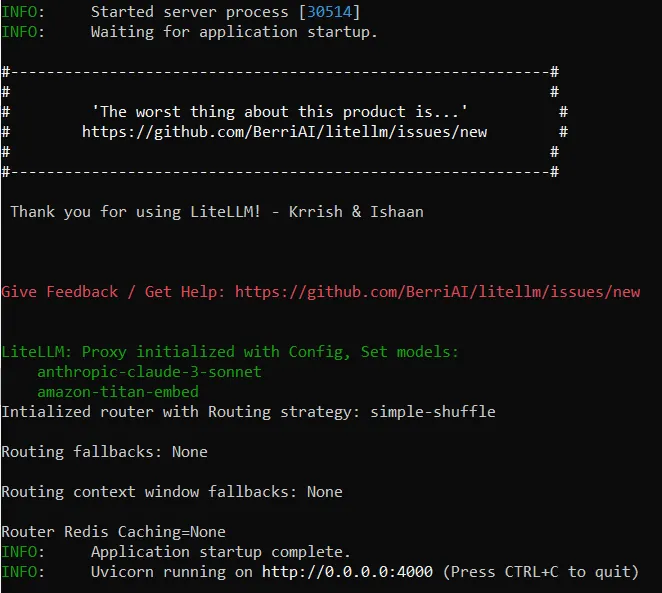
Now, we need to create a GraphRAG workspace. I'll be following the Get Started example from the GraphRAG docs, but feel free to explore at your own volition.
Bash
mkdir -p ./ragtest/inputcurl https://www.gutenberg.org/cache/epub/24022/pg24022.txt > ./ragtest/input/book.txt
Once the download finishes, you can go ahead and initialize the workspace
Bash
python -m graphrag.index --init --root ./ragtest
Now is where things get a little bit tricky. The command above will create two files:
-
.envwhich contains the environment variables required to run the GraphRAG pipeline, and
-
settings.yamlwhich contains the settings for the pipeline
In the
.env file, we will place the GraphRAG API key (this is the key we defined in the LLM proxy config viz. ✔️🐎🔋📎) as well as the base URL (👉 proxy) and our model choicesplaintext
OPENAI_BASE_URL=http://0.0.0.0:4000GRAPHRAG_API_KEY=correct-horse-battery-stapleGRAPHRAG_CHAT_MODEL=anthropic-claude-3-sonnetGRAPHRAG_EMBEDDINGS_MODEL=amazon-titan-embed
which are then injected into the pipeline settings (side note: I have removed a lot of stuff to make it more readable)
YAML
encoding_model: cl100k_baseskip_workflows: []llm:api_key: ${GRAPHRAG_API_KEY}type: openai_chatmodel: ${GRAPHRAG_CHAT_MODEL}model_supports_json: trueapi_base: ${OPENAI_BASE_URL}parallelization:stagger: 0.3async_mode: threadedembeddings:async_mode: threadedllm:api_key: ${GRAPHRAG_API_KEY}type: openai_embeddingmodel: ${GRAPHRAG_EMBEDDINGS_MODEL}api_base: ${OPENAI_BASE_URL}chunks:size: 300overlap: 100group_by_columns: [id]input:type: filefile_type: textbase_dir: "input"file_encoding: utf-8file_pattern: ".*\\.txt$"cache:type: filebase_dir: "cache"storage:type: filebase_dir: "output/${timestamp}/artifacts"reporting:type: filebase_dir: "output/${timestamp}/reports"entity_extraction:prompt: "prompts/entity_extraction.txt"entity_types: [organization,person,geo,event]max_gleanings: 0summarize_descriptions:prompt: "prompts/summarize_descriptions.txt"max_length: 500claim_extraction:prompt: "prompts/claim_extraction.txt"description: "Any claims or facts that could be relevant to information discovery."max_gleanings: 0community_report:prompt: "prompts/community_report.txt"max_length: 2000max_input_length: 8000cluster_graph:max_cluster_size: 10embed_graph:enabled: falseumap:enabled: false # if true, will generate UMAP embeddings for nodessnapshots:graphml: falseraw_entities: falsetop_level_nodes: falselocal_search:# text_unit_prop: 0.5# community_prop: 0.1# conversation_history_max_turns: 5# top_k_mapped_entities: 10# top_k_relationships: 10# max_tokens: 12000global_search:# max_tokens: 12000# data_max_tokens: 12000# map_max_tokens: 1000# reduce_max_tokens: 2000# concurrency: 32
Finally, let's run the indexing pipeline
Bash
python -m graphrag.index --root ./ragtest
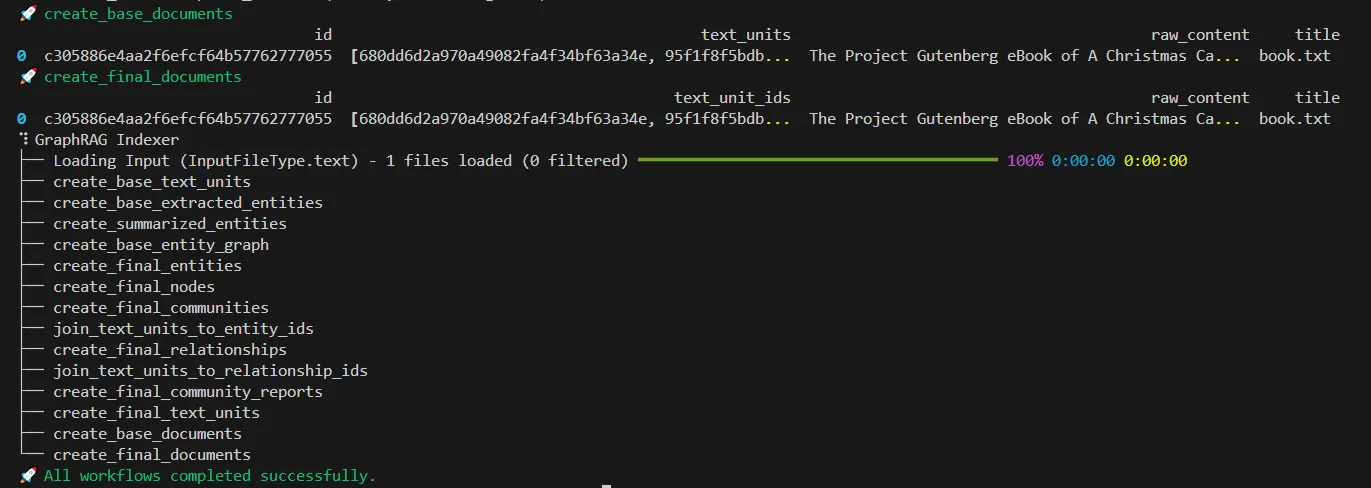
Once it is done, you can start asking questions...
Bash
python -m graphrag.query \--root ./ragtest \--method global \"What are the top themes in this story?"
Output:
plaintext
SUCCESS: Global Search Response: "A Christmas Carol" by Charles Dickens explores several profound themesthrough the transformative journey of Ebenezer Scrooge. Here are the key themes that emerge from the reports:### Redemption and TransformationThe central theme revolves around Scrooge's transformation from a miserly, selfish individual to a kind and generous person,driven by his encounters with supernatural entities and reflections on his past [Data: Reports (47, 21, 15, 24)].The story emphasizes the redemptive power of the Christmas spirit, as Scrooge undergoes a profound change, embracing generosity,kindness, and compassion towards others, particularly the less fortunate [Data: Reports (49, 48, 45)].### The Role of Supernatural GuidanceThe Ghost serves as a moral guide and catalyst for Scrooge's transformation, challenging his perspectives on wealth, poverty,and missed opportunities in life [Data: Reports (49, 48)].The role of supernatural entities, such as ghosts and spirits, in guiding and influencing characters' transformations andself-discovery is a recurring theme [Data: Reports (47, 24, 15, 37)].### The Importance of Family and Human ConnectionsThe importance of family, human connections, and embracing the Christmas spirit is a recurring theme, contrasted with Scrooge'sinitial isolation and indifference [Data: Reports (47, 19, 30, 25)].The Cratchit family, despite their poverty, is portrayed as a close-knit and loving unit, finding joy in their togetherness andthe spirit of the Christmas season [Data: Reports (45)].### The Contrast between Wealth and PovertyThe story explores the stark contrast between the wealthy, miserly Scrooge and the impoverished but joyful Cratchit family,highlighting the societal divide and the importance of empathy and compassion [Data: Reports (45, 49)].The contrast between poverty and wealth, and the treatment of the less fortunate, is a prominent theme, with Scrooge initiallydisplaying a lack of empathy towards the poor [Data: Reports (18, 12)].### The Impact of Choices and ConsequencesThe impact of one's choices and actions on others, and the potential for redemption, is a significant theme explored throughScrooge's journey and the consequences faced by other characters [Data: Reports (47, 38, 24)].### The Fleeting Nature of the PresentThe Ghost of Christmas Present's life is limited, ending at midnight, symbolizing the fleeting nature of the present momentand the importance of cherishing and making the most of the present time [Data: Reports (48)].
Finally, we can visualize the actual graph with a tool like Gephi (make sure
snapshots.graphml is set to true ).
Thanks for reading, see you next time! 👋
References
Articles
- (Edge et al., 2024) From Local to Global: A Graph RAG Approach to Query-Focused Summarization
Blogs
Enjoyed reading this content? Let the author know!
Your likes, comments, shares, and saves help creators reach more builders.

Loading recommendations
Loading article