

AWS Key Management Service
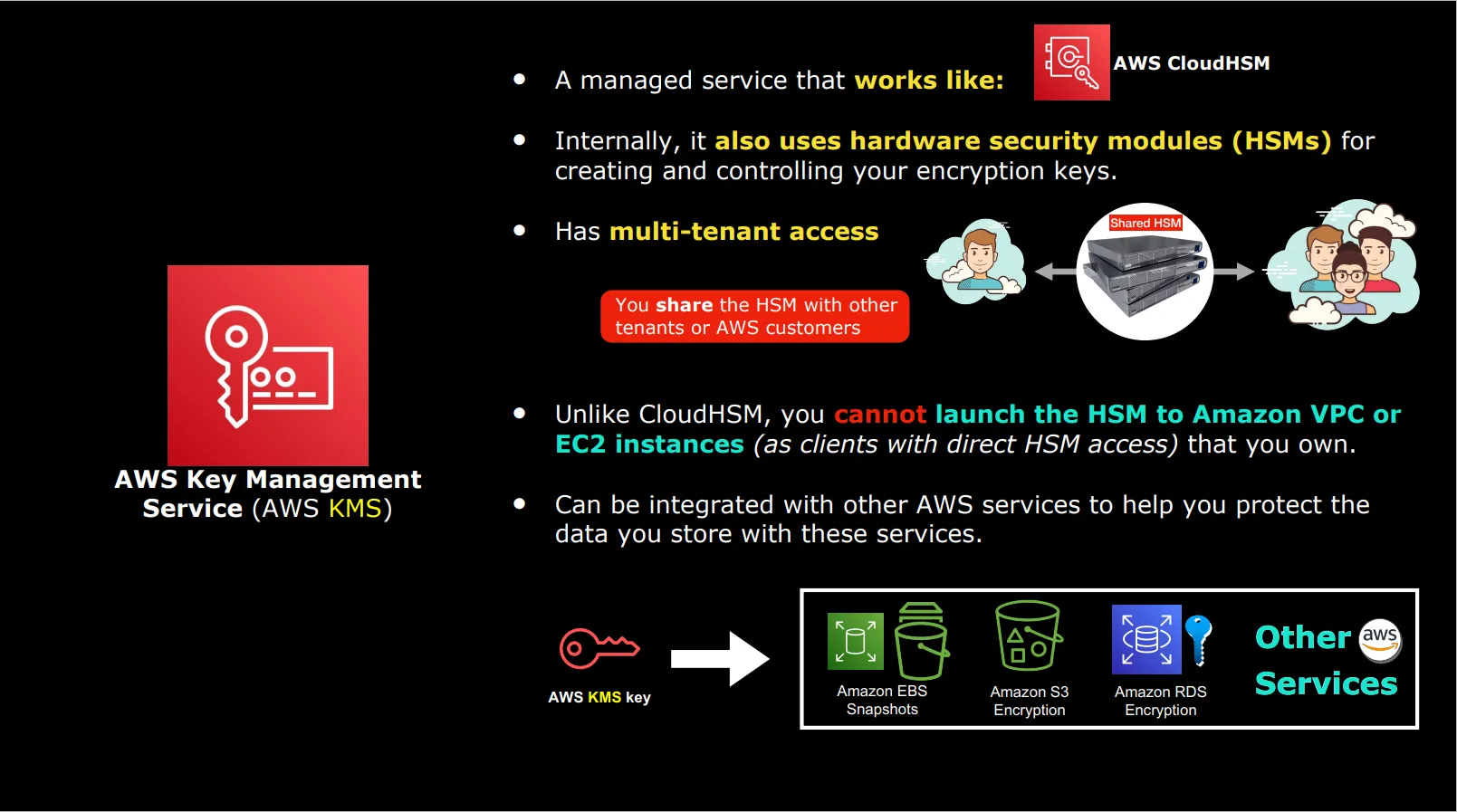
AWS Key Management Service (KMS) acts like a secure vault for your encryption keys, letting you control who can access them and use them to encrypt your data in AWS.

AWS Key Management Service (AWS KMS) is a managed service that simplifies the creation, management, and control of encryption keys used to secure your data across AWS services and applications. Here are the key aspects of AWS KMS:
AWS KMS
- Create and manage cryptographic keys (symmetric and asymmetric).
- Control their use in your applications and AWS Services.
- Define key usage permissions (including cross account access).
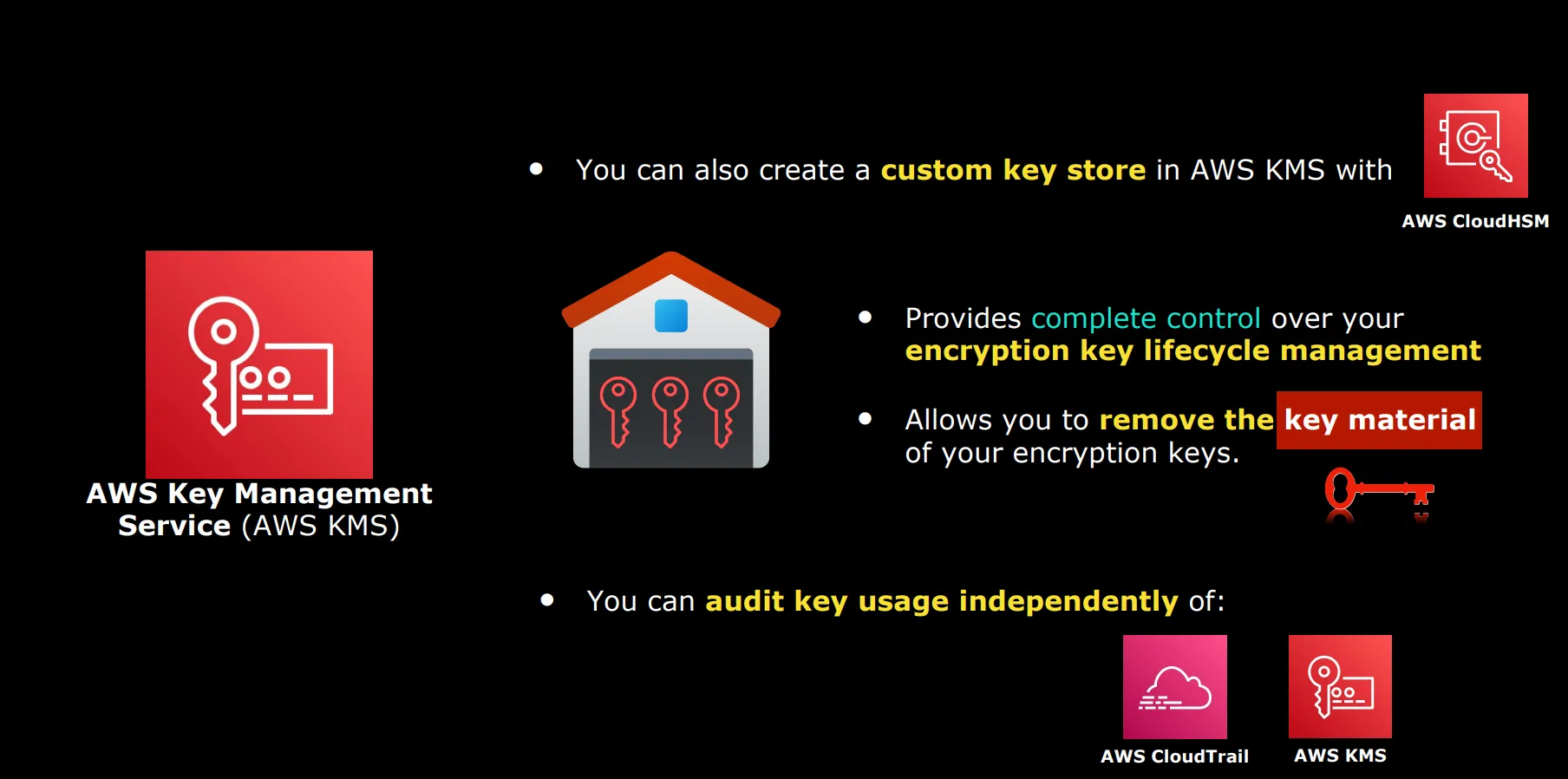
- Track key usage in AWS CloudTrail (regulations & compliance).
- Integrates with almost all AWS services that need data encryption.
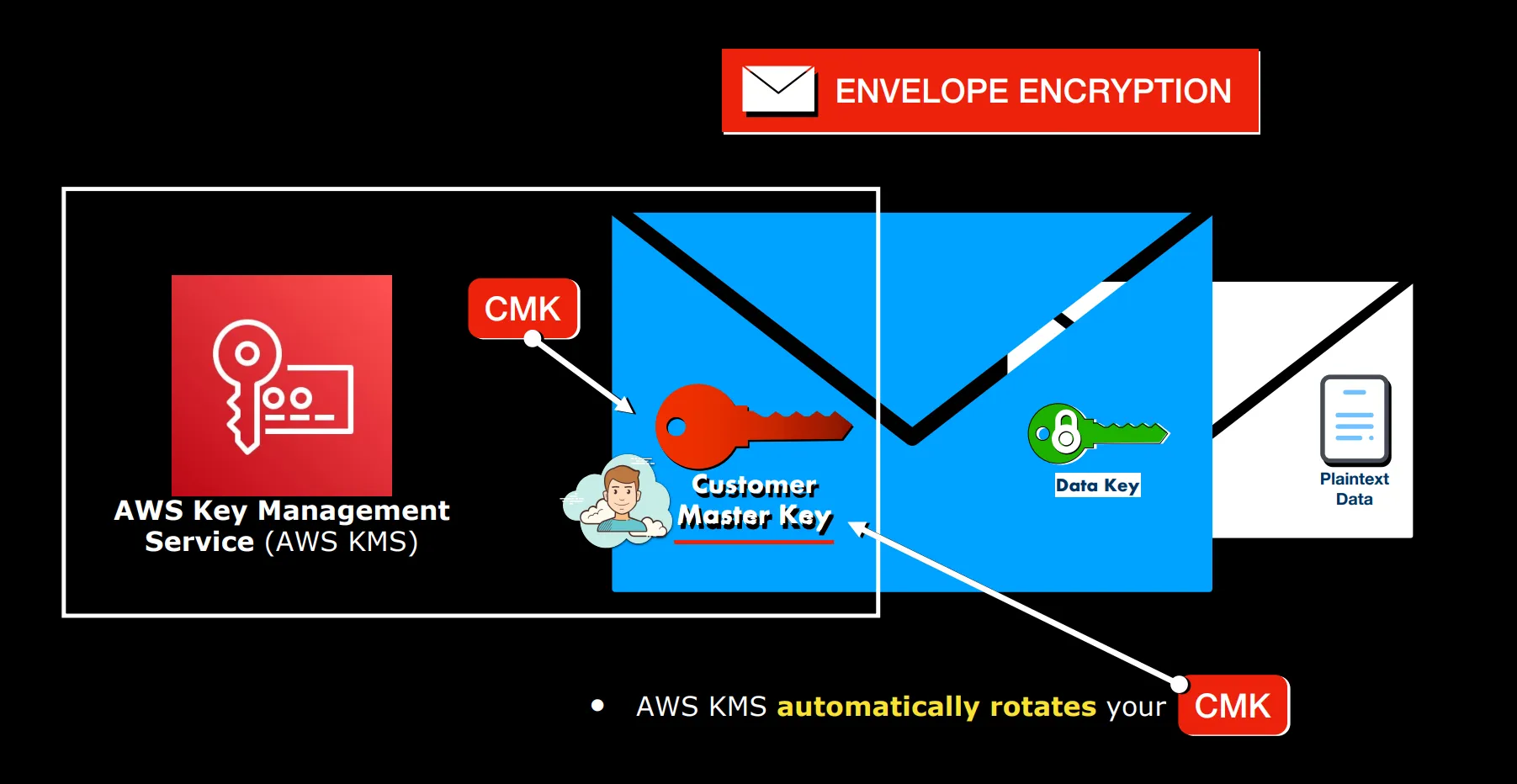
- Automatically rotate master keys once a year.
- Schedule key deletion to verify if the key is used., Mandatory minimum wait period of 7 days (max-30 days).
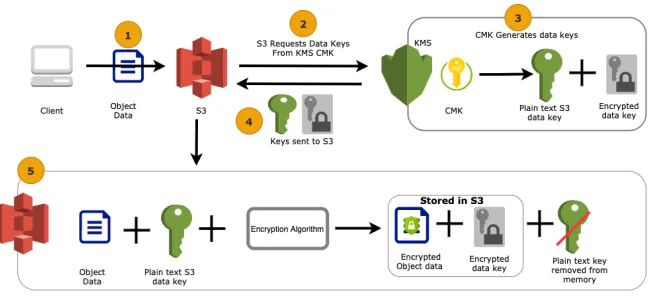
Server Side Encryption With KMS:
- Create Customer Master Key. Map to AWS service (S3)
- Steps
- Data sent to S3.
- S3 receives data keys from KMS.
- S3 encrypts data.
- Stores encrypted data & data key.
- Remember
- CMK never leaves KMS.
- Encryption of data key - KMS using CMK.
- Encryption of data - AWS Service - Amazon S3 using data key.
Envelope Encryption:
- The process KMS uses for encryption is called Envelope Encryption.
- Data is encrypted using data key.
- Data key is encrypted using Master key.
- Master key never leaves KMS.
- KMS encrypts small pieces of data (usually data keys) <4 KB.
(https://docs.aws.amazon.com/kms/latest/developerguide/)
Decryption of data using KMS:
- AWS service (Amazon S3) sends encrypted data key to KMS.
- KMS uses Customer Master Key (CMK) to decrypt and return plain-text data key.
- AWS service (Amazon S3) uses the plain-text data key to perform decryption.
- Note: Remove plain-text data key from memory asap.
- Note: AWS service needs IAM permissions to use the CMK.
Benefits of using KMS:
- Enhanced security: KMS manages the lifecycle of your keys, reducing the risk of unauthorized access or loss.
- Simplified key management: No need to manage keys yourself; KMS handles rotation, backup, and deletion.
- Compliance support: KMS helps meet regulatory compliance requirements for data security.
Who should use KMS?
Anyone storing sensitive data in AWS can benefit from KMS. It's especially useful for:
- Databases: Encrypt databases containing sensitive information like financial records or personal data.
- S3 Buckets: Securely store files in S3 buckets with KMS-managed encryption keys.
- EC2 Instances: Encrypt data on your EC2 instances using KMS keys.
AWS KMS Documentation: https://docs.aws.amazon.com/kms/
Enjoyed reading this content? Let the author know!
Your likes, comments, shares, and saves help creators reach more builders.

Loading recommendations
Loading article